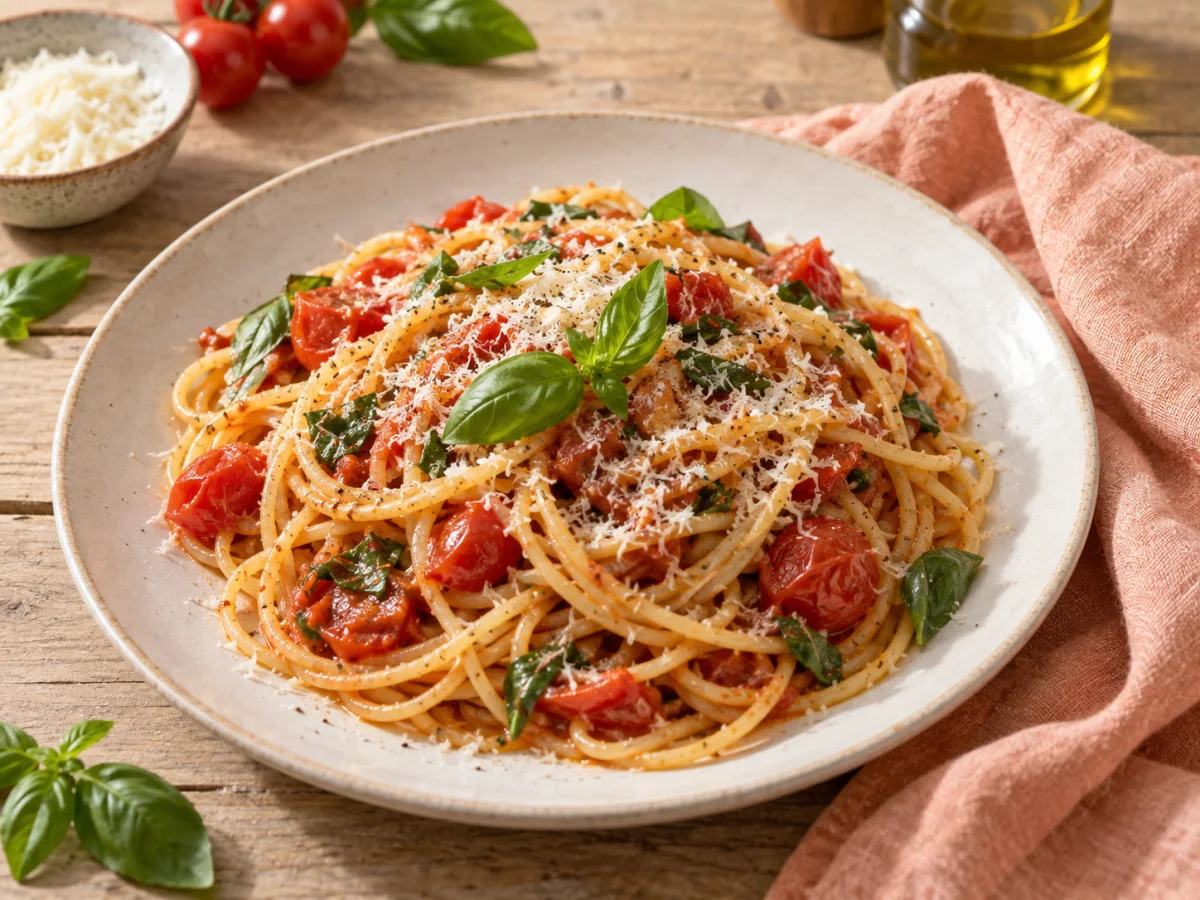
- Category
- Vegetables
- State
- Fresh
- Usual unit
- g
What it is
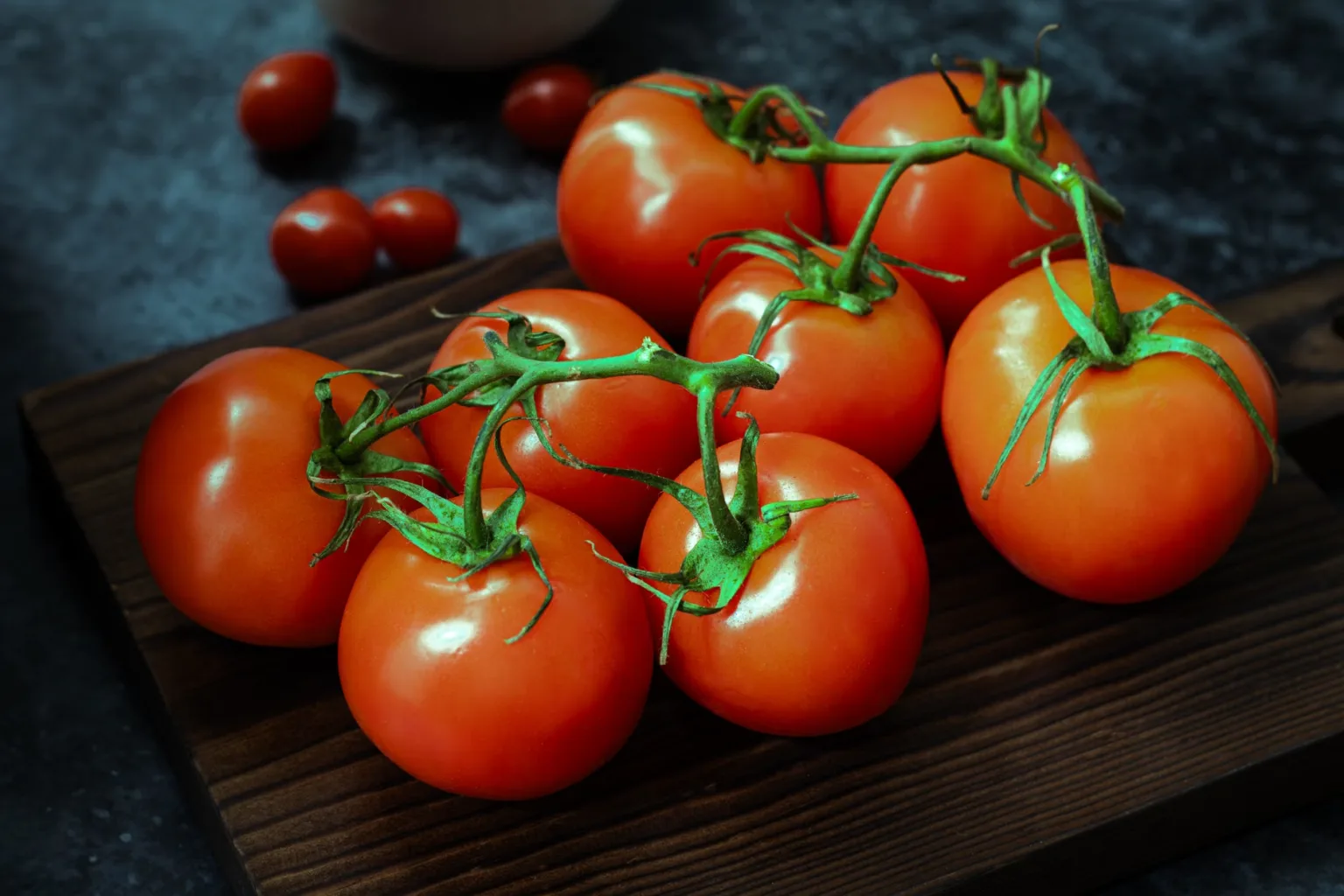
A fresh tomato is the edible fruit of the tomato plant, Solanum lycopersicum. Although it is commonly treated as a vegetable in cooking, botanically it is a fruit; in the kitchen it is mostly used in savoury dishes. Tomatoes vary in size, shape and colour, and the proportions of flesh, juice and seeds differ among varieties. So “fresh tomato” does not describe one fixed texture: a meaty tomato may work well sliced, while a firmer type may be more convenient for blending or cooking. Plum, cherry and salad tomatoes are examples of types with different common culinary uses.
When to use it
Choose fresh tomatoes when you want the ingredient to contribute juiciness and a distinct tomato flavour, in either raw or cooked preparations. Large, meaty or salad tomatoes can be served in slices or pieces; cherry tomatoes work well whole or halved in salads and quick dishes. For sauces, soups and stews, a firmer-fleshed type such as a plum tomato may be useful. In cold dishes such as gazpacho or salmorejo, tomatoes are blended with other ingredients. Variety and ripeness affect the result, so choose according to the texture you want.
How to use it
Wash and prepare tomatoes according to the product instructions and the food-handling practices used in your kitchen. To serve them raw, slice or chop them for salads, sandwiches or bread; they pair well with mozzarella and basil or with olive oil. For blended dishes, chop and process them to the texture you want, as for cold soups or sauces. To cook them, add them to a sauce or stew; a meaty or plum-type variety can be convenient when a fuller flesh is useful. Tomatoes that are bruised but still usable can go into blended or cooked preparations where appearance and intact shape matter less. Adjust the other ingredients to the juiciness and acidity of the tomato you have chosen.
Flavour and texture
Tomato flavour can range from sweet and fruity to more acidic and fresh. Texture varies too: some varieties are juicy, while others have more flesh or a firmer bite. Shape, colour and seed content are not the same across all types, so one variety may be better sliced and another more suitable for blending or cooking.
How to choose it
Look for tomatoes that are whole and firm, without rot or damage affecting the flesh. Colour and shape depend on the variety, so do not expect every tomato to be round or red. If you plan to slice them, choose fruit firm enough for that use; for sauces, consider fleshier types such as plum tomatoes. A smooth skin or uniform appearance is not the only measure: assess the overall condition and the dish you have in mind.
Storage
Ripeness matters: tomatoes that are somewhat green may continue to ripen after harvest. The available evidence does not establish one storage rule for every variety and stage of ripeness. Follow any instructions supplied with the product and check it for deterioration before use. If the label or seller gives specific storage directions, follow them.
Substitutions
For a sauce, you can swap a round tomato for a plum type when you want firmer flesh. In salads or quick dishes, cherry tomatoes can stand in for larger tomatoes, although their size and flesh-to-juice balance will change the result. Canned tomatoes can work in some sauces or stews, but they do not reproduce the texture of a fresh tomato served raw.
Common mistakes
Do not choose a variety without considering the result: flesh, juice and seed content vary. A very ripe or bruised tomato may not hold its shape when sliced, so it may be better suited to blending or cooking. Also, do not assume that a tomato with a different colour or shape is defective; varieties naturally differ.
Safety and allergens
Check tomatoes before preparation and follow the storage and use directions on the package or from the seller. Avoid using fruit with rot or damage that compromises the flesh. When serving unpackaged food or preparing it for others, follow ordinary food-hygiene practices.
Culinary uses
- Ingrediente principal en ensaladas y platos fríos
- Base para sopas, salsas y guisos
Recommended techniques
- Cortar en rodajas o trozos para servir crudo
- Triturar para sopas frías o salsas
- Cocinar en salsas y guisos
Pairs well with
- Pan y aceite de oliva
- Mozzarella y albahaca
- Ajo y pimiento
Frequently asked questions
Is a tomato a fruit or a vegetable?
Botanically, it is the fruit of the tomato plant. In cooking, it is commonly treated as a vegetable and used in savoury dishes.
Which tomatoes are useful for sauce?
A type with abundant or firm flesh, such as a plum tomato, is often a practical choice for sauce. Variety and ripeness affect the final texture.
Can I use bruised tomatoes?
If the damage does not compromise the flesh, use them in blended or cooked dishes where the shape of each piece matters less. Discard tomatoes that are rotten or badly damaged.
Will green tomatoes continue to ripen?
Some tomatoes that are still somewhat green continue to ripen after harvest. The right handling depends on the product’s condition, so follow any storage instructions available.
Estimated nutrition
- Fat
- 13.09 g
- Saturates
- 1.9 g
- Carbohydrate
- 8.09 g
- Sugars
- 0.87 g
- Fibre
- 6.1 g
- Protein
- 1.87 g
- Salt
- 0.79 g
Sources and review
Automatically researched, cross-checked and validated content. Sources consulted:
- En el etiquetado alimentario hay algunas menciones que son obligatorias eletiquetadocuentamucho.aesan.gob.es
- 17 recetas para aprovechar tomates de temporada cuando no están tan guapos directoalpaladar.com
- Tomate - Wikipedia, la enciclopedia libre es.wikipedia.org
- Variedades de tomates: guía completa con tipos, características y usos jardineriaon.com
- La historia del tomate en la cocina | Hida hida.es
- El tomate: orígenes, variedades y propiedades de este alimento | Excelencias Gourmet excelenciasgourmet.com
- ¿Qué otros usos le dan al tomate? restauranteelpilonrascafria.es
- Tipos De Tomates: Variedades Y Usos Culinarios | La Fallera lafallera.es
- Tomate: Variedades Españolas, Tipos, Propiedades y Cultivo frutamerca.com
- Maridajes – Agrogust agrogust.com
- Los 6 mejores tipos de tomate y cómo usarlos en cocina mercadosantamariadelacabeza.es
- Aesan - Agencia Española de Seguridad Alimentaria y Nutrición aesan.gob.es
- Paella de Marisco Valenciana: Receta Auténtica y Fácil es.kitchen20.com
- Los 8 mejores sustitutos del tomate seco para tus recetas - Cook & Logic cookandlogic.com
- Tomate: propiedades, variedades y valor nutricional | OCU ocu.org
- Sobrevivência de Salmonella em polpas tomates frescos de diferentes variedades | Galoá Proceedings doi.org
- A Cook’s Guide to Fresh Tomatoes - by Jordon Ezra King translate.google.com