- Category
- Meat
- State
- Fresh
- Usual unit
- g
What it is
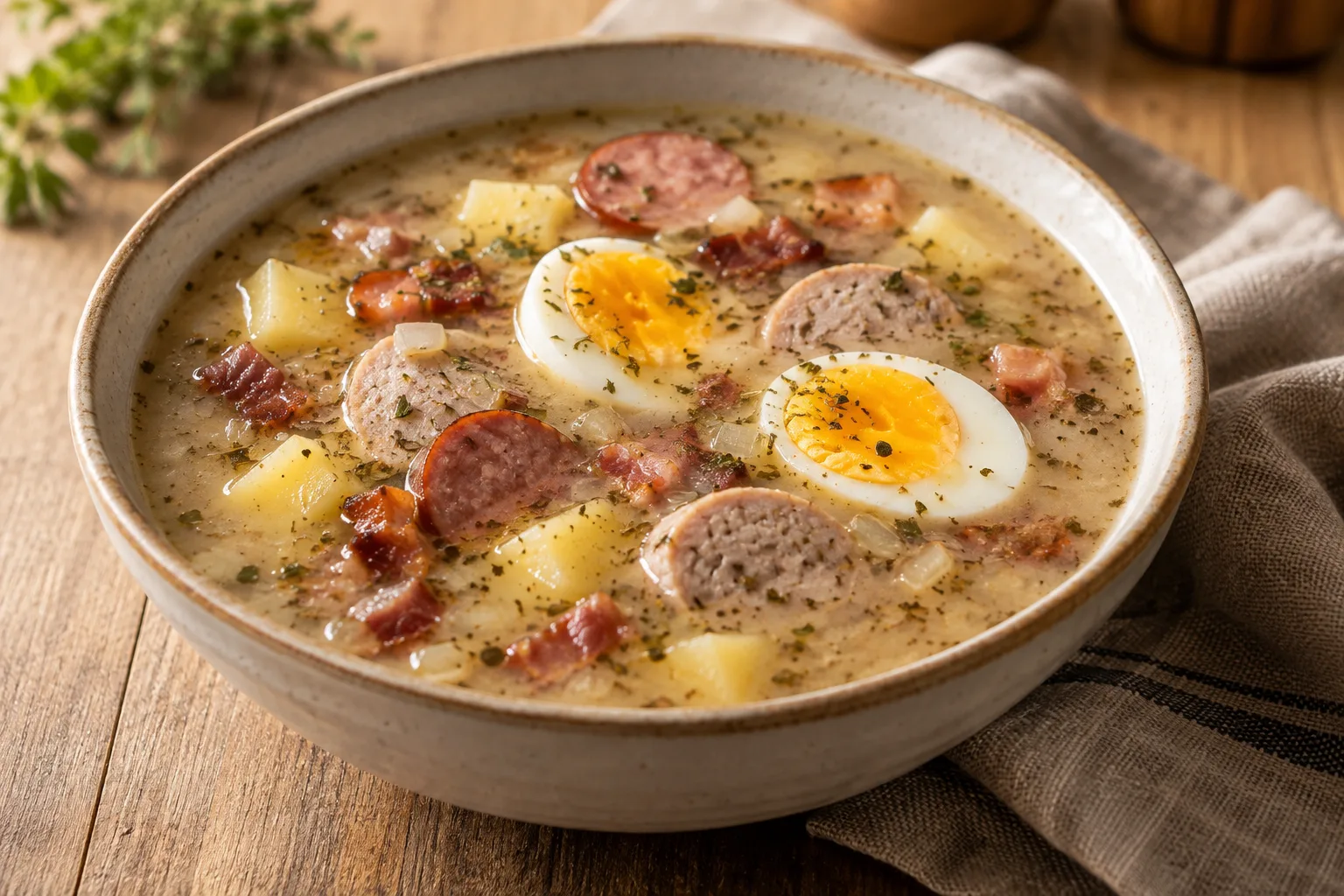
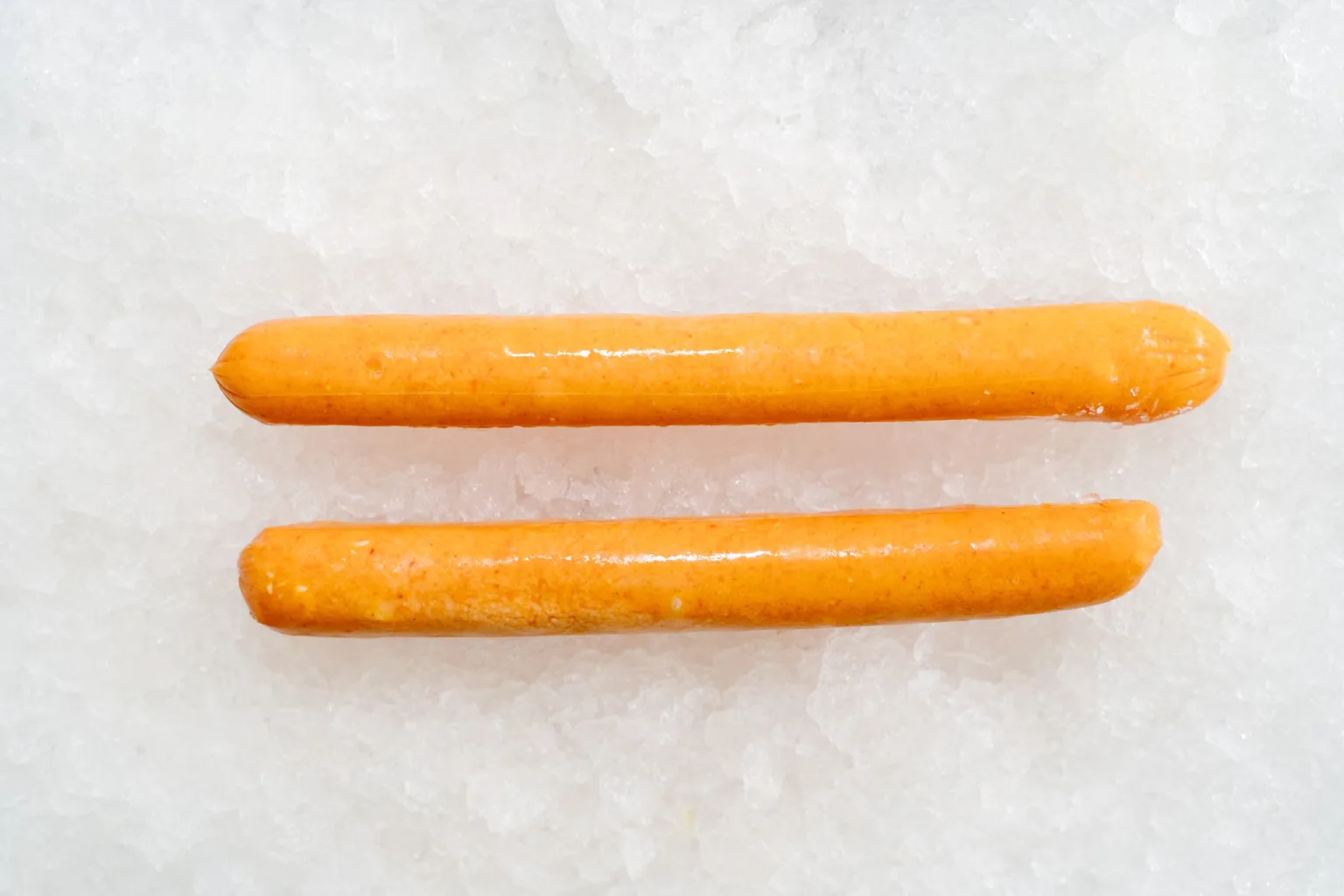
Fresh white sausage is a meat sausage sold without curing, but the name alone does not define a universal recipe or ingredient list. One source describes fresh sausages as uncured minced meat in a casing that must be cooked before eating, with meat and seasonings varying between products. Another source uses “white sausage” for a cooked preparation made from different pork parts, while a description of Bavarian Weisswurst lists pork, bacon and veal. It is therefore not safe to assume that every fresh white sausage is Weisswurst or that all products share the same recipe. Here, “fresh” is a cue that cooking may be required, not a guarantee of fixed ingredients or one cooking method.
When to use it
Use it when the package identifies the sausage as fresh and the recipe calls for a sausage that will be cooked, such as on a griddle, in a pan or on a grill. It can be served as the main part of a meal or included in a simple hot dish with bread and mustard. Before choosing a technique, check whether the product is raw, cooked or precooked: names for white sausage are not consistent, and products with that name can be made differently. Follow any package directions for cooking or serving rather than applying a method based on the name alone.
How to use it
Read the label first to establish whether the sausage is raw, cooked or precooked and to check its ingredients and preparation directions. Fresh sausages need cooking before eating. Depending on the product, they can be pan-fried or grilled; one source also describes fresh sausages as suitable for frying or roasting. A source describes Weisswurst as boiled, but that method should not automatically be applied to every white sausage. Prepare and serve the product according to its own package instructions rather than using its color to determine the method. Mustard and bread or a pretzel are serving ideas mentioned for sausage varieties in the evidence.
Flavour and texture
There is no single flavor or texture profile that can be assigned to every fresh white sausage. The available descriptions show differences in meat and seasoning: one Weisswurst description lists pork, bacon and veal with aromatics, while another white sausage is made from different pork parts. In practice, texture depends on the ingredients and degree of mincing, while flavor depends on the meat and seasonings used. Treat the package as the guide; do not assume the sausage will be mild, highly seasoned or uniform in texture just because it is called white sausage.
How to choose it
Choose a product whose label clearly says whether it is fresh, raw, cooked or precooked and provides ingredient and preparation information. “White sausage” can refer to different products, so do not assume it always means Weisswurst or contains one particular meat. Check the ingredient and allergen information on the package; the available evidence does not support assigning common allergens to all products in this category. If the label does not clarify how to cook or serve it, ask the seller or manufacturer.
Storage
Store the product according to its label and the date given by the manufacturer. The available sources do not establish one storage period or temperature that applies to every fresh white sausage, and products under this name can differ. Keep the packaging and manufacturer information available so you can check the relevant storage and preparation directions. If you cannot confirm how a particular product should be stored, do not infer a storage period from its name; ask the seller or manufacturer.
Substitutions
Another fresh, uncured sausage can work as a substitute if the recipe allows changes to the meat and seasoning, though flavor, texture and the final dish may differ. A cooked or precooked sausage is an option only when its state fits the recipe and its package directions. Do not treat Weisswurst, cooked white sausage and generic fresh sausage as interchangeable names: the sources describe different products and methods.
Common mistakes
A key mistake is treating “white sausage” as one standardized recipe or assuming every product with that name is cooked the same way. It is also a mistake to eat a fresh sausage raw: the source on fresh sausages says they need cooking before consumption. Check the product’s state and follow its label; do not apply a method described for one variety to every sausage.
Safety and allergens
Do not eat a sausage identified as fresh raw; cook and store it according to its package directions. The available evidence does not establish one cooking time or temperature for every variety.
Culinary uses
- Main component of a meal
- Protein-rich sausage for grilling or pan-cooking
Recommended techniques
- Pan-frying
- Grilling or roasting
- Boiling or gentle poaching when specified for the product
Pairs well with
- Mustard
- Pretzel or other bread
Frequently asked questions
Can fresh white sausage be eaten without cooking?
Not if it is identified as fresh raw sausage: the available source says fresh sausages need cooking before consumption. Check the package to confirm the product’s state.
Does white sausage always mean Weisswurst?
No. The sources describe Bavarian Weisswurst as well as another preparation called white sausage with different ingredients and preparation. The name depends on the product and context.
How should I cook it?
That depends on whether it is fresh, cooked or precooked. One source says fresh sausages can be fried or roasted; check the package for the appropriate method for your product.
Estimated nutrition
- Fat
- 7.8 g
- Saturates
- 2.8 g
- Carbohydrate
- 14.83 g
- Sugars
- 1.67 g
- Fibre
- 0.6 g
- Protein
- 5.91 g
- Salt
- 0.9 g
Sources and review
Automatically researched, cross-checked and validated content. Sources consulted:
- Client Challenge doi.org
- Agencia Española de Seguridad Alimentaria y Nutrición aesan.gob.es
- Mexican Immigrants´ Foodways In El Paso, Texas, 1880- ... scholarworks.utep.edu
- educational content to support healthful lifestyle practices sjsu.edu
- Healthy Eating Plan for Weight Management med.uc.edu
- Fresh Produce Recipe Book | Wsu s3.wp.wsu.edu
- Tipos de salchichas: variedades y características campofrio.es
- ¡Asegurándonos de que no eres un robot! dmsrum.uprm.edu
- "THE LIGHTHOUSE " people.duke.edu
- Prepara salchicha blanca, butifarra y salchicha fresca en casa ruca.es
- Salchichas frescas caseras: ingredientes básicos | Dorar no sella los jugos dorarnosella.com
- Historia de las Salchichas Alemanas: Un Símbolo de la Gastronomía Germana • Kurz & Gut kurz-gut.com
- - YouTube youtube.com