- Category
- Herbs and spices
- State
- Fresh
- Usual unit
- slice
What it is
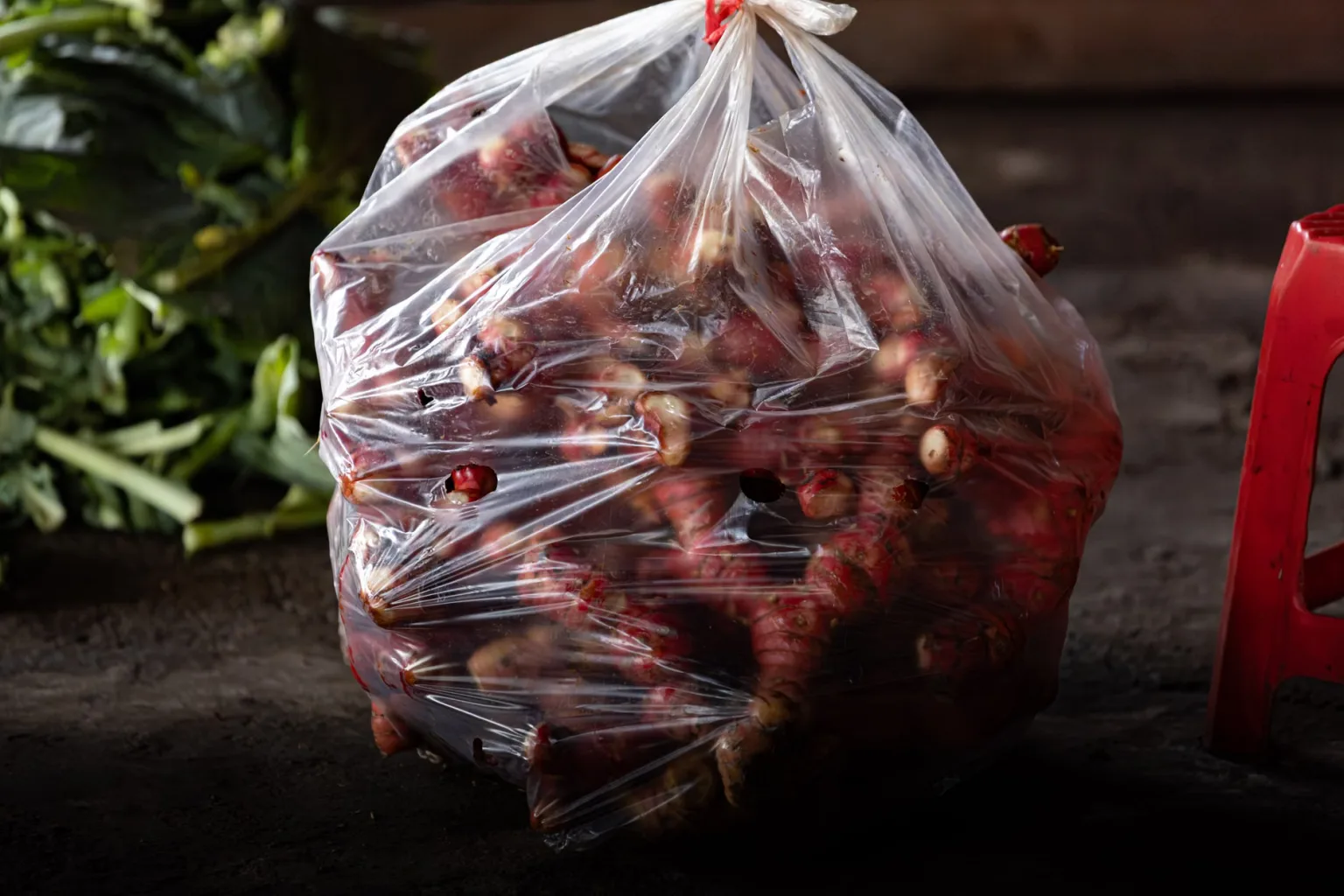
Galangal is the rhizome of plants in the ginger family. It may look like ginger, but it is a distinct ingredient with its own aromatic profile. Greater galangal, Alpinia galanga, is one familiar culinary form; the name galangal can also refer to other species, so references do not always describe precisely the same plant. In cooking, the fresh rhizome is mainly used as a spice: slice, chop or pound it to add aroma to savory preparations. It appears in curry recipes and Thai-inspired dishes. This profile describes fresh rhizome, not dried or powdered galangal, which can have a different aroma and may be used differently. Treat galangal as its own ingredient rather than as another name for ginger.
When to use it
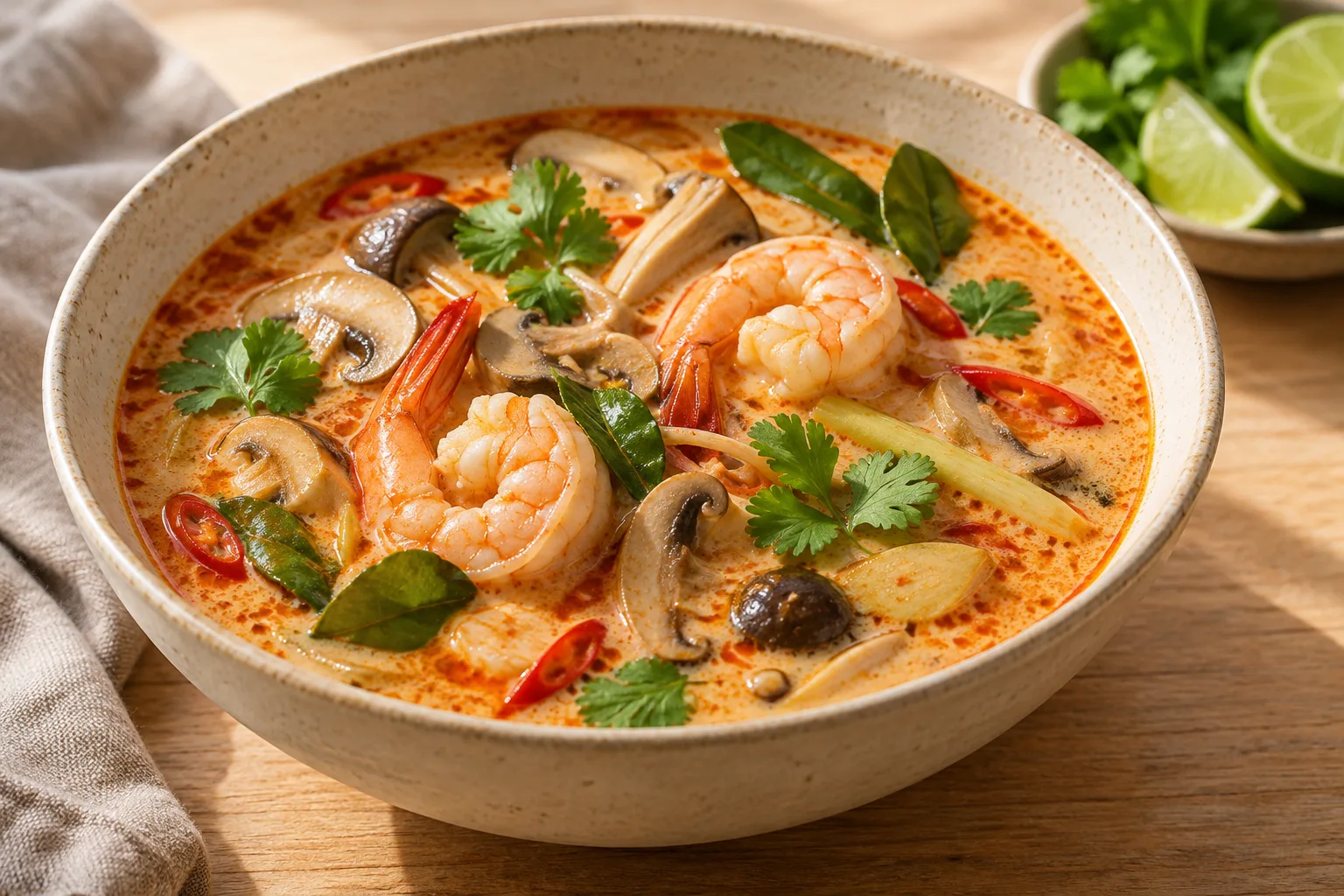
Use galangal when you want a distinctive aromatic, spicy note in soups, broths, curries, stews or curry pastes. It pairs especially well with lemongrass and can be included with chilies and other spices in aromatic mixtures. Add slices to a broth to perfume the liquid; chop or pound it for a paste or marinade where you want its aroma more evenly distributed. Galangal has a character of its own, so it should not be treated as simply interchangeable with ginger. If you cannot find it, ginger can be a practical substitute, but the finished dish will have a different flavor profile.
How to use it
Wash the rhizome and peel it if the recipe or its condition calls for peeling. Slice it for soups, broths or curries, or chop it finely to distribute it through a paste or marinade. You can also pound it in a mortar to release its aroma and combine it with other aromatic ingredients. Galangal is fibrous, so slices may remain firm in the finished dish: use them to flavor a broth and remove them before serving if you do not want to eat them. Adjust the amount to the recipe and your taste, since intensity can vary between products. There is no universal one-to-one conversion for ginger or dried and powdered galangal; changing the form will not produce exactly the same flavor.
Flavour and texture
Galangal has a pungent aroma and a spicy, resinous flavor, with notes that may suggest pine, eucalyptus or clove. It is related to ginger and can look similar, but its character is distinct and less interchangeable than its appearance might imply. The fresh rhizome is firm and fibrous, so slicing it thinly or pounding it can make it easier to use in a dish. Dried or powdered galangal may have a different, less fresh aroma than the fresh rhizome.
How to choose it
When available, choose a fresh piece that looks intact and has no visibly damaged areas. Galangal can be difficult to find; specialist shops selling Asian ingredients are one option noted in the available evidence. Check the form before buying: fresh, dried and powdered galangal do not have exactly the same aroma or uses. Fresh galangal is described as having a deeper aroma and flavor than the dried form.
Storage
The available evidence does not establish precise storage conditions or a shelf life for fresh galangal, so a specific duration should not be promised. Keep the product clean and avoid using pieces with visible deterioration. Dried and powdered galangal are different forms and do not have the same profile as the fresh rhizome. For specific refrigeration, freezing or shelf-life guidance, follow the seller’s or product package’s instructions.
Substitutions
Ginger is a practical substitute if galangal is unavailable, but it does not reproduce galangal’s resinous, spicy notes exactly. Adjust the amount to the recipe and your taste, and expect a different result rather than a replica. Some references also suggest cardamom as an approximate alternative, though its flavor is not identical either. Use galangal when a recipe calls for it if you want the ingredient’s particular character; turn to substitutes when needed.
Common mistakes
A common mistake is assuming galangal tastes just like ginger because the two are related rhizomes. Another is leaving large, fibrous slices in a dish when diners expect to eat them like a tender vegetable. Cut or pound galangal to suit the preparation, and remove slices if you only want them to flavor a broth. Do not treat fresh, dried and powdered galangal as identical forms.
Safety and allergens
The available sources provide no galangal-specific food-safety warning. As a general precaution, check that the product shows no visible deterioration and handle it with clean utensils; also follow package directions for processed products.
Culinary uses
- Aromatic seasoning for soups and broths
- Flavoring for curry pastes, curries and stews
- Aromatic component in marinades and sauces
Recommended techniques
- Peel if needed, then slice or finely chop
- Pound or crush in a mortar to release aroma
- Use sliced in cooked dishes or finely prepared in pastes
Pairs well with
- Lemongrass
- Coconut
- Chilies
- Curry spices
Frequently asked questions
Is galangal the same as ginger?
No. They are related rhizomes, but galangal has its own resinous, spicy profile. Ginger can be an approximate substitute, not an identical one.
How do I prepare fresh galangal?
Wash it, then slice, chop or pound it to suit the recipe. Slices can flavor soups and be removed before serving.
What dishes use galangal?
It is used as an aromatic spice in soups, broths, curries and curry pastes, and pairs well with lemongrass and other spices.
Estimated nutrition
- Fat
- 0 g
- Saturates
- 0 g
- Carbohydrate
- 3 g
- Sugars
- 0 g
- Protein
- 0 g
- Salt
- 0 g
Sources and review
Automatically researched, cross-checked and validated content. Sources consulted:
- Client Challenge doi.org
- Food Timeline: food history research service libguides.umflint.edu
- A World of Curries | Institute of Culinary Education ice.edu
- A Chat with Leela Punyaratabandhu of SheSimmers.com and "Simple Thai Food" Cookbook Giveaway - Pickles and Tea apa.si.edu
- Tom Yum Near Me Discovering Authentic Recipes and Local Favorites ~ cms.ncwc.edu cms.ncwc.edu
- Galanga | Gastronomía & Cía gastronomiaycia.com
- Comparativa de Galanga Roots: los mejores productos para preparar comida asiática auténtica thaibistro.es
- ¿Qué es la galanga? - Guía Vegana, Vegetariana y VegFriendly de Madrid vegmadrid.es
- Why Every Chef Needs a Mortar and Pestle - Escoffier escoffier.edu
- Cooks, in Theory simons.berkeley.edu
- The Recipe Development Process — CRAFT craft.chatham.edu
- Galangal: qué es, para qué sirve y cómo usar esta raíz aromática en tu cocina abc.es
- Galangal. El jengibre azul - Koketo Jengibre azul. Chef Koketo koketo.es
- Características de la galanga – Botanical-online botanical-online.com