- Category
- Vegetables
- State
- Fresh
- Usual unit
- clove
What it is
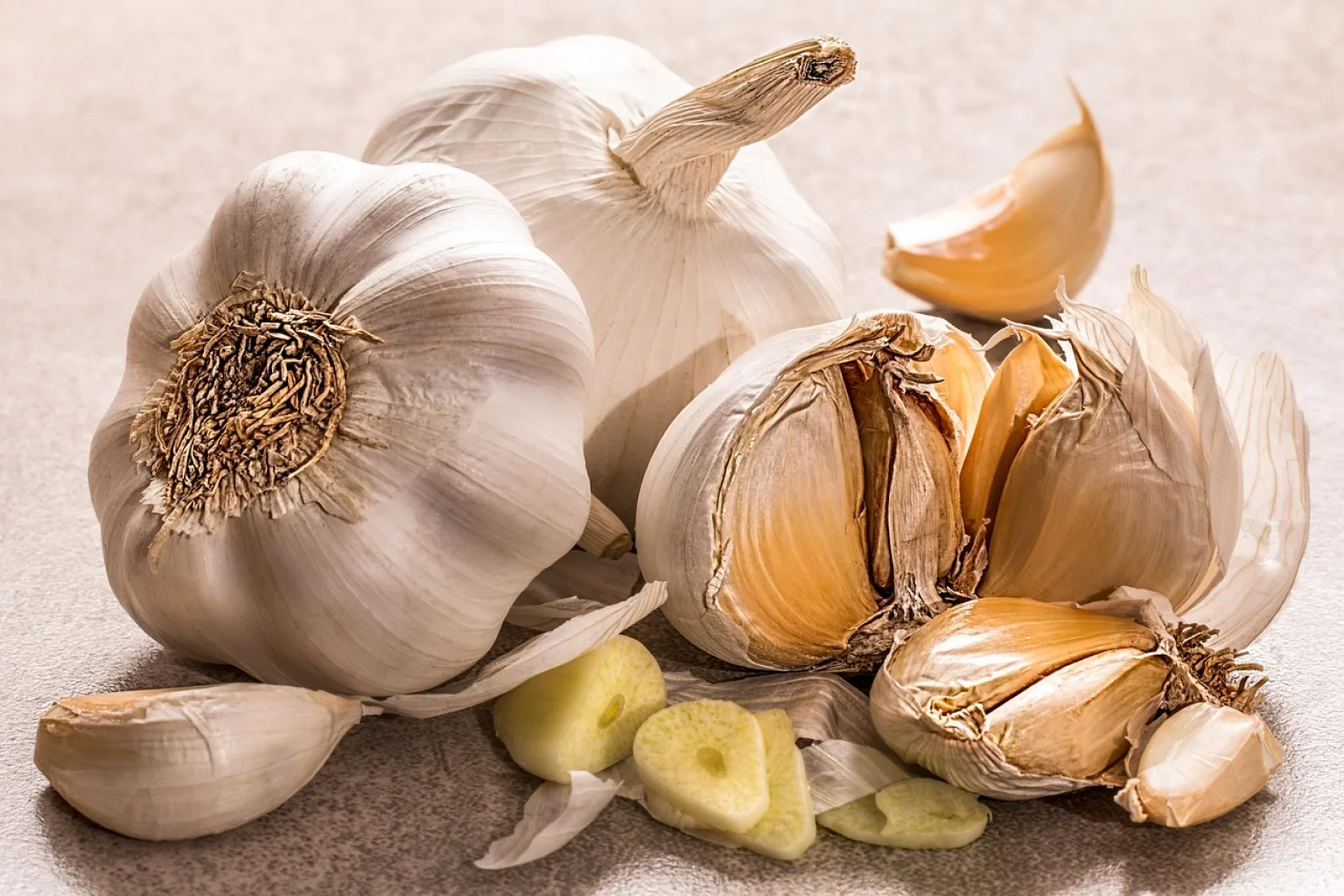
Common garlic, Allium sativum, is a bulb vegetable related to onions, leeks, and chives. The part used in cooking is the bulb, often called a head, made up of several sections known as cloves and covered by dry, papery skin. The cloves can be separated and used whole, sliced, minced, crushed, or grated. Commercial types and varieties differ, so bulb size, clove count, and aromatic intensity can vary. This profile covers fresh common garlic, not processed products such as garlic powder or black garlic.
When to use it
Use garlic when you want to add its characteristic aroma and flavor to a dish such as a sautéed base, sauce, dressing, soup, stew, pasta, or cooked vegetables. Raw garlic, especially when finely minced or crushed, is assertive, so consider how prominent you want it to be. For a less forceful result, slice it or cook it; whole roasted cloves are milder and sweeter. Fresh garlic is available year-round in common retail markets.
How to use it
Separate the cloves from the head and remove their papery outer skin before using. Add them whole, sliced, minced, crushed, or grated: minced or grated garlic gives a more intense flavor, while slices are generally milder. Use it raw in dressings, sauces, and dips when you want a pronounced garlic flavor. For a sauté, watch it closely and avoid browning it too deeply, as it can become bitter. Garlic also works in soups, stews, pasta, and vegetables. Roasting whole cloves makes them soft, sweet, and creamy, suitable for spreading on bread or mixing into purées and sauces.
Flavour and texture
Raw garlic has a pungent aroma and a strong flavor that becomes especially noticeable when the clove is minced, crushed, or grated. Slices tend to give a gentler effect than finely minced garlic. Cooking reduces its sharpness and can bring out sweetness; when roasted whole, the flesh becomes soft and creamy. Intensity varies with the type of garlic and its preparation, so every bulb will not have precisely the same profile.
How to choose it
Choose bulbs that feel compact and firm, with dry, unbroken skin. Avoid bulbs that are soft, wet, or visibly deteriorated. Larger, plumper cloves can be easier to peel and handle, but size alone does not guarantee quality. Some types have more small cloves and others fewer large ones; this normal variation is not necessarily a defect.
Storage
Keep whole bulbs in a cool, dry, dark, well-ventilated place and away from moisture. Storage life depends on the garlic type and condition; an intact bulb generally keeps better than cloves already separated from the head. Do not store fresh garlic in oil at room temperature. If you prepare garlic in oil at home, refrigerate it and follow a reliable food-safety guide; do not keep it refrigerated for more than four days.
Substitutions
The supplied evidence does not establish an exact substitute for fresh garlic. You can change the preparation: sliced garlic can stand in for minced if a milder flavor is acceptable, and roasted garlic can replace raw garlic when a sweeter, creamier profile suits the dish. These changes alter the result, so they are not exact equivalents.
Common mistakes
Adding minced garlic too early or letting it brown too much can make its flavor bitter. It is also easy to use too much raw garlic, which tastes more intense when minced, crushed, or grated. Adjust the amount and cut to suit the role you want it to play, and remember that cooking mellows its flavor.
Safety and allergens
Discard garlic that is soft, wet, or visibly deteriorated. Do not leave fresh garlic prepared in oil at room temperature: homemade garlic-in-oil mixtures should be refrigerated and used within four days. For longer preservation, follow tested food-safety instructions rather than improvising a method.
Culinary uses
- aromatic base
- seasoning
- sauce and dressing ingredient
- spread when roasted
Recommended techniques
- mincing or crushing
- slicing
- grating
- sautéing
- roasting
Pairs well with
- bread
- vegetables
- pasta
- soups and stews
- legumes
- oil-based dressings
Frequently asked questions
How does raw garlic differ from cooked garlic?
Raw garlic is generally pungent and assertive. Cooking mellows its sharpness and can bring out sweetness; whole roasted garlic becomes especially soft and creamy.
What is the best way to store a whole garlic bulb?
Keep it whole in a cool, dry, dark, ventilated place. Avoid moisture, and do not leave homemade garlic in oil at room temperature.
Can sliced garlic be used instead of minced garlic?
Yes, as a change in preparation. Slices tend to give a milder flavor than finely minced garlic, so the finished dish will not taste exactly the same.
Sources and review
Automatically researched, cross-checked and validated content. Sources consulted:
- Client Challenge doi.org
- Ajo, tipos, beneficios y uso en la cocina - Mercado de Chamartín mercadodechamartin.es
- Ajo, el ingrediente milenario que transforma el sabor en la cocina chefyerika.com
- Todo sobre el ajo: qué es, cómo se cultiva, cómo utilizarlo en cocina y qué propiedades tiene directoalpaladar.com
- El Origen e Historia del Ajo josebernad.com
- EL CULTIVO DEL AJO mapa.gob.es
- Garlic: the Flavorful Superhero for Your Garden and Kitchen - Burke County Center | N.C. Cooperative Extension burke.ces.ncsu.edu
- FoodWISE choices and winter garlic – Gigi Berardi wp.wwu.edu
- Fruit and Vegetable Guide Series: Garlic | USU extension.usu.edu
- Garlic townesharvest.montana.edu
- Garlic: A Powerful Vegetable extension.psu.edu
- FoodLink - Purdue Extension extension.purdue.edu
- Garlic Adds Flavor and Aroma uaex.uada.edu
- Usos culinarios del ajo | Consumer consumer.es
- - YouTube youtube.com