- Category
- Vegetables
- State
- Fresh
- Usual unit
- clove
What it is
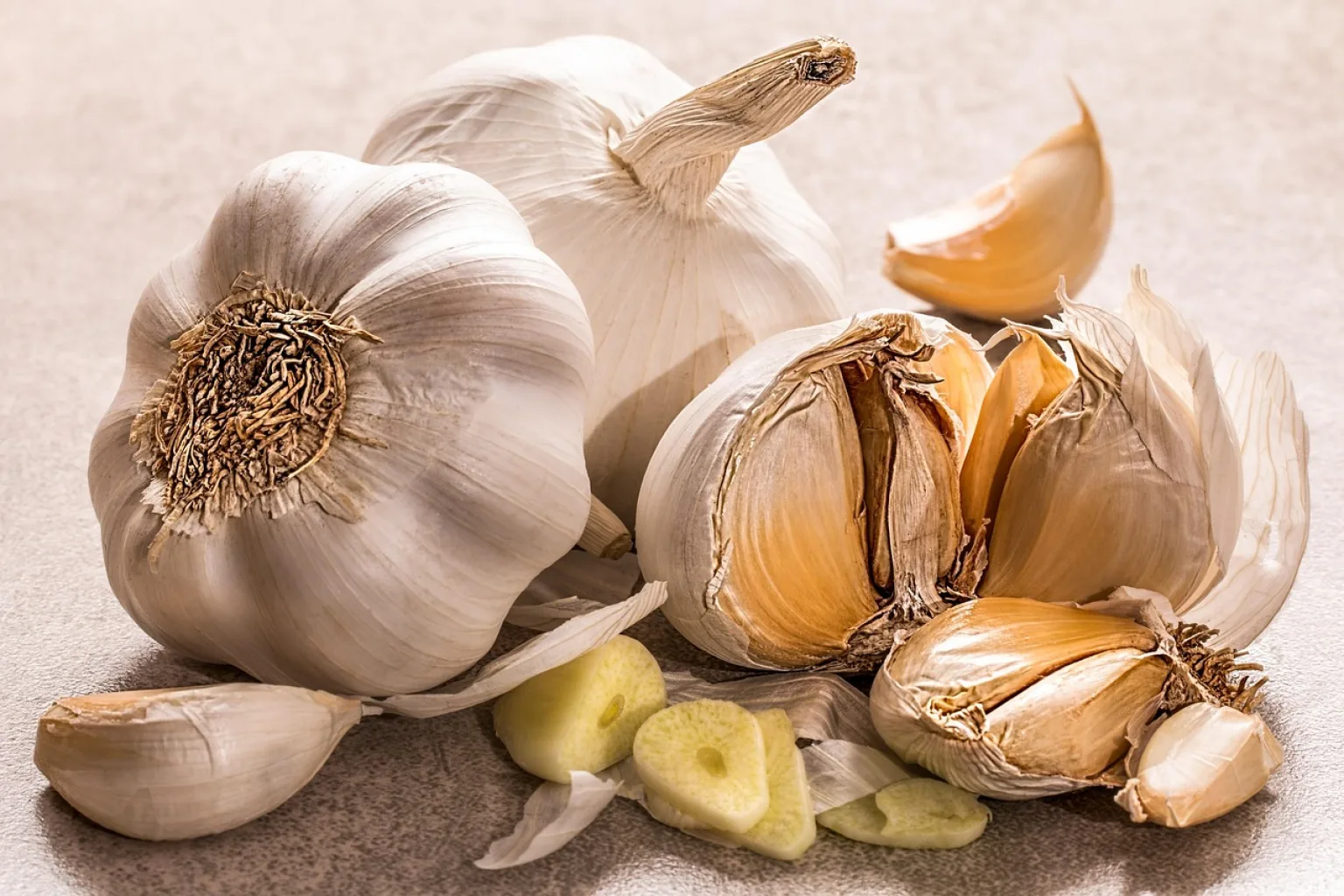
Common garlic, Allium sativum, is a vegetable whose bulb is made up of individual cloves. A clove is a convenient cooking unit: use it whole, sliced, chopped, or crushed to suit the flavor and texture you want. Its thin outer skin is usually removed before chopping or crushing. Cloves vary in size, and varieties can differ in appearance and aroma, so counting cloves does not always measure out the same amount. This fresh ingredient refers to individual garlic cloves, not garlic powder or black garlic, which are different forms.
When to use it
Use garlic to build an aromatic base for a stew, sauce, or sauté, or make it a leading flavor in the dish. Raw garlic gives sauces and dressings a more direct, assertive taste; cooked garlic can blend more gently into soups, vegetables, pasta, potatoes, and slow-cooked dishes. To flavor oil without leaving pieces in the food, add a whole or crushed clove and remove it before continuing. When garlic is a central flavor, adjust the amount to your preference and to the size of the cloves.
How to use it
Separate a clove from the bulb and peel it if the recipe calls for it. For a restrained flavor, leave it whole or crush it, cook it gently in oil, and remove it if you do not want pieces in the dish. For a more even distribution, chop or grate it; crushing also makes it easy to work into a paste or sauce. Watch garlic closely when sautéing or frying: garlic that browns too much or burns can taste bitter. You can also roast a whole or halved bulb in its skin, then add the soft flesh to a recipe. For cold dishes, dressings, and sauces, start with a modest amount of raw garlic, taste, and adjust.
Flavour and texture
Raw garlic has a pungent aroma and a pronounced flavor that can taste sharp or hot. Cooking usually mellows its impact and blends it with other ingredients; burning it can make it bitter. Whole cloves and slices leave distinct pieces, while chopped, grated, or crushed garlic spreads more evenly through a dish. Aroma and intensity also vary with the clove, variety, and cut.
How to choose it
Choose cloves that feel firm and compact, with no visible signs of moisture or spoilage. Avoid cloves that are soft or shriveled, and look for protective skin that is not excessively dry. Size and color can vary between varieties, so neither alone is a reliable measure of quality or intensity. If a recipe needs a consistent amount, consider the actual size of each clove rather than assuming they are all alike.
Storage
Keep garlic in a cool, dry place, and follow any storage directions on its packaging. Avoid a damp location. The available guidance concerns garlic generally and does not specify storage conditions for cloves that have already been peeled or cut; for those, follow the product instructions and applicable food-storage guidance. Do not assume that directions for a whole bulb also apply to prepared garlic.
Substitutions
Dried garlic flakes can replace fresh garlic when they have a chance to hydrate in the dish, though their texture differs. Garlic powder or granulated garlic adds garlic flavor when pieces are not wanted, but does not reproduce the texture of a clove. Onion can provide a related aromatic note, but it is milder and sweeter, so it is not an exact substitute. Adjust amounts to the product and taste before adding more.
Common mistakes
Do not let chopped garlic burn while you prepare other ingredients: garlic that browns too much can make a dish bitter. Do not automatically replace one fresh clove with a fixed amount of dried garlic, since flavor strength and texture differ. If using garlic raw, start with less and taste before adding more. Cloves are not all the same size, and varieties do not necessarily have identical aromas.
Safety and allergens
If you buy packaged garlic or use it in a prepared product, check the label for ingredients and allergen information. The available evidence does not establish a specific official safety warning for fresh garlic cloves.
Culinary uses
- Aromatic seasoning and flavor base
- Main ingredient in garlic-forward sauces and dishes
- Finishing accent for vegetables, soups, and cooked dishes
Recommended techniques
- Use raw, finely chopped, crushed, or grated
- Sauté or fry gently in oil; avoid burning
- Roast whole or halved in its skin
- Add whole or crushed to infuse oil or a slow-cooked dish
Pairs well with
- Olive oil, parsley, and lemon
- Tomato, onion, and peppers
- Mushrooms and other sautéed vegetables
- Bread, pasta, and potatoes
Frequently asked questions
How can I make garlic taste milder?
Use it whole or crushed and cook it gently; you can also remove it before adding the other ingredients. Raw chopped or crushed garlic is usually more widely distributed and more assertive.
Why can garlic taste bitter?
Garlic can taste bitter when it browns too much or burns. Watch it as it cooks and do not leave it unattended over high heat.
What can I use if I do not have fresh garlic cloves?
Try dried flakes, granulated garlic, or garlic powder, keeping in mind that the texture will differ. Onion is another option for a different, milder aromatic flavor.
Sources and review
Automatically researched, cross-checked and validated content. Sources consulted:
- En el etiquetado alimentario hay algunas menciones que son obligatorias eletiquetadocuentamucho.aesan.gob.es
- ¿Por qué la muerte es origen de miedos y tabúes? doi.org
- El Ajo, Un Ingrediente Milagro En La Gastronomía Mundial - Restaurante Romero restaurante-romero.es
- ::AESAN:: Agencia Española de Seguridad Alimentaria y Nutrición aesan.gob.es
- Ajo: historia, beneficios y usos - CocinoPedia.com cocinopedia.com
- Ajo | HerbaZest herbazest.com
- Todo sobre el ajo: qué es, cómo se cultiva, cómo utilizarlo en cocina y qué propiedades tiene directoalpaladar.com
- Ajo: propiedades, beneficios y cómo usarlo en la cocina cuerpomente.com
- Dientes de ajo: un ingrediente valioso en la cocina. spaghettiemandolino.it
- Descubre Cómo Comer un Diente de Ajo y Potenciar tu Salud al Máximo - Clínica Dental Santana clinicadentalsantana.es
- El Origen e Historia del Ajo josebernad.com
- Ajo - ingredientes guiadelacocina.com
- Propiedades del ajo cuidateplus.marca.com
- Ajoblanco - Wikipedia, la enciclopedia libre es.wikipedia.org
- Maridaje del Ajo Negro con Vinos - AMEFRUITS GOURMET | AJO NEGRO amefruits.es
- Los sustitutos para un diente de ajo_Especias drinkfood.biz
- 5 sustitutos de los dientes de ajo frescos | IWOFR iwofr.org
- Consejos para usar correctamente el ajo en la cocina hola.com