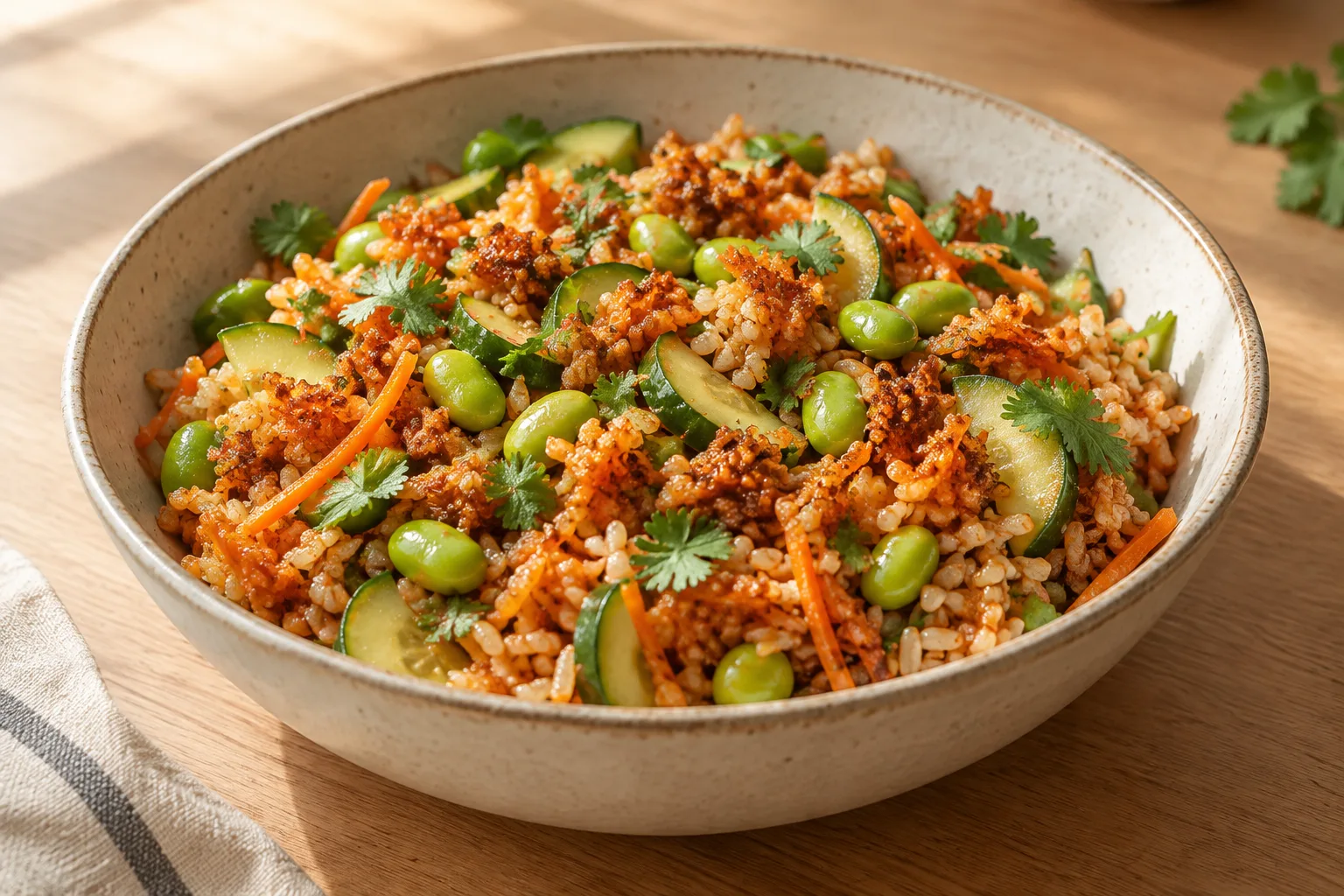
- Category
- Sauces and condiments
- State
- Paste
- Usual unit
- tablespoon
What it is
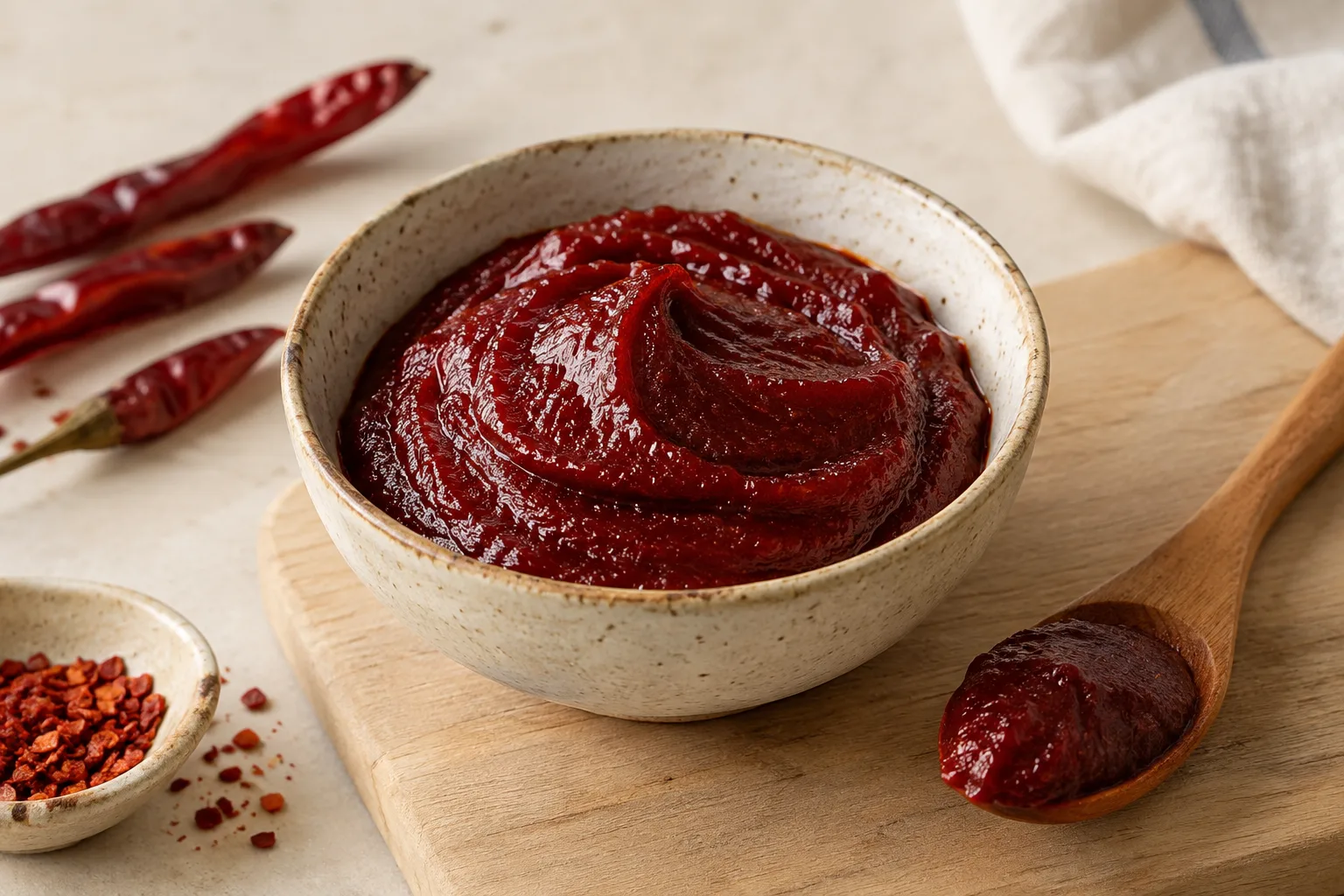
Gochujang is a thick, red Korean fermented seasoning paste. Its characteristic profile brings together chili and deep savory flavors, often described as spicy, sweet, salty and umami. Formulations vary: it is commonly associated with red chili, fermented soybeans, salt and rice or other grains, but the exact ingredients differ from product to product. It is not simply a thin chili sauce; its paste-like consistency makes it useful in marinades, sauces and cooked dishes. Some commercial versions also contain ingredients such as wheat, sesame or sugar. Check the package to confirm the ingredients and the product-specific directions for use and storage.
When to use it
Choose gochujang when you want to give a dish a combination of heat and savory depth, rather than chili heat alone. It can add character to noodle dressings, dipping sauces, marinades, stir-fries, soups and stews. It can also season rice or vegetables, or form the base of a sauce when combined with ingredients such as rice vinegar, soy sauce, honey or sesame oil. Different brands and varieties can vary in heat and sweetness, so taste and adjust the amount before adding more to the dish.
How to use it
Start with a small amount and mix it with other ingredients to spread the flavor and adjust the consistency. For a noodle dressing, for example, combine it with vinegar, soy sauce, a little sweetness and sesame oil; adjust the balance to taste and stir until smooth. You can also add it to a marinade, stir it into a stir-fry, or use it to season soups and stews. Its thick paste may need thinning if you want a more fluid sauce. Taste before adding more, because heat, sweetness and saltiness vary by product. Check the label for ingredients, allergens and directions for use.
Flavour and texture
Gochujang commonly tastes spicy, salty and deeply savory, with sweet and umami notes; the intensity differs among products. Its texture is thick and paste-like, so it adds body as well as flavor to sauces and marinades. Mixing it with liquids or other seasonings makes it easier to distribute. Taste the product you have before adjusting the rest of the dish.
How to choose it
Look for a package that clearly identifies the product, its ingredients and directions for use. Formulations and heat levels vary; check any stated heat description and choose a product that suits your preference and intended dish. Also review the allergen information: some formulations contain soy, wheat or sesame, and recipes are not identical across all products.
Storage
The available information does not support one storage instruction for every package. Follow the storage and use directions printed on the specific product, including any special instructions from its manufacturer. Check the package date and directions as well; do not assume all brands have the same storage requirements after opening.
Substitutions
There is no direct substitute established here that reproduces gochujang’s combination of heat, sweetness and savory depth. In an onion or fennel confit, it can be used instead of chutney or pickles, with a shift toward a spicy, savory profile. Mixing it with doenjang makes ssamjang, a different sauce that can serve as an alternative accompaniment but is not a replica of gochujang.
Common mistakes
Treating every brand as if it has the same heat, sweetness or saltiness can throw off a dish. Start with a little and adjust after tasting. Another mistake is using the thick paste undiluted when a recipe needs a fluid sauce. Do not assume every product has the same ingredients or allergens: check the package each time.
Safety and allergens
Read the package to check ingredients, allergens, directions for use and storage conditions. Formulations vary, so the label is the reference for the product in hand. If you have an allergy or intolerance, do not rely on the ingredient name alone; check the ingredient list and allergen information.
Culinary uses
- Condimento picante y sabroso
- Base para salsas, marinados y guisos
Recommended techniques
- Mezclar con líquidos o condimentos para hacer aliños y salsas
- Incorporar a marinados
- Añadir a salteados, sopas o guisos
Pairs well with
- Fideos y noodles
- Arroz
- Carnes
- Verduras
- Tofu
- Vinagre de arroz, salsa de soja y aceite de sésamo
Frequently asked questions
What does gochujang taste like?
It commonly combines heat, saltiness, sweetness and umami, although the balance and intensity depend on the product and its formulation.
How can I use gochujang?
Mix small amounts with other ingredients for sauces and dressings, or add it to marinades, stir-fries, soups and stews.
Does every gochujang contain the same allergens?
No. Recipes vary, and some formulations contain soy, wheat or sesame. Always check the label of the product you plan to use.
How should I store it after opening?
Follow the storage and use directions on the package; a single instruction cannot be assumed for every brand.
Estimated nutrition
- Fat
- 5.56 g
- Saturates
- 0 g
- Carbohydrate
- 38.9 g
- Sugars
- 16.7 g
- Fibre
- 0 g
- Protein
- 5.56 g
- Salt
- 6.1 g
Sources and review
Automatically researched, cross-checked and validated content. Sources consulted:
- Aesan - Agencia Española de Seguridad Alimentaria y Nutrición aesan.gob.es
- En el etiquetado alimentario hay algunas menciones que son obligatorias eletiquetadocuentamucho.aesan.gob.es
- Client Challenge doi.org
- Cultivo del manzano mapa.gob.es
- Gochujang Recipe | Institute of Culinary Education ice.edu
- Korean Cuisine Guide: Flavors, Techniques & Traditions - Escoffier escoffier.edu
- Nutrition | Label - Gochujang Sauce nutrition.umd.edu
- Gochujang (고추장) | 한국 음식 sites.gsu.edu
- (PDF) Gochujang (Korean red pepper paste): A Korean ethnic sauce, its role and history academia.edu
- The great gochujang guide www-ft-com.ezp-prod1.hul.harvard.edu
- Gochujang: qué es y cómo usarlo | Gastronosfera gastronosfera.com
- Cocinamos con gochujang | CocinaSinReceta.com cocinasinreceta.com
- ▷ Gochujang: el condimento picante total viene de Corea | Blog de Cocina Internacional mercadoflotante.com
- Gochujang: qué es y cómo usar este condimento coreano excelenciasgourmet.com
- Gochujang - Receta Coreana Tradicional | 196 flavors 196flavors.com