- Category
- Nuts and seeds
- State
- Dry
- Usual unit
- g
What it is
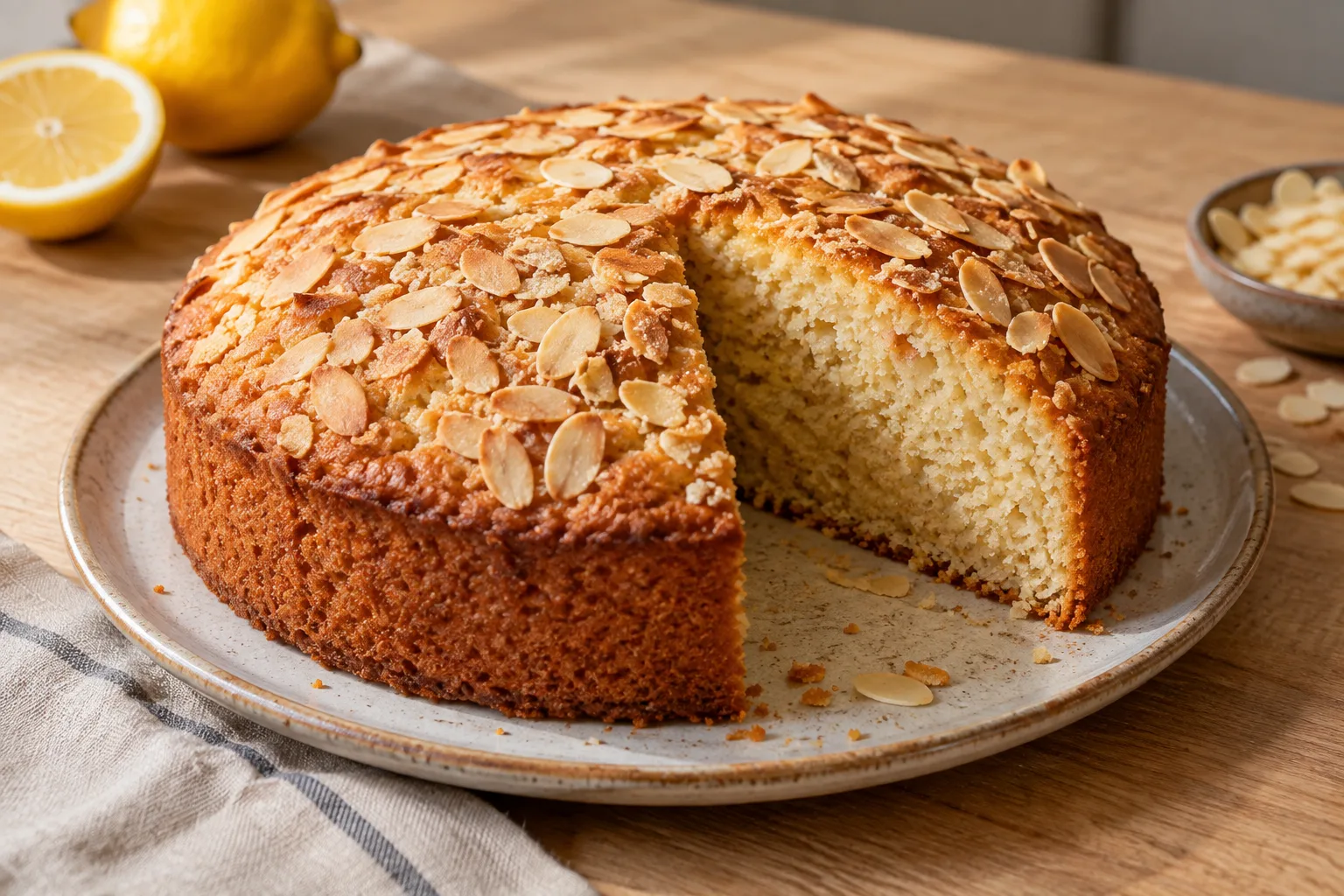
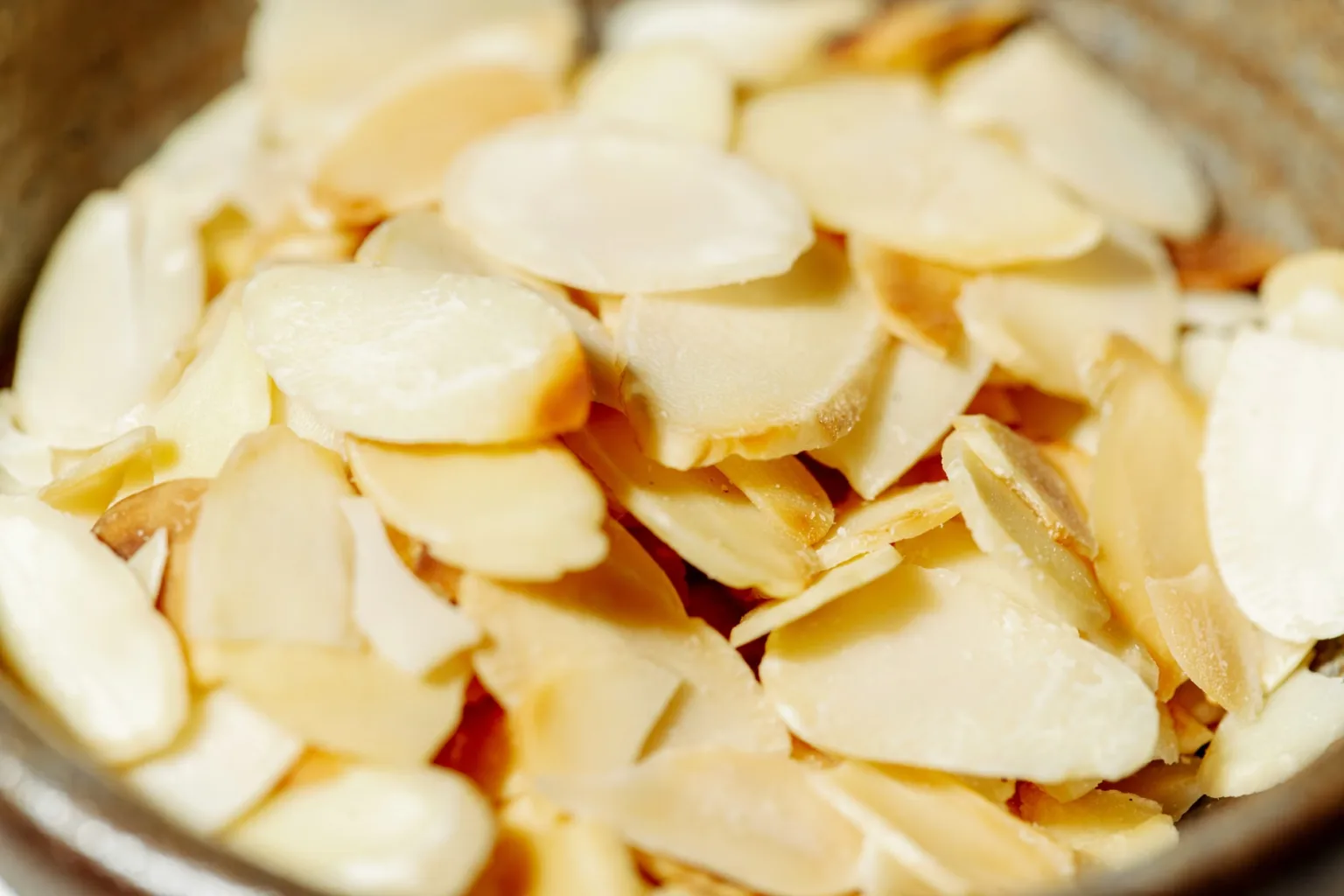
Ground or chopped almonds are edible almonds broken into particles of different sizes. Depending on the product, the skins may be left on or removed, so color and appearance can vary. Finely ground almonds can resemble flour, while chopped almonds retain distinct pieces. The two forms do not necessarily behave alike in a recipe: particle size changes the final texture. They are used in both baking and savory cooking, and can be added to batters, creams, soups, and sauces. This profile covers dry almonds that have already been ground or chopped, not fresh almonds or almond paste.
When to use it
Choose ground almonds when you want them to blend into a batter, cream, or sauce, or contribute body to a preparation. Chopped almonds are a better choice when you want visible pieces and a crunchy contrast in salads, meat or fish dishes, and toppings. In baking, ground almonds are used in cakes, biscuits, and other preparations; the texture you want helps determine whether to use a fine or coarse grind. They can also be added to soups and savory sauces. Check which form the recipe calls for, since swapping powder for pieces can change consistency.
How to use it
First check the texture specified in the recipe: very finely ground almonds blend more readily into batters, while chopped almonds leave visible pieces and a crunchy bite. Add them to cakes, biscuits, and other baked goods, or mix them into sauces, soups, and stews for flavor and body. For a finishing touch, sprinkle chopped almonds over salads or savory dishes when you want textural contrast. Almonds may also be toasted to bring out roasted notes, then used in the intended preparation. Do not assume almond can replace another flour in the same proportion: recipes respond differently, and a substitution can change the consistency.
Flavour and texture
Almonds have a mild, characteristic flavor with a gentle sweetness; toasting emphasizes their roasted notes. Fine grinding gives a uniform or slightly grainy texture, depending on the product. Chopped almonds add distinct pieces and crunch, so they do not give the same result as powder.
How to choose it
Choose the format to suit the recipe: fine ground almonds for blending in, chopped almonds for distinct pieces. Check the ingredient list and allergen information on the package, especially when cooking for someone with an allergy. If appearance matters, check whether the almonds are blanched or retain their skins, as these forms can differ in color and texture.
Storage
Keep almonds in a tightly closed container in a cool, dry place, protected from light. Follow the package storage directions, since the specific product may have its own instructions. For homemade ground almonds, one source recommends an airtight container in the refrigerator. Discard the product if it appears spoiled or the package says it should no longer be used.
Substitutions
Coconut flour is suggested as an alternative in some baking recipes, but it is not a universal replacement and should not be assumed to work in the same amount. Ground hazelnuts may suit some preparations if a different flavor is welcome; the result depends on the recipe. Use a tested recipe for substitutions and do not assume the textures are identical.
Common mistakes
A common mistake is treating fine ground almonds and chopped almonds as interchangeable: one blends in more readily, while the other leaves pieces. A direct swap with another flour can also fail because it may change consistency. Check the format, follow the recipe, and review allergen information.
Safety and allergens
Almonds can cause an allergic reaction. If you or someone you are cooking for has an almond allergy, do not use them and check the product's allergen information; allergen information matters for both packaged and non-prepacked food.
Culinary uses
- Ingredient for baking and pastry
- Texture and body for sauces, soups, and stews
- Crunchy garnish for salads and savory dishes
Recommended techniques
- Grinding to a fine or coarse texture
- Chopping for a distinct, crunchy bite
- Toasting to develop roasted aromas
- Blending into batters, sauces, and soups
Pairs well with
- Orange and lemon zest
- Chocolate, coffee, and vanilla
- Peaches, cherries, and plums
- Olive oil, garlic, and bread in savory preparations
Frequently asked questions
Are ground and chopped almonds the same?
Not necessarily. Ground almonds are usually finer and blend in more readily; chopped almonds retain pieces. Use the form specified by the recipe.
Are ground almonds the same as fine almond flour?
The names may be used for products with different textures and forms. Check the grind and whether the skins remain rather than assuming all products are identical.
How should ground almonds be stored?
Keep the package tightly closed in a cool, dry place away from light, and follow the manufacturer's directions. For homemade ground almonds, one source recommends an airtight container in the refrigerator.
Sources and review
Automatically researched, cross-checked and validated content. Sources consulted:
- En el etiquetado alimentario hay algunas menciones que son obligatorias eletiquetadocuentamucho.aesan.gob.es
- Aceituna - Wikipedia, la enciclopedia libre es.wikipedia.org
- Client Challenge doi.org
- Aesan - Agencia Española de Seguridad Alimentaria y Nutrición aesan.gob.es
- Variedades de almendras - Guía de tipos, calidades y abastecimiento | Nutrada nutrada.com
- Almendra: usos, variedades y combinaciones en pastelería pastrypedia.net
- Almendros y almendras - Gastronomía - Región de Murcia Digital regmurcia.com
- Redescubre la almendra, el fruto seco más popular: sus propiedades, usos en la cocina y cinco recetas para disfrutarla directoalpaladar.com
- ▷ Recetas con harina de Almendra: Recetas Saladas Fáciles | Blog turronesydulces.com
- Almendra, la bomba de salud que es la base de la cocina dulce mediterránea lavanguardia.com
- Almendra procesada, lo que debes saber para conocer este fantástico producto | Almendras de la mancha almendrasdelamancha.com
- Harina de Almendras vs. Almendra Molida: ¿Son Realmente lo Mismo? Un Análisis Exhaustivo para Pasteleros pasteleriamarianohernandez.es
- Harina de almendra, sus beneficios y usos en la cocina abc.es
- La Almendra: Un Tesoro Nutricional y Culinario formacionavanzadaeuropea.com
- almendra molida - 4,330 recetas caseras- Cookpad cookpad.com
- Almendra Molida sucesoresdeignaciolopez.com
- Almendra molida - Gastronomía Vasca: Escuela de Hostelería Leioa gastronomiavasca.net
- ¿Por qué ingrediente puedo sustituir la almendra molida en reposteria? - Gallina Blanca gallinablanca.es