- Category
- Fish and seafood
- State
- Fresh
- Usual unit
- g
What it is
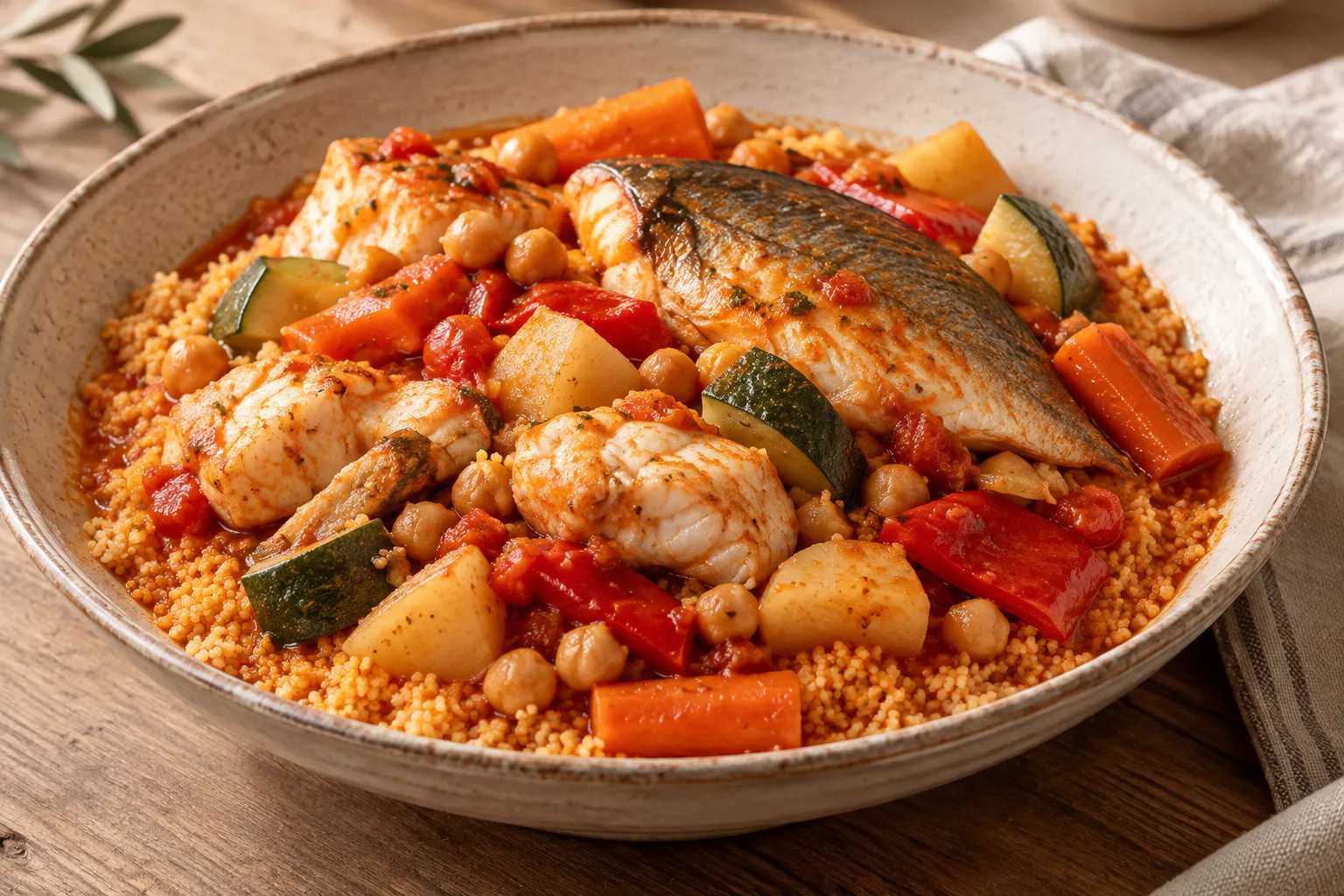
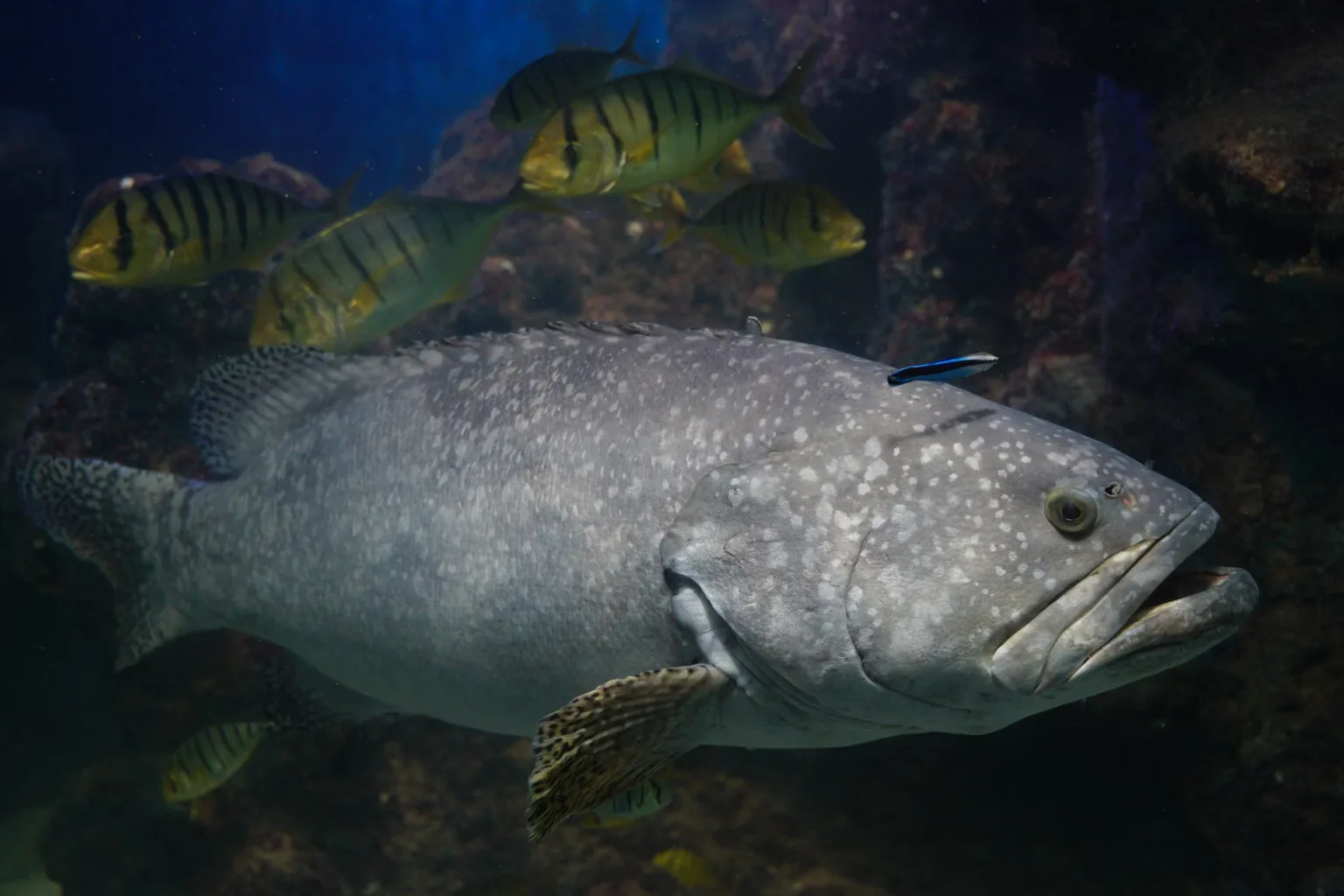
Grouper is a marine fish sold whole or in slices and used in both simple meals and more elaborate dishes. Culinary descriptions characterize its flesh as white, fine, and mild, with a delicate texture; other descriptions note a consistency suited to several cooking methods. It can be grilled or pan-cooked, baked, fried, coated and fried, or cooked en papillote. Grouper is also used in seafood soups and stews: one culinary source notes that its bones contribute flavor and a gelatinous quality to the broth. The common name can refer to different species or market offerings, so this profile sticks to general culinary characteristics and does not assign a specific season.
When to use it
Choose grouper when you want a mild-flavored fish that can be the focus of a meal without requiring a strongly flavored sauce. Slices or portions can be grilled, baked, fried, or cooked en papillote; the fish can also be used in seafood stews and soups. Pair it simply with lemon, parsley, and olive oil, or use tomato, peas, onion, garlic, and white wine in a fuller dish. Since cut thickness and presentation affect the result, choose a form that suits the recipe you have in mind.
How to use it
First decide whether you want to keep the fish’s delicate flavor prominent or include it in a dish with more accompaniments. For a simple preparation, pan-cook or grill a portion, wrap it en papillote, or bake it. Frying or coating the fish before frying gives it a different exterior. In soup or seafood stew, grouper can cook with the other ingredients; a culinary source notes that its bones add flavor and a gelatinous quality to broth. Pairings described for this fish include lemon, parsley, and olive oil, as well as tomato, peas, onion, garlic, paprika, and white wine. Match the cut and method to the recipe, and follow the product’s directions.
Flavour and texture
Culinary descriptions characterize grouper as having white, fine, delicate flesh and a mild flavor. That restrained taste works with simple seasonings or with more pronounced sauces and accompaniments. Its flesh is also described as having a consistency suitable for frying. In soups and stews, the bones can contribute flavor and a gelatinous quality to the broth.
How to choose it
Grouper may be sold whole or cut into slices. One market guide suggests looking for a shiny appearance, intensely red gills, clear-looking eyes, and a flexible tail. Consider those cues alongside the fish’s overall condition and the seller’s information; the cited source presents them as buying observations, not as a single guarantee of quality.
Storage
The available evidence does not specify storage times or temperatures for fresh grouper. Follow the seller’s and package’s storage directions, where provided, and consult official local food-safety guidance. Do not use this profile to determine how long to keep the fish: appropriate storage can depend on how the product has been handled and sold.
Substitutions
If grouper is unavailable, another mild white fish may suit a similar recipe. The result may differ because texture, thickness, and firmness are not necessarily the same. Choose a fish suitable for the method—grilling, baking, frying, or soup—and adapt the cut and cooking to that fish’s instructions.
Common mistakes
Do not assume every cut will cook or handle the same way: a thick slice and a thin portion are not interchangeable without adjusting the preparation. For a simple dish, avoid letting accompaniments overwhelm the fish’s mild flavor. When buying, consider the overall appearance and available product information rather than relying on one cue alone.
Safety and allergens
Grouper is fish. If you have a fish allergy, check the product information and consult a healthcare professional if you have questions. For handling and storage, follow official local guidance and the seller’s or package’s directions; the available evidence provides no additional ingredient-specific warning.
Culinary uses
- Main-course fish
- Fish for soups and seafood stews
Recommended techniques
- Grilling or pan-cooking
- Baking or cooking en papillote
- Frying or coating and frying
- Adding to soups and stews
Pairs well with
- Lemon, parsley, and olive oil
- Tomato and peas
- Onion, garlic, paprika, and white wine
Frequently asked questions
What does grouper taste like?
It is described as mild and delicate, so it works with simple seasonings as well as sauces and accompaniments.
How can grouper be cooked?
The preparations described include grilling, pan-cooking, baking, en papillote, frying, coating and frying, soups, and seafood stews.
What goes well with grouper?
Described pairings include lemon, parsley, and olive oil, as well as tomato, peas, onion, garlic, paprika, and white wine.
Estimated nutrition
- Fat
- 0.88 g
- Saturates
- 0 g
- Carbohydrate
- 0 g
- Sugars
- 0 g
- Fibre
- 0 g
- Protein
- 19.5 g
- Salt
- 0.13 g
Sources and review
Automatically researched, cross-checked and validated content. Sources consulted:
- REGLAMENTO (UE) No 1169/2011 DEL PARLAMENTO ... eletiquetadocuentamucho.aesan.gob.es
- Client Challenge doi.org
- Preparing an Emergency Food Supply, Long Term Food Storage | Food Preservation | Food | Extension | UGA FACS fcs.uga.edu
- Aplicaciones de la Biotecnología en Seguridad Alimentaria aesan.gob.es
- Kitchens/Co-Packers | CALS cals.cornell.edu
- Food Access Research Atlas | Economic Research Service guides.ucf.edu
- PART 4: ACCESS AND STORAGE TASK LIST ssec.si.edu
- Food Incubator/ Public Commercial Kitchen Briefing 2024 idm.uni.edu
- Delivering to deserts: New data reveals the geography of digital access to food in the U.S. | Brookings brookings.edu
- FSN 209 - Principles of Food Preparation and Safety - catalog.life.edu
- Data Products | Economic Research Service guides.lib.purdue.edu
- Arnold Wong ’84 | SHC shcp.edu
- Recreational Lead Chef & Operations Manager | Institute of Culinary Education ice.edu
- Mero- Gastronomía - Región de Murcia Digital regmurcia.com
- El mero, sus características y propiedades - El Blog de Mariskito mariskito.com
- Mero o cherna | Curiosidades y cómo prepararlo | Pescados y mariscos | EROSKI CONSUMER pescadosymariscos.consumer.es