- Category
- Fruit
- State
- Preserved
- Usual unit
- g
What it is
Guava jam is a sweet preserve made from guava. In cooking, it may be a soft spread or a thicker guava sweet, depending on the recipe and the fruit used. It is not quite the same as guava paste, which is dense and moldable, or guava sauce, which is made loose enough to drizzle over desserts. A guava preparation can be used in different forms, but its final consistency depends on how it is cooked and on the characteristics of the fruit. Product names and textures therefore matter when choosing one for a particular dish.
When to use it
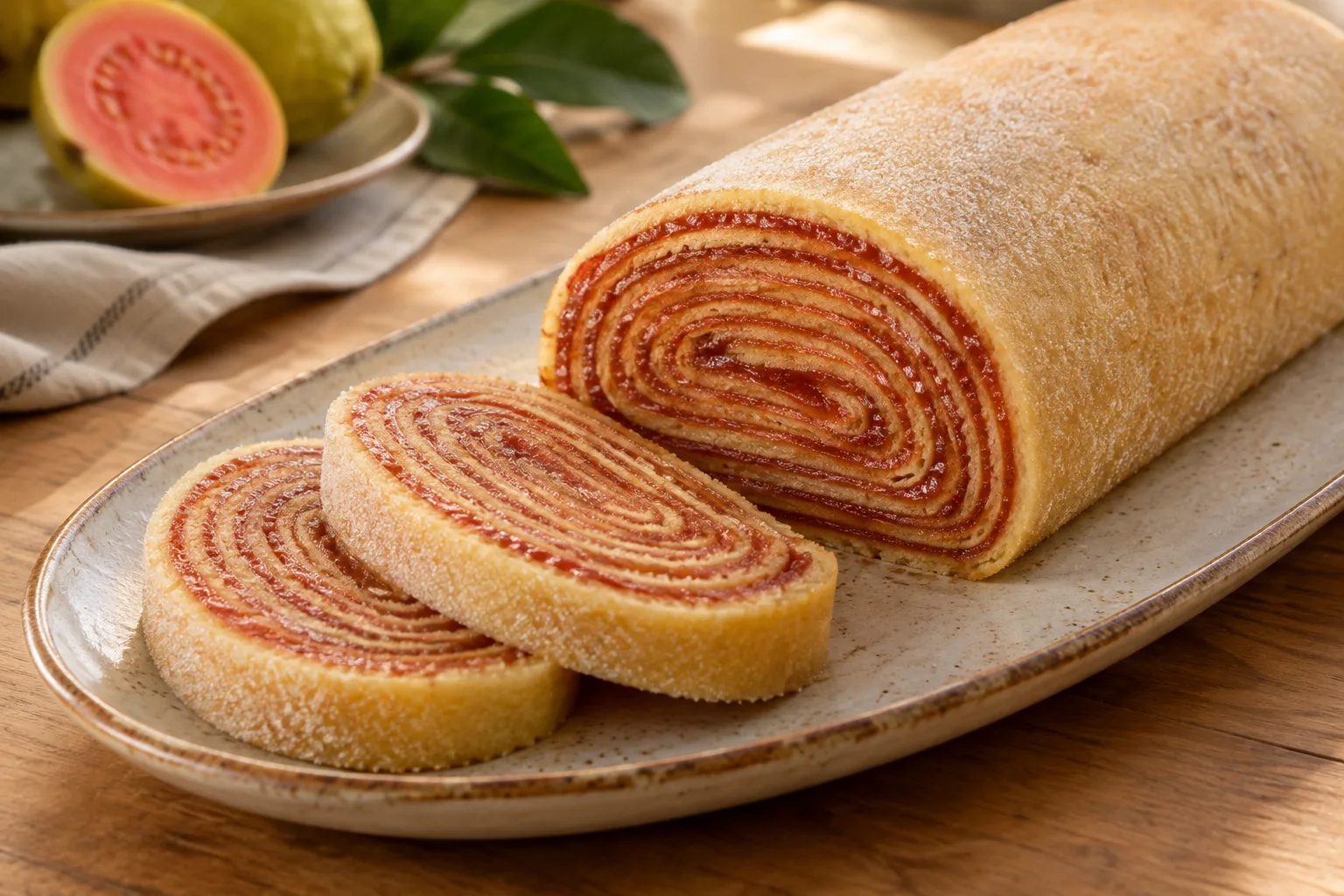
Use guava jam when you want a sweet, fruity spread for toast or biscuits, or a guava filling for cakes and pastry. It can also be served with white cheese as a snack. If you need a topping that drizzles over dessert, choose a looser version or use guava sauce; if you want a guava sweet that can be cut or shaped, choose firmer guava paste.
How to use it
Spread it on bread, biscuits or a pastry base, or use it as a filling in cakes and other baked preparations. For a simple snack, serve it with white cheese and a biscuit. It can also go into wrapped sweet pastries such as guava empanadas, or provide a starting point for a barbecue-style sauce. If a preparation is too firm for your intended use, one guava recipe suggests reheating it and adding a little water to adjust the consistency. Follow the recipe rather than assuming a fixed amount will suit every product.
Flavour and texture
Guava jam tastes sweet and fruity, with guava as its defining flavor. Its texture can range from soft and spreadable to thick. Guava paste is firmer and moldable, while guava sauce is made to be pourable. Color and consistency can vary among products and fruit varieties.
How to choose it
Check the product name and description to distinguish guava jam, paste and sauce: their main practical difference is consistency and intended use. Guava varieties can produce different results. If you need a filling that holds its shape, look for a denser preparation; for a dessert topping, choose a looser one.
Storage
Follow the storage directions on the package, since the available evidence does not establish one universal shelf life or storage condition for every commercial product. Keep the jar closed and use a clean utensil when serving to reduce contamination. For home-canned preserves, do not assume that filling and closing a jar is enough; use a tested recipe and safe canning procedure.
Substitutions
For a firmer result, guava paste can replace jam; for a pourable topping, choose guava sauce. These are different forms of guava rather than identical substitutes, so adapt the amount and application to the consistency your recipe needs.
Common mistakes
Do not treat guava jam, paste and sauce as if they had the same texture: one may spread, another may be cut, and another may drizzle. Avoid a very firm product for a flowing topping or a very loose one for a filling that needs to hold its shape.
Safety and allergens
Follow the package directions. When making preserves at home, use a tested recipe and safe canning method; do not rely on simply filling and closing a jar.
Culinary uses
- sweet spread
- pastry and cake filling
- dessert topping or sauce base
Recommended techniques
- spread on bread or biscuits
- use as a filling in pastries and cakes
- warm and loosen into a pourable dessert sauce
Pairs well with
- fresh white cheese
- bread and biscuits
- cakes and pastries
- barbecue-style sauces
Frequently asked questions
How is guava jam different from guava paste?
Jam is generally softer and spreadable. Guava paste is denser and can be shaped or cut.
What can I serve with guava jam?
Spread it on bread or biscuits, use it in cake and pastry fillings, or serve it with white cheese.
Can guava jam be used as a dessert sauce?
It can be used as a starting point, but a pourable consistency works best for drizzling. Guava sauce is made to be poured over desserts.
Estimated nutrition
- Fat
- 0 g
- Saturates
- 0 g
- Carbohydrate
- 73.3 g
- Sugars
- 53.3 g
- Fibre
- 0 g
- Protein
- 0 g
- Salt
- 0.02 g
Sources and review
Automatically researched, cross-checked and validated content. Sources consulted:
- ¿Por qué la muerte es origen de miedos y tabúes? doi.org
- Dictionary of Health Related Terms: English – Spanish hia.berkeley.edu
- The Distributional Consequences of Large Devaluations fordschool.umich.edu
- Casola Dining Room Menu | SUNY Schenectady sunysccc.edu
- Dulce de Guayaba [Video+Receta] Mermelada y Pasta cocinadominicana.com
- Vamos a Conservar Alimentos: Mermeladas, jaleas y compotas extension.psu.edu
- Jams, jellies and preserves with no added pectin | OSU Extension Service extension.oregonstate.edu
- Characterization and use of Mangifera indica L. seeds from four varieties :: BioResources bioresources.cnr.ncsu.edu
- Pasos para preparar una rica mermelada de guayaba con especias - Burbujas de Recuerdos Blog burbujasderecuerdos.blogspot.com
- Mermelada de guayaba del Brasil o feijoa - Pepekitchen pepekitchen.com
- Comprar Mermelada de guayaba artesanal- Huerta Tropical huertatropical.com