- Category
- Fruit
- State
- Paste
- Usual unit
- g
What it is
Guava paste is a compact preparation made from guava. Unlike a looser sauce or jam, it may be sold as a block that can be cut into portions; firmness can differ between products. It is eaten as a sweet and used as an ingredient in fillings and other recipes. Some descriptions of guava products mention concentrated fruit and sugar, but recipes and labels can vary, so do not assume every brand has the same ingredients. Check the package when you need to know the contents of a particular product.
When to use it
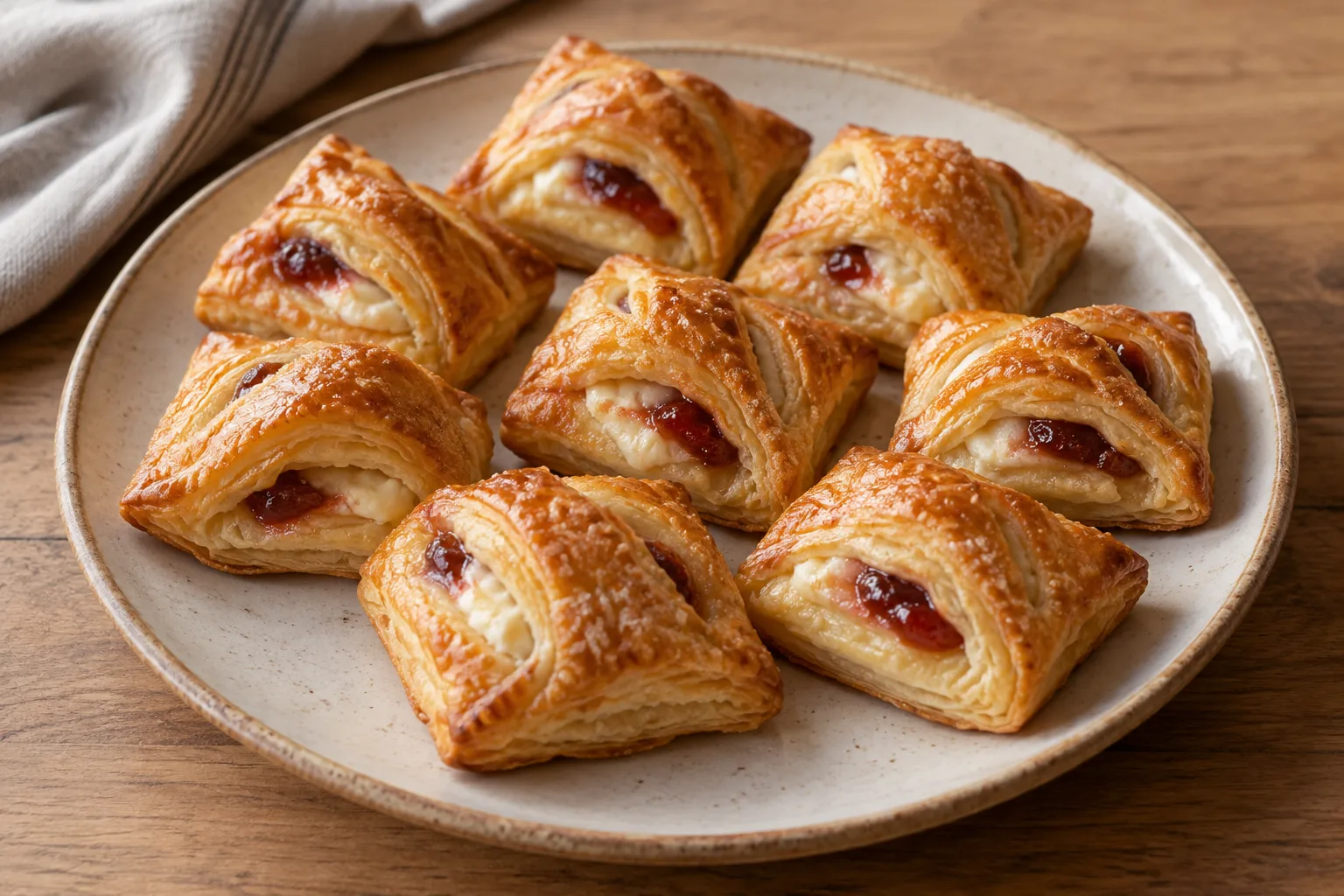
Use guava paste when you want a sweet, slightly tangy fruit flavor in a portion that is easy to handle, especially for baking, cheese snacks and desserts. It works in empanadas, cakes, cookies and rolled or puff pastry, or sliced beside cheese. It can also be incorporated into sauces for a guava note. Because paste is firmer than jam or sauce, use those alternatives only when their softer or more fluid texture suits the recipe.
How to use it
Cut the paste into slices or cubes to serve with cheese, bread or crackers, or to portion into a filling. For cakes, empanadas, cookies and puff pastry, place pieces in the dough and size them to suit the recipe and how the pastry will be sealed. Spread it if the product is soft enough; if you need it to blend into a warm preparation, gently warm only the amount needed until it softens, then stir it in. For a sauce or accompaniment, add it gradually and check the consistency, since paste and more fluid guava preparations do not behave in the same way.
Flavour and texture
Guava paste is described as sweet, intense and slightly tart, with a recognizable guava character. Its texture is dense and firm enough to cut or shape, and it can soften when warmed. Firmness and flavor may differ among products, so taste a small portion before adjusting a recipe.
How to choose it
Look for a product labeled guava paste and check its package for ingredients, format and the maker’s directions. Paste is generally firmer than guava jam or sauce, but texture can vary; choose according to whether you want to slice portions, spread it or make a filling. If a recipe depends on a particular consistency, do not assume every product will behave alike.
Storage
The available evidence does not establish a universal shelf life or storage condition for every guava paste product. Follow the package directions for the specific product and check its label for instructions after opening. Keep it protected and use clean utensils when serving; do not infer its usable life from its firm texture alone.
Substitutions
Guava jam may work in some recipes, but it is generally softer than paste. Reduced guava sauce can also provide guava flavor, though it may be more fluid. Add either alternative gradually and adjust the filling’s consistency; do not assume it can be swapped in the same quantity or will hold the shape of the paste.
Common mistakes
Treating guava paste, jam and sauce as interchangeable can change a recipe’s texture: they are distinct preparations. Do not expect jam or sauce to keep the shape of a block when sliced or used as a structured filling. Avoid adding a fluid substitute all at once, and check the label if you need to know the ingredients in a particular product.
Safety and allergens
The available sources provide no specific official safety warning for this ingredient. Follow the package directions and use ordinary food hygiene practices; check the ingredient list if you need to avoid a particular component.
Culinary uses
- relleno dulce
- acompañamiento para queso
- ingrediente para salsas
Recommended techniques
- cortar en rebanadas o cubos
- untar
- templar para ablandar o integrar
Pairs well with
- queso fresco o queso blanco
- masa de pastelería y hojaldre
- pan y galletas
Frequently asked questions
Is guava paste the same as guava jam?
Not necessarily. Paste is described as a dense preparation that can form a block, while guava jam is usually softer. That difference affects how each can be sliced or used as a filling.
What can I serve with guava paste?
Slice it and serve it with cheese, bread or crackers. It is also used as a filling for cakes, empanadas, cookies and puff pastry.
What can I use instead of guava paste?
Try thick guava jam or reduced guava sauce, but adjust the quantity and consistency: both may be softer or more fluid than paste.
Estimated nutrition
- Fat
- 0 g
- Saturates
- 0 g
- Carbohydrate
- 0.08 g
- Sugars
- 72 g
- Fibre
- 4 g
- Protein
- 0 g
- Salt
- 0.4 g
Sources and review
Automatically researched, cross-checked and validated content. Sources consulted:
- ¿Por qué la muerte es origen de miedos y tabúes? doi.org
- The Essential Glossary of Cooking Terms for the Culinary Arts - Escoffier escoffier.edu
- The traditional food of migrants scholar.smu.edu
- filling gender gaps: determining how traditional knowledge of experts.esf.edu
- Assessing Food Access in Oregon's Willamette Valley pdxscholar.library.pdx.edu
- Results of a Consumer Acceptance Test for Two Types of ... revistas.upr.edu
- NUTRITION IN ACTION Beans & Peas • Frijoles & ... stonybrookmedicine.edu
- Casola Dining Room Menu | SUNY Schenectady sunysccc.edu
- GUAVA BBQ SAUCE healthcare.utah.edu
- Pasta de guayaba: sabor tropical listo para tus recetas - Garpa Alimentación - Almacenamiento y Distribución para las Islas Canarias garpa-alimentacion.com
- - YouTube youtube.com
- Guayaba: propiedades, variedades y usos | Recetas Mexas recetasmexas.com
- Dulce de Guayaba [Video+Receta] Mermelada y Pasta cocinadominicana.com
- Guayaba como alimento – Botanical-online botanical-online.com