- Category
- Sauces and condiments
- State
- Paste
- Usual unit
- tablespoon
What it is
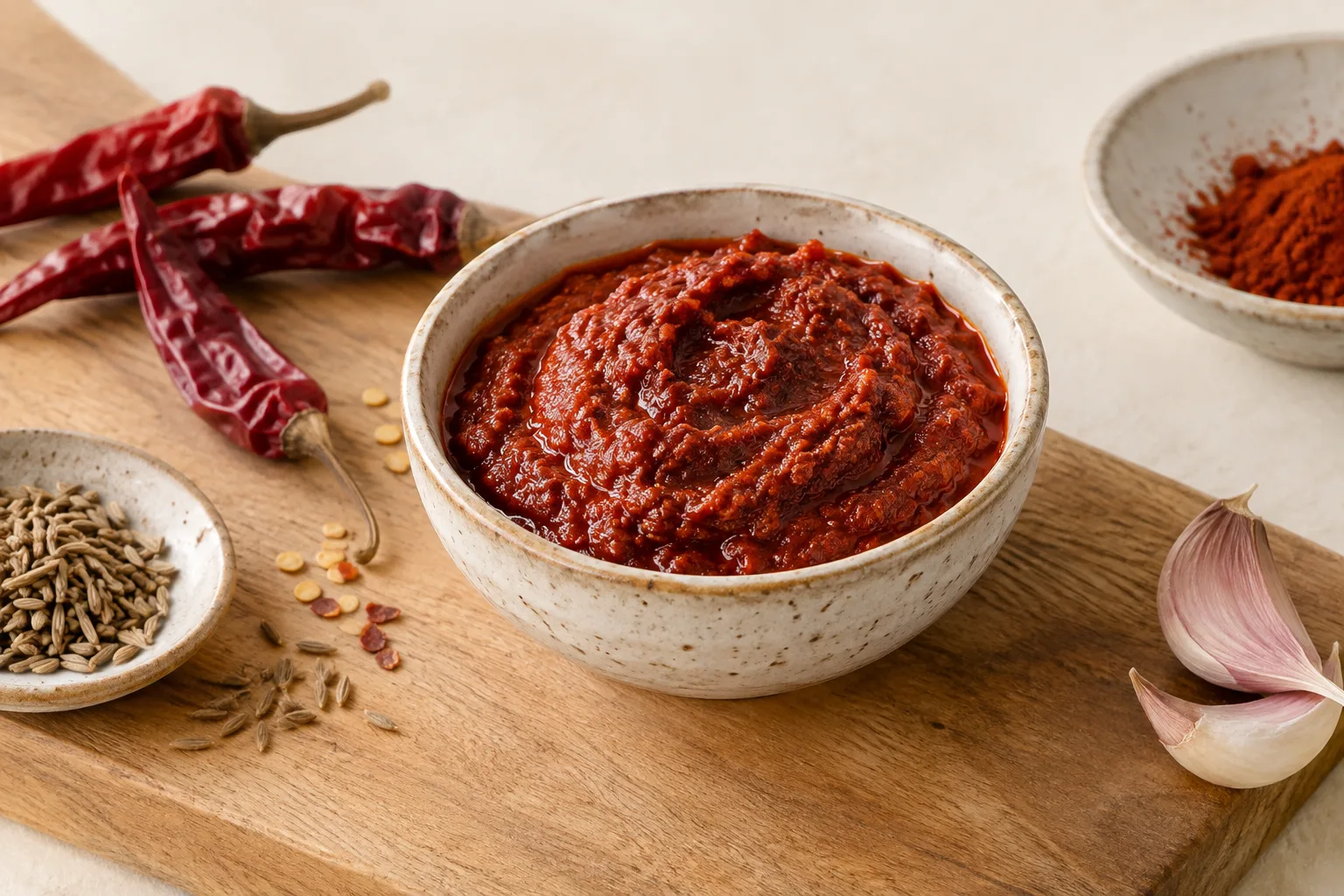
Harissa is a spicy condiment associated in the available sources with Maghrebi cooking, particularly Tunisian cuisine. The commonly described form is a paste made from red chiles and spices, which may include garlic, coriander, cumin or caraway, salt and oil; recipes and commercial products are not all alike. Some preparations include lemon and other seasonings, and dry harissa blends are also sold. Its color, consistency, ingredients and heat therefore depend on the version. In the kitchen, it works as a concentrated seasoning: a small amount can bring chile heat and aromatic flavor to a dish. Check the ingredient list of the specific product, especially if you need to avoid an ingredient.
When to use it
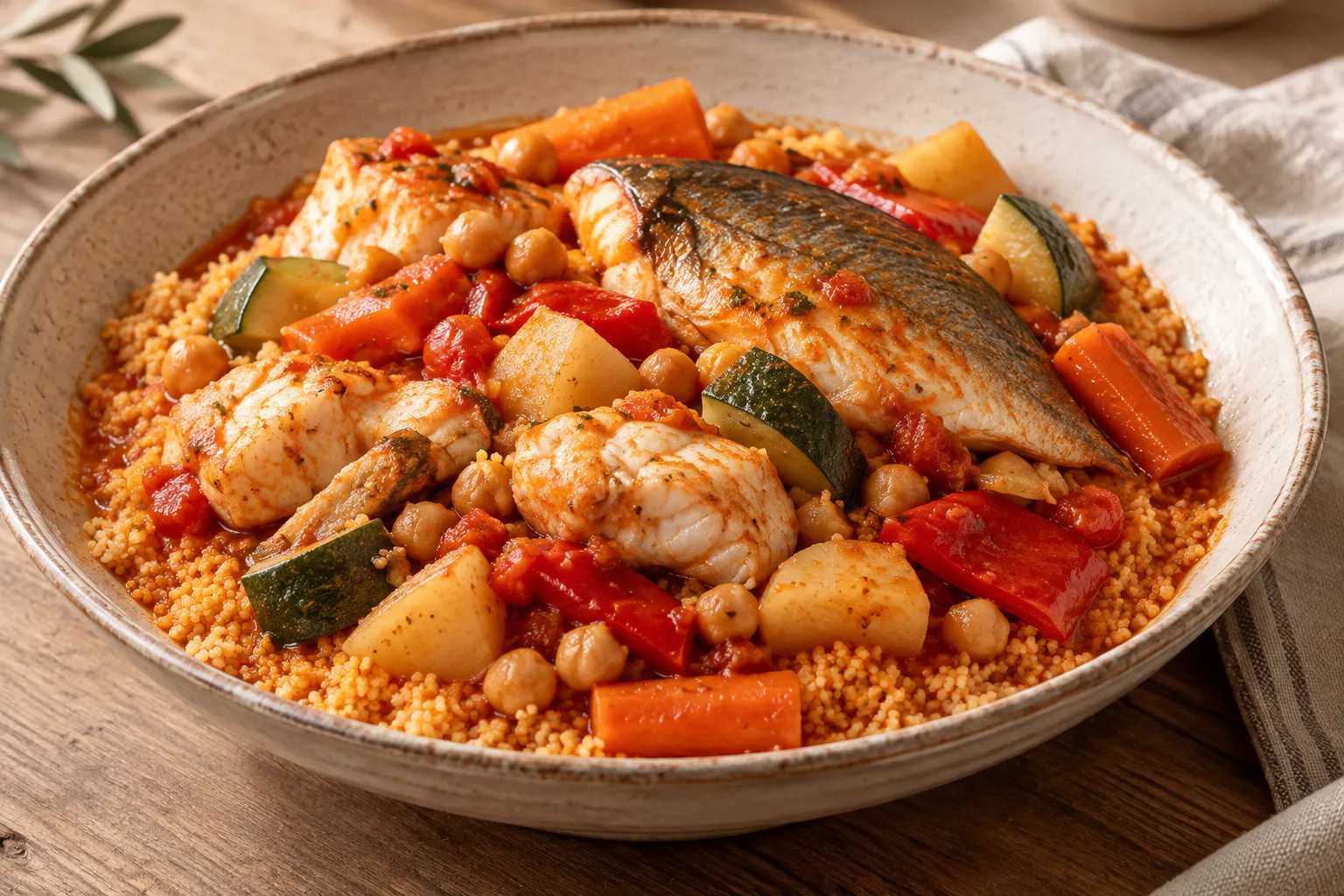
Use harissa when you want to add chile heat and spiced flavor to a dish, rather than treating it as a fixed quantity that can be exchanged identically in every recipe. It suits couscous, rice, pasta, vegetables, soups, stews, fish and meat; it can also season sandwiches or be stirred into a sauce. Because versions differ in heat and composition, start with a little, taste, and increase gradually. A paste can be stirred in during cooking or served as a condiment; a dry blend needs to be incorporated according to its form.
How to use it
Stir the paste if needed, then add a small amount to the sauce, stew or mixture you are preparing. Taste before adding more: harissas vary in heat and saltiness, and some versions contain additional ingredients. To use it in a marinade, combine it with the other marinade ingredients and coat meat, fish or vegetables before cooking, adjusting the heat to your preference. You can also stir it into soups, sauces, rice or pasta dishes, or serve it at the table as a condiment. If a recipe calls for dry harissa, do not assume that paste can be substituted spoon for spoon; check the specified form and adjust gradually.
Flavour and texture
Chile heat and aromatic spices are the main features; some versions are described as smoky. Garlic, coriander, cumin or caraway appear in different recipes, but there is no single universal formula. Paste is generally thick and easy to stir into sauces or spread, while dry blends have a different texture. Heat also varies from one product to another.
How to choose it
Choose the form your recipe calls for: harissa is sold as both paste and dry blends. Read the ingredient list because commercial recipes vary and may include, beyond chile and spices, oil, tomato, lemon, vinegar or other ingredients. Compare any heat guidance on the label and choose a level you can adjust in your cooking.
Storage
The available sources do not establish one storage rule for every harissa. Follow the instructions on the specific product label, including any direction to refrigerate after opening. Do not infer one brand’s shelf life from another product: formats and recipes can differ. For homemade preparations, use a clean container and follow storage guidance appropriate to the ingredients and method used.
Substitutions
A red chile paste with garlic and spices can approximate harissa’s flavor profile, but the heat and taste will depend on its ingredients. Dry harissa blends are also available; if using a spice blend, add it gradually and bear in mind that it may not provide the same texture or composition as a paste. Adjust to taste rather than making an automatic one-for-one swap.
Common mistakes
Adding a large amount before tasting is risky because heat varies from product to product. Another mistake is assuming every harissa contains the same ingredients or that a dry blend behaves like a paste. Read the label, add gradually, and adjust the heat and the rest of the dish’s seasoning.
Safety and allergens
Check the label for ingredients you need to avoid and follow the manufacturer’s storage instructions, especially after opening. Handle and taste the condiment in moderation: heat can be intense and varies by product.
Culinary uses
- Condimento picante para servir o añadir a platos
- Base concentrada para salsas, adobos y mezclas de sabor
Recommended techniques
- Mezclar poco a poco en salsas, sopas o guisos
- Incorporar a un adobo o untar sobre ingredientes antes de cocinarlos
- Añadir al final como condimento, ajustando la cantidad al picor deseado
Pairs well with
- Cuscús, arroz y pasta
- Verduras asadas y sopas de verduras
- Pescado y carnes
- Huevos y bocadillos
Frequently asked questions
Is harissa always a paste?
No. It is commonly sold as a paste, but dry harissa blends are also available. Check the form before following a recipe.
What is harissa made from?
Recipes vary. Commonly described ingredients include red chiles and spices such as garlic, coriander, cumin or caraway; some versions include oil or other ingredients. Check the specific product label.
How can I control the heat?
Start with a small amount, mix and taste before adding more. Heat is not uniform across brands or recipes.
Sources and review
Automatically researched, cross-checked and validated content. Sources consulted:
- Client Challenge doi.org
- The Essential Glossary of Cooking Terms for the Culinary Arts - Escoffier escoffier.edu
- CART 030: Whole Food Natural Cooking collegeofthedesert.edu
- La Fertilidad de la Tierra Revista de Agricultura Ecológica, ... mapa.gob.es
- Lemon Harissa Pollock extension.purdue.edu
- Harissa-Spiced Deviled Egg | Institute of Culinary Education ice.edu
- Funk Library Resources - Food Science & Human Nutrition - LibGuides at University of Illinois at Urbana-Champaign guides.library.illinois.edu
- Need some cooking inspiration? Try these winter comfort foods. | Stories | Oregon State University oregonstate.edu
- Harissa - Wikipedia, la enciclopedia libre es.wikipedia.org
- La guía de la mejor pasta, salsa y especias de Harissa en España chilli-no5.com
- Receta de salsa harissa - Recetas de Miriam García / El invitado de invierno invitadoinvierno.com
- Harissa espabilate.es
- Harissa Terre Exotique Picante 85 g cocinista.es
- Cómo hacer salsa harissa casera, receta picante de cocina árabe y de Túnez directoalpaladar.com
- Harissa: La Mezcla de Especias que Despierta los Sabores del Norte de África. - ALQUIMIA DE ESPECIAS abelion.ar