- Category
- Fish and seafood
- State
- Fresh
- Usual unit
- g
What it is
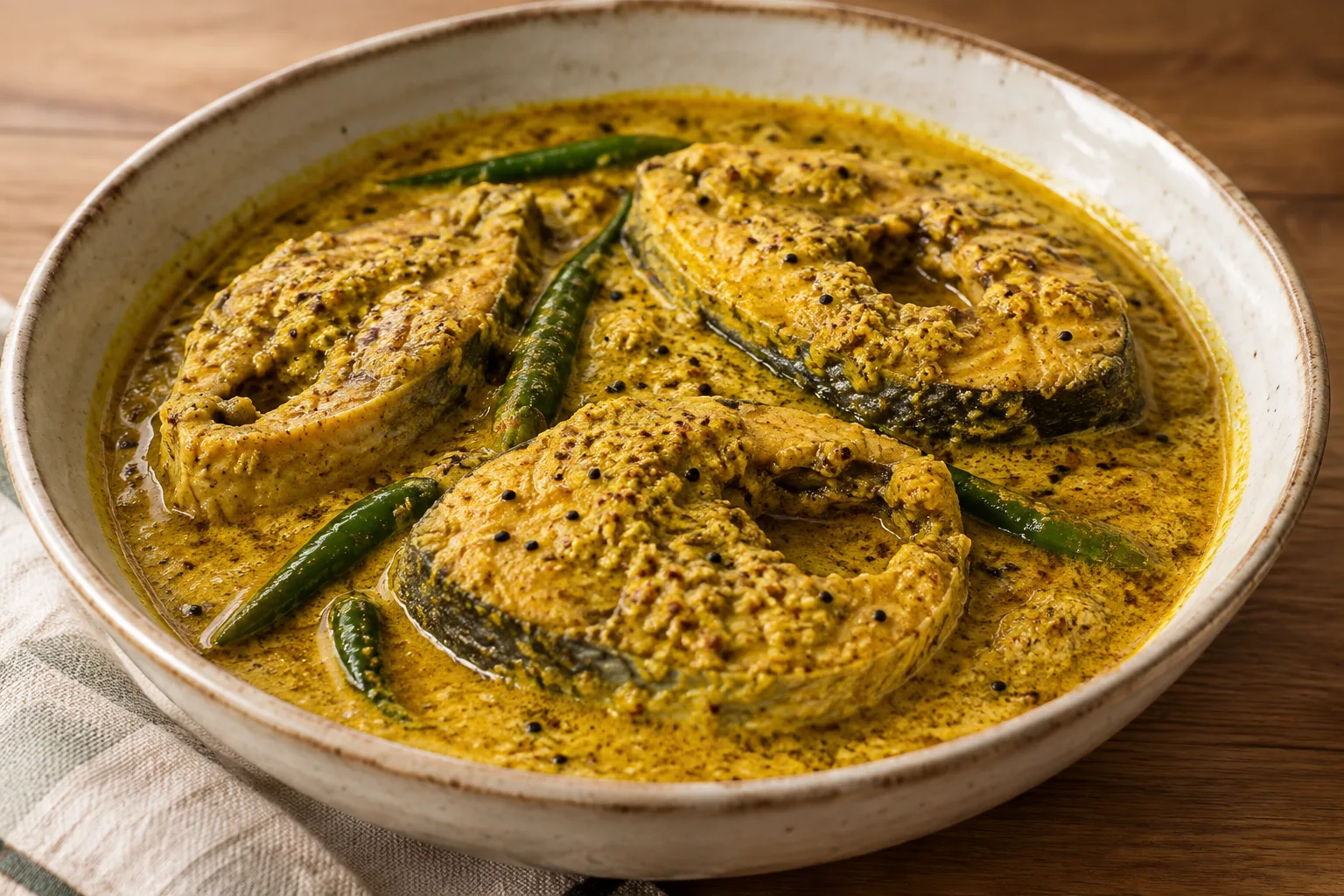
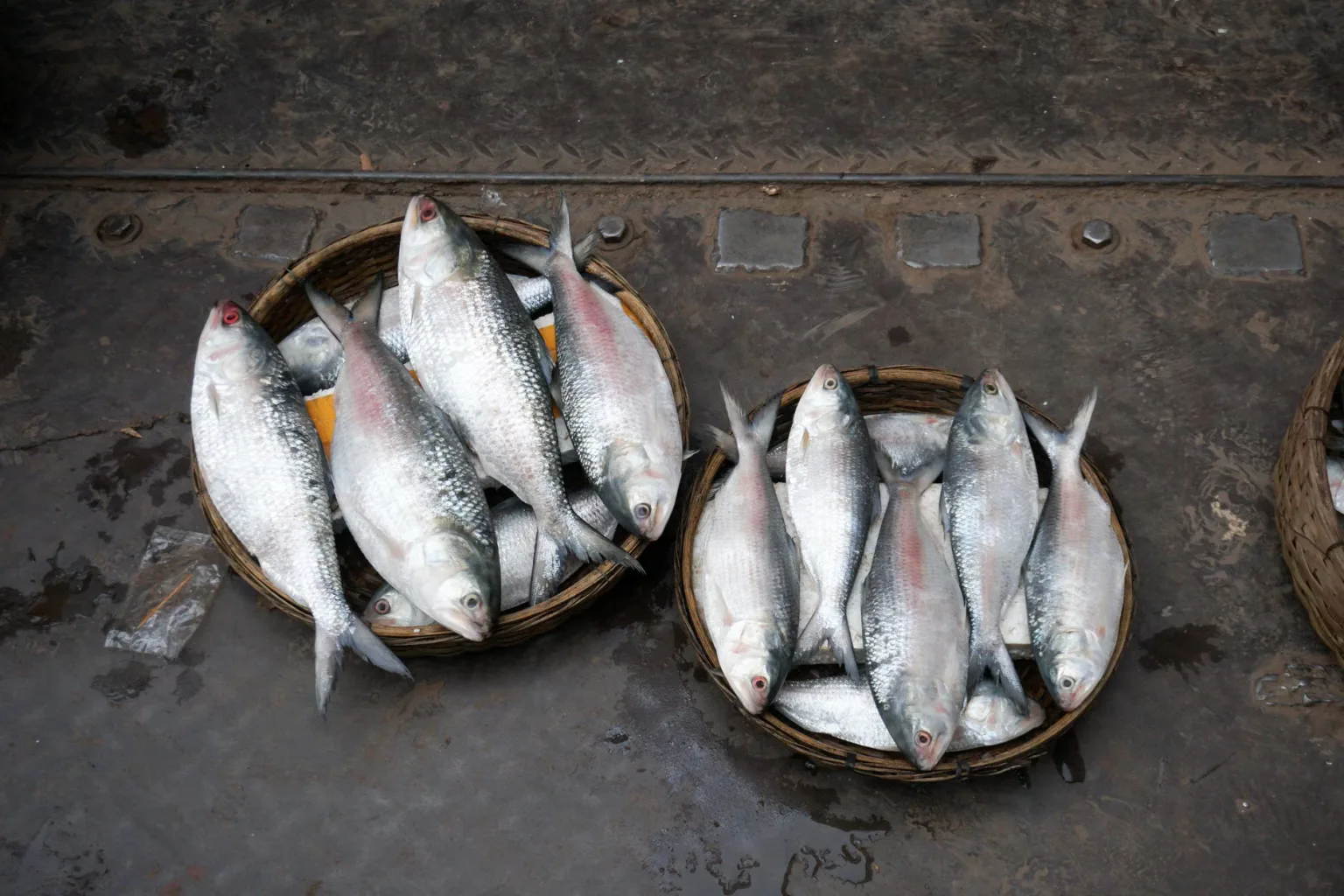
Hilsa, also called ilish in the supplied source, is identified as Tenualosa ilisha. The source describes it as a member of the Clupeidae family and an oily fish. Hilsa steaks here means cut portions of the fish, not a different species. The source says hilsa is valued for its distinctive flavour and texture and is used in Bengali cooking in curries, fried dishes and grilled preparations. It also describes cooking the fish in banana leaves by steaming, as well as a mustard-sauce preparation. The source does not specify the exact thickness, size or cut of these steaks, so check the product’s form with the seller before choosing a recipe.
When to use it
Choose steaks when you want fish in separate portions or pieces that are convenient to cook individually. The source describes hilsa in curries, fried, grilled and steamed in leaves, and mentions preparations with mustard and rice. Select a method to suit the dish you have in mind; the evidence does not establish one exclusive use or give instructions for every cut thickness. If your recipe calls for a particular cut or presentation, confirm with the fishmonger that the portions are suitable.
How to use it
Before cooking, check with the seller whether the steaks have been cleaned and are ready for your intended preparation; the available source does not give cleaning instructions or say how to remove bones. Documented cooking ideas include curry, frying, grilling, and steaming the fish wrapped in banana leaves. The source also describes a mustard-paste and green-chilli preparation, and rice cooked with hilsa. Adapt other ingredients to your recipe, and do not treat these mentions as complete instructions: the evidence provides no universal cooking times, temperatures or proportions. For safe handling and cooking, follow the package or supplier directions and local official guidance.
Flavour and texture
Hilsa is described as prized for its distinctive flavour and texture, but the source does not provide a detailed tasting description or establish how every steak will feel or taste. The skin is retained in the preparations described to enhance flavour and texture. Results also depend on the preparation; there is not enough evidence to assign an exact texture or intensity to every portion.
How to choose it
Check that the product is sold as hilsa and ask whether the pieces are steaks and are prepared for the use you have in mind. The evidence supplied does not provide reliable criteria for judging freshness, size, bones or visual quality, so do not present those as hilsa-specific rules. Ask the seller about origin, cut or prior preparation if you need those details, and check the package information.
Storage
The available evidence gives no specific storage conditions or time limits for hilsa steaks. Follow the package or seller’s storage directions and local official guidance for fish. If instructions are missing, ask the fishmonger before storing the product; do not infer a storage period from this profile or rely on an unstated rule.
Substitutions
The supplied evidence does not identify another fish as a direct substitute for hilsa or compare its flavour or texture with other species. If hilsa is unavailable, ask a fishmonger which fish might suit the preparation you plan to make and expect the result to differ. No alternative can be promised to reproduce hilsa’s characteristics.
Common mistakes
Do not assume all steaks have the same size, thickness or level of preparation: the source does not specify these. The recipe examples are not complete instructions, since no universal times, temperatures or quantities are provided. Avoid claiming an equivalent substitute or storage rules that are absent from the available evidence.
Safety and allergens
The supplied evidence contains no hilsa-specific official safety advice and gives no cooking temperatures or storage limits. Follow the package or supplier directions and local official guidance for handling and cooking fish; do not use this profile to determine times or temperatures.
Culinary uses
- Plato principal de pescado
- Ingrediente para curris y preparaciones bengalíes
Recommended techniques
- Freír
- Asar a la parrilla
- Cocinar en curry
- Cocinar envuelto en hojas y al vapor
Pairs well with
- Mostaza
- Arroz
- Chile verde
- Coco
Frequently asked questions
What fish is hilsa?
The source identifies it as Tenualosa ilisha, also called ilish, and places it in the Clupeidae family.
How can hilsa steaks be cooked?
The source mentions curry, frying, grilling and steaming the fish wrapped in banana leaves. It does not provide times or temperatures.
What ingredients are mentioned with hilsa?
The described preparations include mustard, green chilli, coconut and rice. These are recipe examples, not required ingredients for every dish.
Sources and review
Automatically researched, cross-checked and validated content. Sources consulted:
- Romanica Olomucensia : «¿Qué pinga es esto?». Usos disfemísticos en el español de Cuba doi.org
- ¿Qué es el maridaje de sabores? - Hostelería Benidorm hosteleriabenidorm.com
- Tipos de Maridaje: de afinidad o contraste | Bartalent Lab bartalentlab.com
- Qué es (y qué no es) la estadística, usos y abusos de una disciplina clave en la vida de los países y las personas | Estudios económicos doi.org
- Qué es el maridaje: tipos y consejos - Brandy Fundador brandyfundador.com
- Qué es el maridaje: El arte de lograr la armonía perfecta entre gastronomía y bebida | Grupo Dani García grupodanigarcia.com
- Pescado Hilsa de Bangladesh: Un plato tradicional remitly.com
- Harissa - Wikipedia, la enciclopedia libre es.wikipedia.org
- Maridajes poco habituales perfectos para winelovers - CestaShop cestashop.com
- Técnicas de maridaje de vinos - Bodegas Heredad Linares heredadlinares.com
- ¿Cómo hacer un maridaje perfecto? | SumiVin sumivin.com
- Elementos del maridaje. La textura. – Terroaristas, el Blog del VINO terroaristas.com
- Qué es la amilasa y para qué se utiliza en cocina | Gastronomía & Cía gastronomiaycia.com
- - YouTube youtube.com
- Blog de Magenis | Especias para cocina magenis.es