- Category
- Herbs and spices
- State
- Fresh
- Usual unit
- unit
What it is
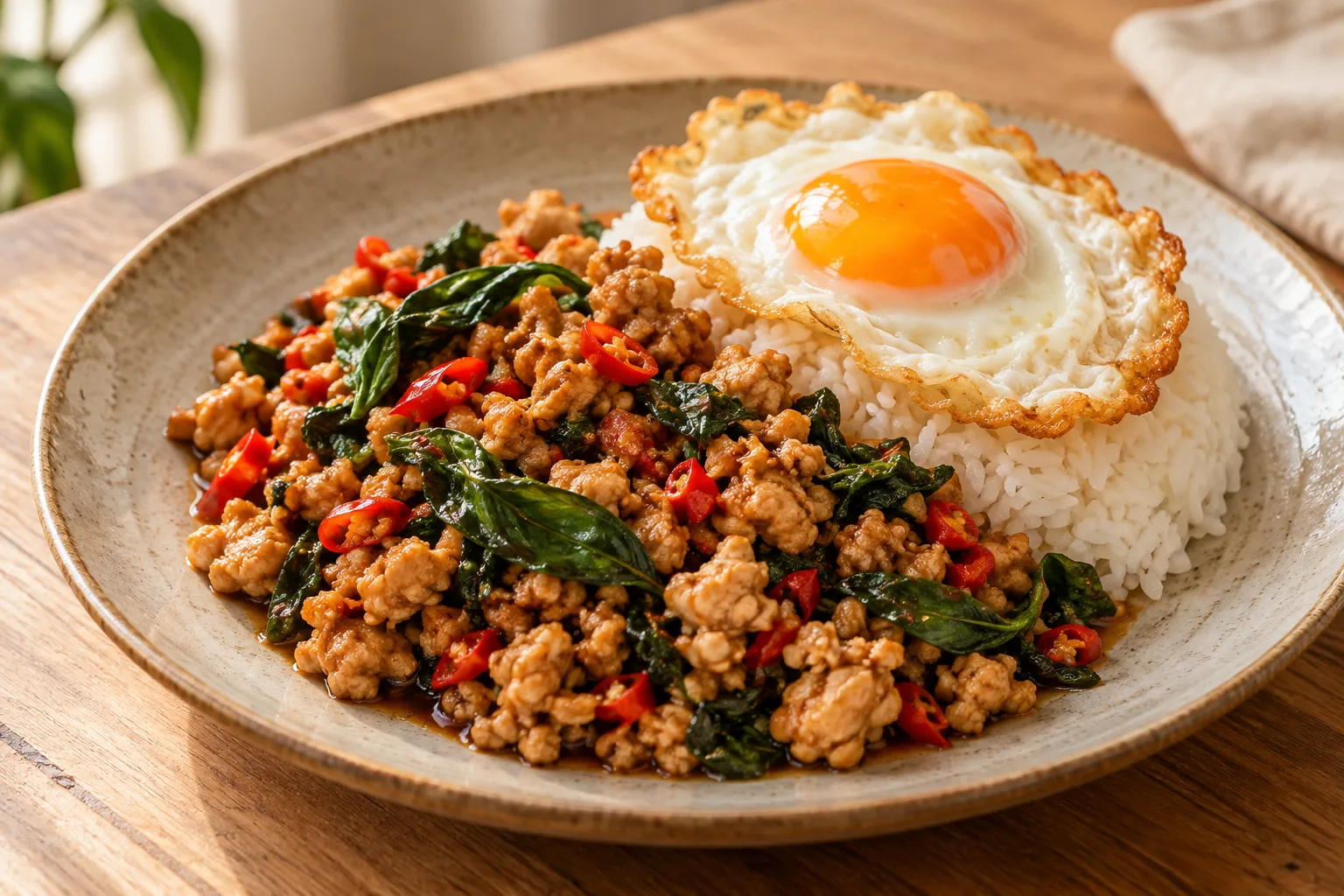
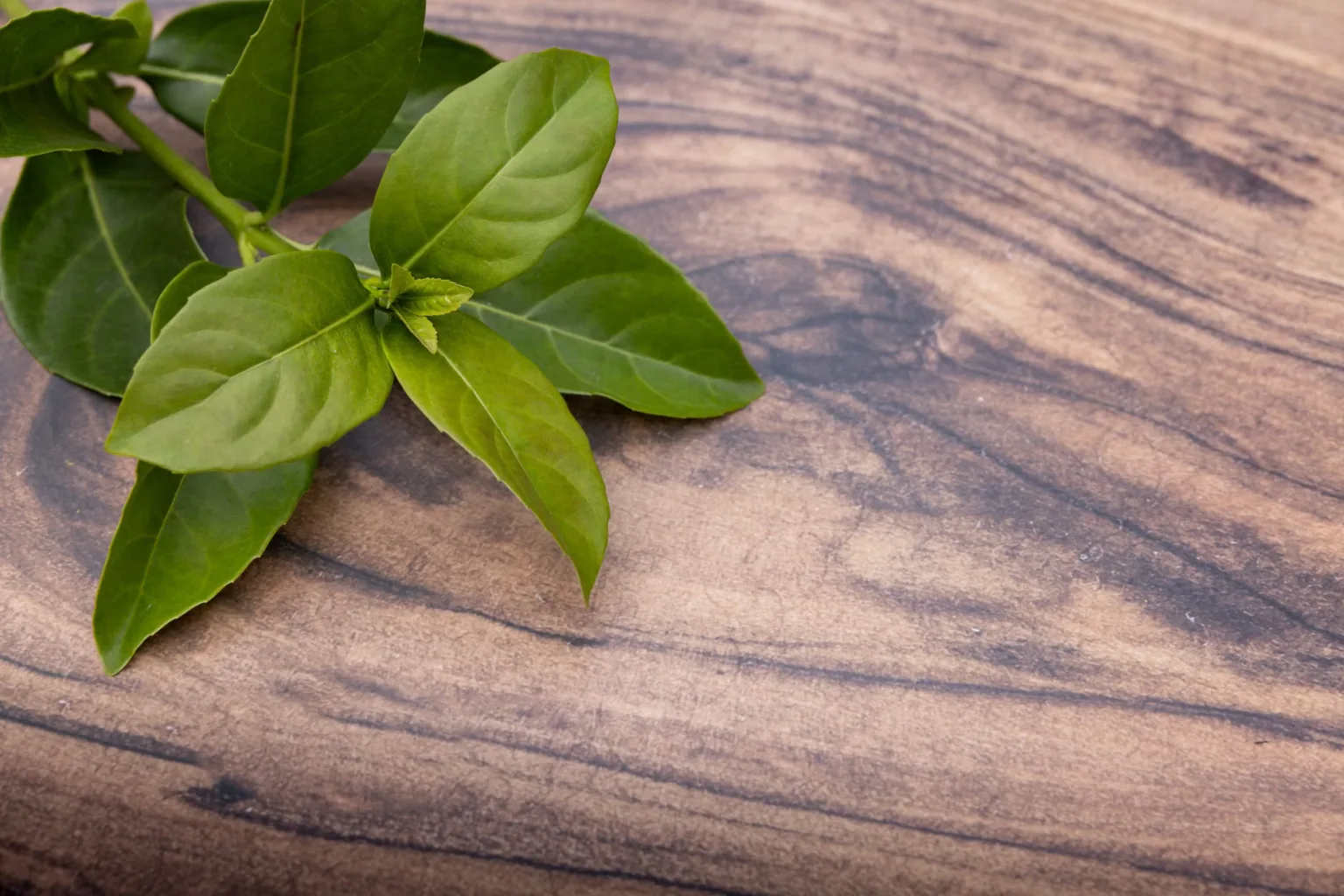
Holy basil is an aromatic herb identified in the supplied sources as Ocimum tenuiflorum and also known as tulsi. It belongs to the Lamiaceae family, like other basils, but it is not the same ingredient as sweet basil or Thai basil. In Southeast Asian cooking, and especially in Thai preparations described by one culinary source, its leaves are used in stir-fries with meat or seafood. Other described uses include sauces, soups, curries, salads and eating the leaves raw. This profile covers fresh leaves as a culinary ingredient; it does not treat that use as equivalent to teas, supplements or essential oils.
When to use it
Choose these leaves when you want an aromatic character in a stir-fry, particularly a Thai-style dish with meat or seafood. They can also go into soups, curries and sauces, or be used raw in salads when you want their flavor uncooked. Holy basil does not exactly reproduce the profile of sweet basil or Thai basil, so choose it for its own character rather than assuming any basil will do. Sources describe differences in aroma intensity among types of holy basil, meaning the strength can vary from one product to another.
How to use it
Separate the leaves from the stems if your preparation calls for it, then use them whole or chopped. For a cooked dish, add them to a stir-fry, soup, sauce or curry; a culinary source also describes Thai-style stir-fries with meat or seafood. For an uncooked preparation, add whole or chopped leaves to a salad. Start with a modest amount and adjust to taste, since aroma may vary by type of holy basil. If you can only find Thai basil or sweet basil, either can work as a substitute in a dish, but the flavor will be different. The supplied evidence gives no precise conversion between fresh and dried leaves.
Flavour and texture
Sources describe holy basil as aromatic and spicy, with a character distinct from the sweet or anise-like profiles associated with other basils. They also note variation in aroma intensity among types of holy basil. The leaves can be used raw or cooked; their specific texture may vary with freshness and condition, and the supplied evidence does not characterize it more precisely.
How to choose it
Look for leaves specifically identified as holy basil or tulsi, rather than simply labeled basil. A culinary source distinguishes holy basil from varieties such as sweet Thai basil, so the names are not interchangeable. Products may vary in aroma intensity by type. The evidence supplied does not establish official visual quality criteria or a purchasing season; confirm the identity with the seller and do not assume a similar-looking variety will taste the same.
Storage
The supplied evidence does not establish a validated method, duration or conditions for storing fresh holy basil leaves. It would therefore be inappropriate to assign a shelf life or recommend a specific temperature here. Follow the package or seller’s instructions, and if none are provided, consult local official guidance for fresh herbs. Do not confuse fresh-leaf storage with drying: an extension source describes general herb-drying methods, but does not give specific advice for storing fresh holy basil.
Substitutions
Thai basil or sweet basil can be practical alternatives if holy basil is unavailable, but they are different herbs and the flavor will change. Dried holy basil may also work in recipes suited to dried leaves; the supplied evidence does not give a conversion ratio for replacing fresh leaves with dried. Adjust to taste and treat the substitution as approximate, not exact.
Common mistakes
Do not assume holy basil, Thai basil and sweet basil are the same ingredient: sources distinguish their flavor profiles. Do not assume every type of holy basil has identical aroma intensity, either, since differences among types are described. Finally, do not apply a fixed fresh-to-dried conversion without a recipe that supports it; the available evidence supplies no such equivalence.
Safety and allergens
The supplied sources do not establish a specific official warning for culinary use of fresh holy basil leaves. This profile is limited to use as a food ingredient and does not provide advice about extracts, supplements or essential oils. For food-safety guidance, follow applicable local official recommendations for fresh herbs.
Culinary uses
- Aromatic herb for Thai-style stir-fries with meat or seafood.
- Fresh or cooked seasoning for soups, curries, sauces, salads and other dishes.
Recommended techniques
- Stir-frying the leaves with other ingredients.
- Using the leaves raw, whole or chopped, or adding them to cooked dishes.
Pairs well with
- Meat, including the meat used in Thai-style stir-fries.
- Seafood, including seafood used in Thai-style stir-fries.
- Soups and curries.
Frequently asked questions
Is holy basil the same as Thai basil?
No. The sources distinguish holy basil from Thai basil and sweet basil. They may substitute for one another in some dishes, but the aroma and flavor will differ.
How can I use fresh holy basil leaves?
Use them raw, whole or chopped, for example in salads, or add them to cooked dishes such as stir-fries, soups, curries and sauces.
Can I substitute dried holy basil for fresh?
The evidence confirms that dried holy basil leaves exist, but does not establish a fresh-to-dried conversion ratio. Adjust according to the recipe and taste.
Estimated nutrition
- Fat
- 0 g
- Saturates
- 0 g
- Carbohydrate
- 13.3 g
- Sugars
- 0 g
- Fibre
- 6.7 g
- Protein
- 6.67 g
- Salt
- 1.5 g
Sources and review
Automatically researched, cross-checked and validated content. Sources consulted:
- The Essential Glossary of Cooking Terms for the Culinary Arts - Escoffier escoffier.edu
- Hojas de Albahaca Santa doi.org
- Vamos a Conservar Alimentos: El secado de las plantas medicinales y aromáticas extension.psu.edu
- educational content to support healthful lifestyle practices sjsu.edu
- UCCE efforts improve quality of and demand for fresh ... ucanr.edu
- Herbs to Avoid During Pregnancy utep.edu
- Albahaca sagrada tailandesa – Kwan Homsai kwanhomsai.com
- Tulsi, albahaca sagrada e infusión del Ayurveda | Alveus alveus.eu
- Albahaca sagrada: cultivo, cuidados y plantas compañeras plotmygarden.com
- Los beneficios de la albahaca santa | Wellness Hub es.iherb.com
- Analyzing Food Sources and Food Insecurity of Kichwa ... scholarworks.uark.edu
- List of Cerambycidae from Honduras revistas.zamorano.edu
- Antimicrobial and Anticancer Activity of Essential Oils from ... scholarsarchive.byu.edu
- Tulsi o Albahaca Sagrada: propiedades, beneficios y contraindicaciones - Farmacia Torrent farmaciatorrent.com