- Category
- Grains, flour and pasta
- State
- Dry
- Usual unit
- g
What it is
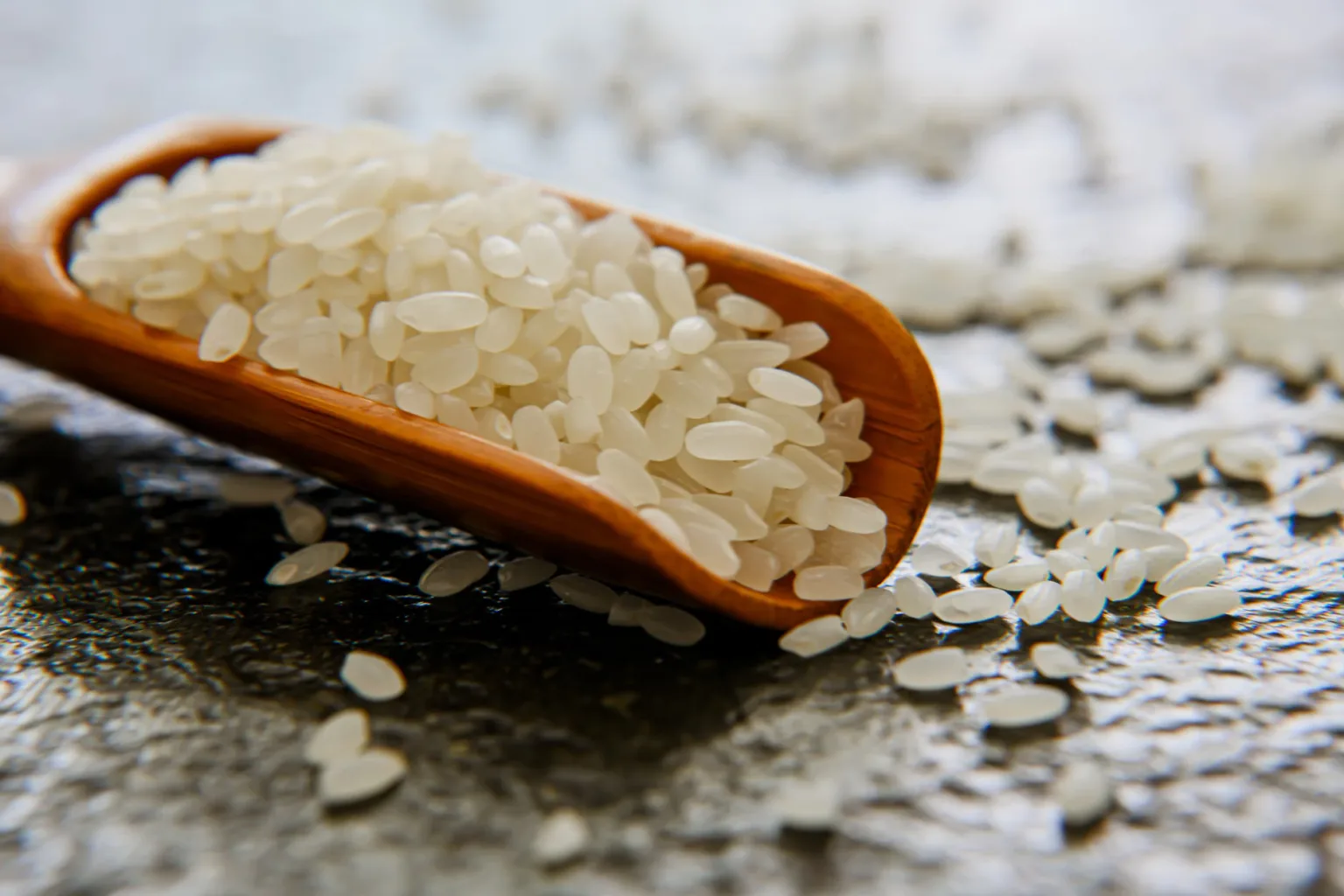
Japanese short-grain rice generally refers to short- or medium-grain japonica rice eaten as everyday rice and used in a range of Japanese dishes. The available evidence describes uruchimai, or ordinary rice, as translucent and short to medium in grain; when cooked, it is sticky and slightly sweet. It is distinct from mochigome, the glutinous rice used especially for mochi and certain other dishes. A package labeled “sushi rice” signals a common use, but check the label to identify the rice type and variety rather than assuming all Japanese-style rice is identical.
When to use it
Choose this rice when you want cooked grains that hold together, whether served plain as a side or shaped into sushi and onigiri. It also makes a base for a bowl topped with other ingredients, and cooked rice can be used in dishes such as fried rice or ochazuke. For mochi, look for mochigome instead of assuming that every Japanese short-grain rice is glutinous: the evidence distinguishes ordinary japonica rice from this separate type.
How to use it
Check the package first to see whether the rice is ordinary, brown, or glutinous, since those forms are not interchangeable in every recipe. The available evidence describes washing the rice and cooking it with measured water; it also notes that it may be soaked before cooking and then steamed until the center is soft. Water ratios and timing vary with the product and method, so follow the package or your recipe rather than relying on a single universal formula. Serve it plain, shape it for sushi or onigiri, or use it as the base for a topped rice bowl.
Flavour and texture
The available description of ordinary japonica rice notes a slightly sweet flavor and a sticky cooked texture. Short or medium grains tend to stay together after cooking, a useful quality for sushi and onigiri. Do not confuse that cohesion with mochigome, which is described as even stickier and chewier. Brown rice is also described as having a texture different from polished white rice.
How to choose it
Look for package terms such as Japanese rice, Japanese-style rice, or sushi rice, then check whether the label names a variety or degree of milling. The evidence identifies uruchimai as ordinary rice, genmai as brown rice, and mochigome as glutinous rice; they suit different uses. Ordinary short-grain japonica is a suitable choice for sushi or onigiri. Do not assume that glutinous rice is simply another name for sushi rice.
Storage
The available evidence does not establish a storage duration or a specific method for dry rice. Keep the product in its package or follow the manufacturer’s printed directions; if the package gives no clear guidance, ask the seller. When buying, check that the package is closed and undamaged. These cautious pointers avoid promising a shelf life or storage conditions that the available sources do not document.
Substitutions
For savory dishes, another short-grain japonica variety may serve a similar role, although the result can differ. Koshihikari and Sasanishiki are among the named japonica varieties in the evidence. Do not automatically substitute mochigome: it is used for mochi and has a stickier, chewier texture. Long-grain rice such as basmati is not described as a texture-equivalent.
Common mistakes
Do not treat uruchimai, genmai, and mochigome as the same product: the evidence distinguishes them by rice type, milling, or use. Another mistake is expecting long-grain rice to hold together like short-grain japonica. For sushi, do not assume that cooking any white rice will give the same result; grain type affects how well the rice holds its shape.
Safety and allergens
Follow the package and recipe directions when preparing the rice. The available sources provide no specific official safety warning or detailed food-safety guidance for this ingredient.
Culinary uses
- cereal cocido para acompañar
- base para sushi, onigiri y cuencos de arroz
Recommended techniques
- lavado antes de la cocción
- cocción en agua seguida de reposo al vapor
Pairs well with
- nori
- furikake
- natto
- pescado para sushi
Frequently asked questions
Is Japanese short-grain rice always sushi rice?
No. Ordinary japonica rice is used for sushi, but it is also served as everyday rice and in other dishes. Check the package for the rice type.
Is it the same as glutinous rice for mochi?
No. Ordinary japonica rice, or uruchimai, is distinct from mochigome, which is used mainly for mochi and described as stickier and chewier.
Why do the cooked grains hold together?
The available evidence describes cooked japonica rice as sticky and slightly sweet, qualities that help the grains stay together.
Sources and review
Automatically researched, cross-checked and validated content. Sources consulted:
- The Essential Glossary of Cooking Terms for the Culinary Arts - Escoffier escoffier.edu
- Second Edition - cns cns.ucdavis.edu
- THE BEAUTIFUL WOMAN IN MEDIEVAL IBERIA mospace.umsystem.edu
- Fresh Produce Recipe Book | Wsu s3.wp.wsu.edu
- informe anual de indicadores - agricultura, pesca y alimentación servicio.mapa.gob.es
- PORTADA weedeco.msu.montana.edu
- Comité Científico aesan.gob.es
- Producción de Maíz Dulce extension.psu.edu
- comprehension of spanish relative and passive clauses ideals.illinois.edu
- La importancia del arroz en Japón - Muy Japones muyjapones.com
- Qué tiene el arroz japonés para conquistar a un país entero gogonihon.com
- El arroz japonés. Curso de Cocina Japonesa en Pepekitchen - Pepekitchen pepekitchen.com
- Arroz japonés - Wikipedia, la enciclopedia libre es.wikipedia.org
