- Category
- Herbs and spices
- State
- Dry
- Usual unit
- teaspoon
What it is
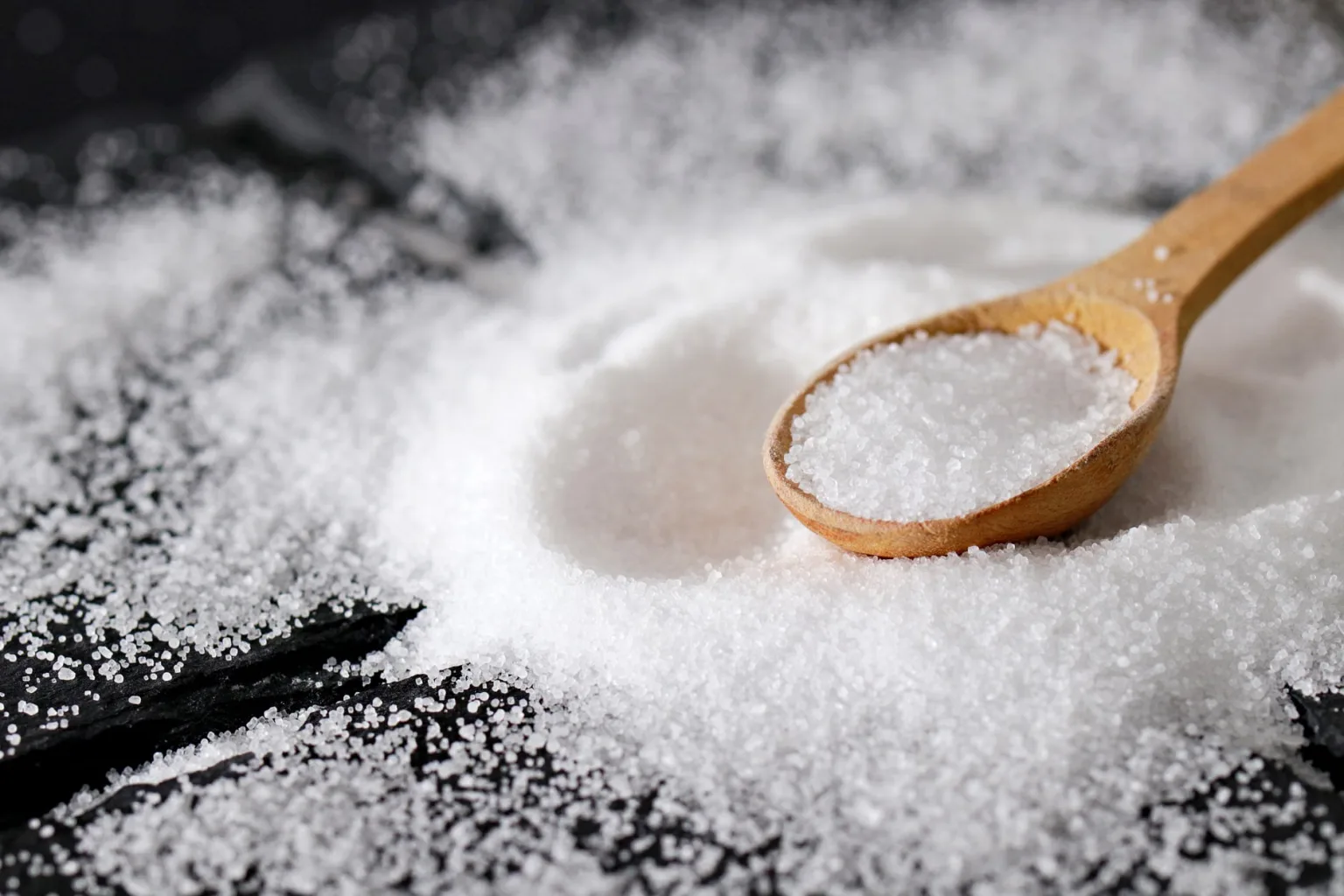
Kosher salt is a culinary salt commonly sold as relatively coarse crystals, often flat or irregular in shape. Its name is associated with the traditional use of coarse salt in a Jewish ritual meat-preparation practice; the name alone does not mean the product carries kosher certification. Salt is composed mainly of sodium chloride, while crystal shape and density by volume can vary from brand to brand. It is therefore useful to distinguish its practical texture from any claim of uniform composition or certification: check the package if a particular certification matters, and do not assume volume measures are interchangeable.
When to use it
Use it when you want to pinch and scatter salt over meat, poultry, or vegetables, or when you prefer to season in several small additions as you cook. Its crystals are easy to handle and practical for sprinkling across a surface. It can also dissolve in cooking liquids, although crystal size and brand affect how much fits in a teaspoon. If a recipe specifies a different kind of salt, especially when it measures by volume, adjust cautiously and taste the result.
How to use it
Take a small pinch and distribute it evenly over the food rather than leaving concentrated patches in one spot. For soups, sauces, or cooking water, add salt gradually and taste before adding more. If a recipe calls for teaspoons of fine salt, do not assume the same volume of kosher salt supplies exactly the same amount: density and crystal size differ among products. For a more predictable result, use the salt specified by the recipe or weigh the amount when the recipe allows. Do not confuse the product name with religious certification; check the package if that matters to you.
Flavour and texture
When fully dissolved, it provides the characteristic salty taste of salt; the name does not imply a different flavor. In its dry form, its relatively large crystals can feel crunchier than fine salt and are easy to pick up with your fingers. Appearance, shape, and density are not identical across brands: some crystals are flatter, while others are more irregular. Those differences matter most when measuring by volume and when you want visible texture on the food.
How to choose it
Read the label and look at the crystal size, because “kosher salt” does not describe an identical grain size in every product. Brands can differ in shape and density, so the same teaspoon measure is not always interchangeable. Check the ingredient list and package information if you need to know about additives or verify kosher certification. The name alone does not guarantee that a product has religious certification.
Storage
Keep it dry in a clean, tightly closed container to limit exposure to moisture and keep it easy to handle. Avoid putting wet fingers or utensils into the container, since they can encourage clumping. Keep the label or identify the container if you use several grain sizes: distinguishing salts helps prevent errors in recipes measured by volume.
Substitutions
You can replace it with fine salt or another culinary salt, but add the substitute gradually and taste. Crystal size and density per teaspoon vary, so there is no universal volume conversion for every brand. For precise recipes, keep the specified salt or use a weight measure if available; a coarse appearance does not make one tablespoon-for-tablespoon replacement reliable without adjustment.
Common mistakes
A common mistake is replacing it with the same volume of fine salt without accounting for crystal size and density. It is also easy to assume that every kosher salt has identical crystals or that the name certifies the product as kosher. Check the label, add salt in stages, and taste the preparation rather than relying on a generic conversion.
Safety and allergens
Salt supplies sodium, so use it in moderation and consider the recipe as a whole. If you have been advised to limit sodium, follow that advice and check the package for product-specific information.
Culinary uses
- Seasoning
- Finishing salt
Recommended techniques
- Season by pinching and sprinkling
- Dissolve in cooking liquid
Pairs well with
- Meat and poultry
- Vegetables and soups
Frequently asked questions
Is kosher salt certified kosher?
Not necessarily. The name is associated with a traditional use of coarse salt; check the package if you need religious certification.
Can I substitute table salt in the same measure?
Do not assume so, because crystal size and density differ. Substitute gradually and taste, especially when the recipe measures by volume.
Do all brands of kosher salt have the same crystals?
No. Crystal shape and size can vary by brand, affecting how the salt is handled and how much fits in a volume measure.
Estimated nutrition
- Fat
- 0 g
- Saturates
- 0 g
- Carbohydrate
- 0 g
- Sugars
- 0 g
- Fibre
- 0 g
- Protein
- 0 g
- Salt
- 98.25 g
Sources and review
Automatically researched, cross-checked and validated content. Sources consulted:
- Client Challenge doi.org
- The Essential Glossary of Cooking Terms for the Culinary Arts - Escoffier escoffier.edu
- Location coloradomesa.edu
- Salt and Sodium • The Nutrition Source nutritionsource.hsph.harvard.edu
- Food & Shopping | Smithsonian's National Zoo and Conservation Biology Institute nationalzoo.si.edu
- Ideas for Healthy Living wpcdn.web.wsu.edu
- Hotel Culinary Arts & Tourism Institute - Anne Arundel Community College aacc.edu
- The Study at Hedrick – Dining dining.ucla.edu
- The Culinary Institute of America ciadigitalcollections.culinary.edu
- How to Cook Dry Beans from Scratch | UNL Food | Nebraska food.unl.edu
- ¿Qué es la sal kosher y para qué se utiliza? salroche.com
- Sal Kosher | www.cocinista.es cocinista.es
- Sal kosher vs. sal marina: ¿cuáles son las diferencias? ittefaqsalt.com
- De dónde proviene la sal kosher y por qué se llama kosher | Wellness Hub es.iherb.com
- Sal kosher (kosher salt): qué es, para qué sirve y si tiene yodo | Fond fond.kitchen
- Los 9 increíbles beneficios y usos de la sal kosher - Revista Mia miarevista.okdiario.com