- Category
- Vegetables
- State
- Fresh
- Usual unit
- unit
What it is
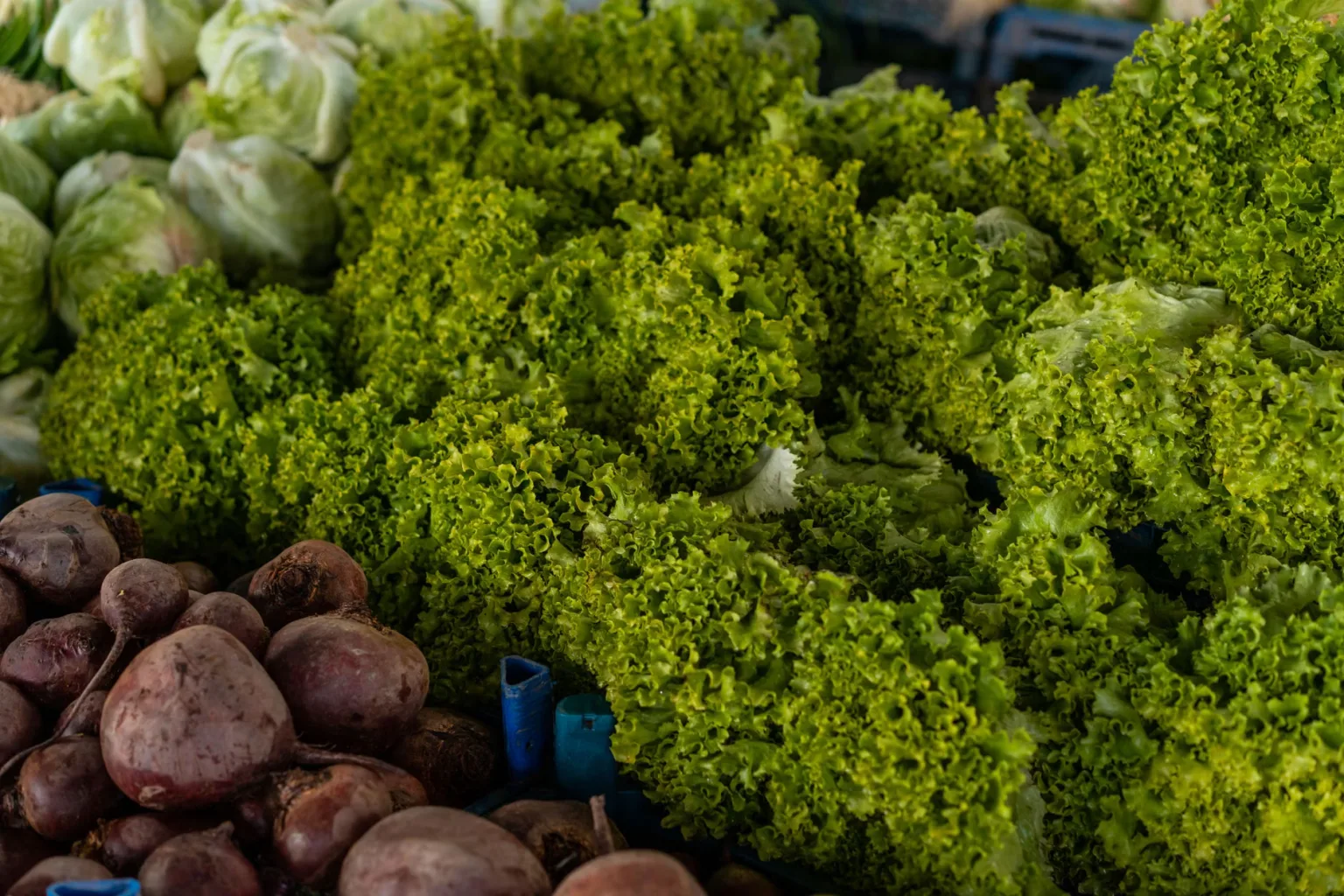
Lettuce is a leafy vegetable grown mainly for its leaves, although some types are also grown for their stems. The name covers quite different varieties: compact heads, long firm leaves, and loose or frilled leaves. This diversity matters in the kitchen: some provide more crunch, while others are tender or delicate. When buying and cooking lettuce, consider the variety and the role you want it to play rather than treating every kind as an identical ingredient.
When to use it
Use lettuce raw when you want fresh leaves in a salad, sandwich, burger or wrap. Choose a firm variety when the dish needs leaves that retain crunch, and tender leaves when you want a more delicate base. Romaine can also suit sturdier salads. Some preparations use lettuce in soup or grilled, but the result depends on the variety and recipe.
How to use it
Separate the leaves when a recipe calls for whole pieces; for a salad, combine or cut them to the size you want. Mix varieties for a contrast between firm and tender leaves, and pair them with ingredients such as fruit, egg, dairy, seafood, pasta or rice. In sandwiches, burgers and wraps, use the leaves as part of the filling. Lettuce can also be grilled or added to soup, but the available evidence does not establish cooking times or temperatures: follow the specific recipe and do not assume every variety behaves the same way.
Flavour and texture
Flavour and texture vary considerably: iceberg is described as neutral and very crunchy, while romaine is mild and firm; other leaves may be tender, frilled or more pronounced in flavour. Colour, shape and texture also depend on variety. Choose according to the contrast you want in the dish rather than assuming a particular colour guarantees a particular flavour.
How to choose it
Choose the variety for its intended use: a compact head or firm romaine when you want crunch, and loose or tender leaves for a delicate texture. Check that the produce looks as expected for that variety and set aside visibly damaged leaves. Lettuce varieties are not identical in texture, even when they can serve similar purposes.
Storage
The available evidence does not establish a specific storage method or duration for lettuce. Follow directions from the package or seller and do not assume a shelf life. Check the condition of the leaves before use and discard visibly damaged ones; no storage temperature or duration is specified here.
Substitutions
You can replace one variety with another when they serve the same purpose, but firmness, crunch and delicacy may differ. Romaine and iceberg are options when a firm leaf matters; for a more tender texture, try a loose-leaf variety. Choose according to the recipe’s needs, not just the generic name.
Common mistakes
Treating all lettuce as having the same texture and flavour can lead to a different result than expected. A delicate leaf does not provide the same crunch as a compact head. Another mistake is substituting a variety without considering its role in the recipe, or assuming cooking directions apply equally to every kind.
Safety and allergens
The supplied evidence contains no specific official warning about lettuce and does not substantiate a particular washing or storage method. Handle it with basic hygiene and follow local official guidance for washing fresh produce; this profile sets no temperatures or storage periods.
Culinary uses
- Base para ensaladas
- Aporte crujiente a sándwiches, hamburguesas y wraps
Recommended techniques
- Servir cruda, separada en hojas o cortada
- Asar a la parrilla
Pairs well with
- Frutas, como pomelo
- Huevo, lácteos, marisco, pasta o arroz
Frequently asked questions
Is all lettuce crunchy?
No. Texture depends on variety: some leaves are firm and crunchy, while others are more tender or delicate.
Is lettuce only eaten raw?
No. In addition to salads and sandwiches, some preparations add it to soup or grill it.
What can I use instead of iceberg lettuce?
Romaine can work when you want a firm leaf, although the flavour and crunch will not be exactly the same. Choose according to the role in the recipe.
Estimated nutrition
- Fat
- 0.22 g
- Saturates
- 0.03 g
- Carbohydrate
- 2.26 g
- Sugars
- 0.48 g
- Fibre
- 0.9 g
- Protein
- 1.33 g
- Salt
- 0.06 g
Sources and review
Automatically researched, cross-checked and validated content. Sources consulted:
- Client Challenge doi.org
- The Essential Glossary of Cooking Terms for the Culinary Arts - Escoffier escoffier.edu
- Aplicaciones de la Biotecnología en Seguridad Alimentaria aesan.gob.es
- Survey of insect pests and plant diseases of selected food ... ageconsearch.umn.edu
- UCCE efforts improve quality of and demand for fresh ... ucanr.edu
- USDA FoodData Central libguides.marist.edu
- The traditional food of migrants scholar.smu.edu
- Safe & Healthy Food Pantries Project - Health & Well-Being health.extension.wisc.edu
- Guía práctica de lechugas: historia, tipos y cómo elegir la mejor para cada plato | Gastronomía & Cía gastronomiaycia.com
- Tipos de lechuga: propiedades, usos y variedades más populares | Grupo Animal grupoanimal.mx
- El discreto mundo de las lechugas margavilan.substack.com
- Abril: La lechuga | Consumer consumer.es
- Lactuca sativa - Wikipedia, la enciclopedia libre es.wikipedia.org