- Category
- Vegetables
- State
- Fresh
- Usual unit
- unit
What it is
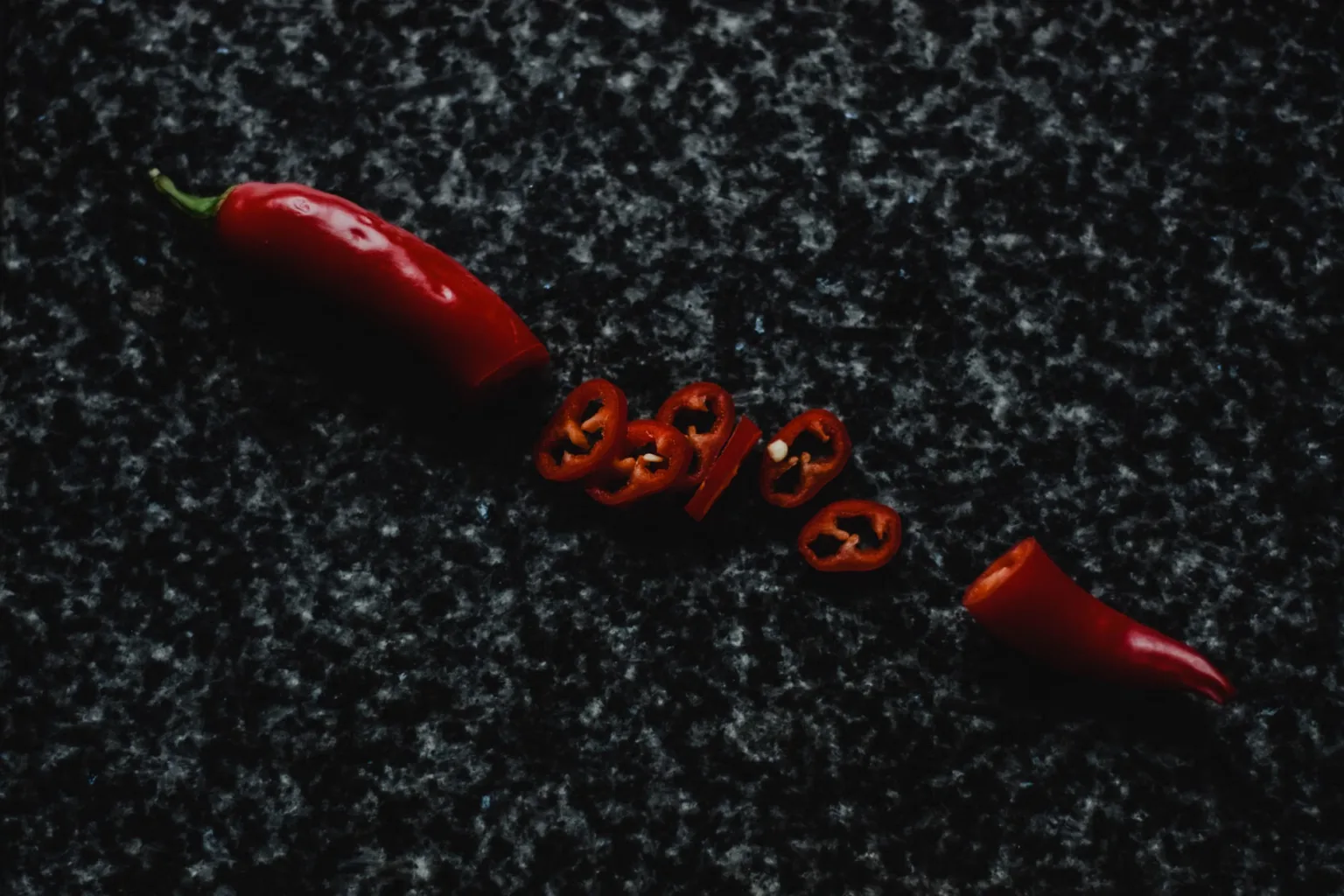
The name long red chili describes a general appearance; it does not identify a specific variety by itself. Fresh chilies can differ in shape, size, color, flavor, and heat. Some are eaten green, while others are also used after ripening and turning red. It is therefore unwise to assume that all elongated red chilies taste alike or have the same intensity. This guide refers to a fresh chili, not a dried or ground product. It can be chopped into a raw preparation or cooked as part of a sauce or stew. If the variety is not stated on the label, taste a small amount cautiously and adjust to its actual heat.
When to use it
Use it when you want to add heat and flavor and can adjust the amount to the chili you have. It can go into a sauce or cooked dish, or be chopped into a fresh preparation. Since the name does not establish the variety and heat differs among chilies, taste a small amount before adding more. If you are aiming for a particular color effect or mild heat, do not assume this chili will deliver it: appearance alone cannot predict the result.
How to use it
Wash the chili and cut it to suit the dish: slice or chop it to distribute the pieces, or mince it to incorporate it more fully. For fresh use, add it gradually to a sauce or salad and taste before increasing the amount; heat can vary among varieties. You can also roast or cook it as part of a dish. Tomato and other juicy ingredients are documented companions for chili sauces; cilantro, lime, and oil work in a fresh salad preparation. Do not treat a fresh chili as though it were a dried chili: dried chilies are used differently.
Flavour and texture
Heat may be the most noticeable feature, but its intensity cannot be reliably inferred from red color or an elongated shape alone. Chilies vary in flavor and pungency from one variety to another. Fresh, it is handled as a vegetable ingredient that can be chopped into a raw dish or cooked; it should not be confused with a dry or powdered spice. Taste a small piece to assess its heat before seasoning the whole dish.
How to choose it
Choose a chili suited to your intended use, and ask which variety it is if heat matters. The description “long red” does not guarantee a particular variety, flavor, or degree of heat. Fresh chilies vary in shape, color, and pungency, so a similar appearance does not ensure the same result. If a variety is named on the label, use that as a guide; otherwise, add the chili gradually and taste before adding more.
Storage
This guide does not have a specific, verified recommendation for the storage duration or conditions of this fresh chili. If you will not use it promptly, follow the package directions or local food-safety guidance for fresh produce; do not infer a storage time from its color or shape. To preserve chilies by freezing, drying, or canning, use tested instructions specifically for chilies rather than improvising a preservation process.
Substitutions
You can substitute another fresh chili, such as jalapeño or serrano, but do not assume it will have the same heat or flavor: varieties differ. If you do not know the substitute, start with a small amount, taste it, and adjust. “Long red” is not enough to establish an exact equivalent. A dried chili or chili powder is not a direct replacement for a fresh one because its form and culinary use are different.
Common mistakes
A common mistake is assuming that every long red chili has predictable heat. Shape and color alone do not identify its variety. It is also easy to add a large amount before tasting, or to treat a substitute chili as an exact equivalent. Add it gradually, and distinguish fresh from dried or ground chilies: they are not used in exactly the same way.
Safety and allergens
Wash your hands with soap and water before handling food. Because chili heat varies, taste a small amount and add it gradually. For canning, freezing, or drying it for preservation, follow reliable instructions specific to chilies; do not improvise preservation methods.
Culinary uses
- Aportar picor y sabor a platos frescos o cocinados
- Dar carácter a salsas y preparaciones de chile
Recommended techniques
- Cortar y usar en crudo
- Asar o cocinar antes de incorporarlo a un plato
Pairs well with
- Tomate y otros ingredientes jugosos para salsas
- Cilantro, lima y aceite en ensaladas o preparaciones frescas
Frequently asked questions
Does every long red chili have the same heat?
No. The name describes a general shape and color, but chilies vary by variety and heat level. Taste a small amount before using it in the whole dish.
Can I use it raw?
Yes. Fresh chilies are used in raw preparations; chop it and add it gradually to a sauce or salad, tasting as you adjust.
What can I use instead?
You can try another fresh chili, such as jalapeño or serrano. Flavor and heat may differ, so adjust the amount after tasting.
Estimated nutrition
- Fat
- 0.44 g
- Saturates
- 0.04 g
- Carbohydrate
- 8.81 g
- Sugars
- 5.3 g
- Fibre
- 1.5 g
- Protein
- 1.87 g
- Salt
- 0.02 g
Sources and review
Automatically researched, cross-checked and validated content. Sources consulted:
- Client Challenge doi.org
- Sabores de nuestras tierras/recetas - 2024 | Agricultura y Recursos Naturales ucanr.edu
- Vamos a Conservar Alimentos - Home Food Preservation and Safety - Food Safety and Quality extension.psu.edu
- El chile, ingrediente esencial en la cocina de México - Formacion en Gastronomia formacionengastronomia.com
- Los chiles mejicanos y sus variedades expogourmetmagazine.com
- Chile Rojo en Polvo — Open Spice Box openspicebox.com
- Tipos de Chiles Secos Mexicanos: Características y Usos abarrotes.es
- El CHILE como alimento amc.edu.mx
- Salsa de Chile II (Spanish) - National Center for Home Food Preservation nchfp.uga.edu
- MEMORIA DEL SISTEMA COORDINADO DE ... aesan.gob.es
- of the arequipa nexus institute - Agronomy - Purdue University agry.purdue.edu
- Mortality in the Patagonian Guanaco (Lama guanicoe) dr.lib.iastate.edu
- Food of the Lesser Kestrel (falco Naumanni) in Its Winter ... digitalcommons.usf.edu
- La historia del chile en la gastronomía mundial | Recetas Mexas recetasmexas.com