- Category
- Bread and dough
- State
- Dry
- Usual unit
- g
What it is
Maria-style biscuits are a kind of sweet biscuit, usually thin and crisp, sold ready to eat. The name describes a style rather than one fixed recipe: formulations and ingredients can vary across brands and places. They are commonly eaten plain or dipped in a drink, and can also be used in sweet dishes. Some recipes and products include ingredients such as wheat flour, sugar and fats, and some versions may include milk, egg or soy. Do not assume every product has the same composition. Check the ingredient list on the package, particularly when choosing biscuits for someone with an allergy or dietary restriction.
When to use it
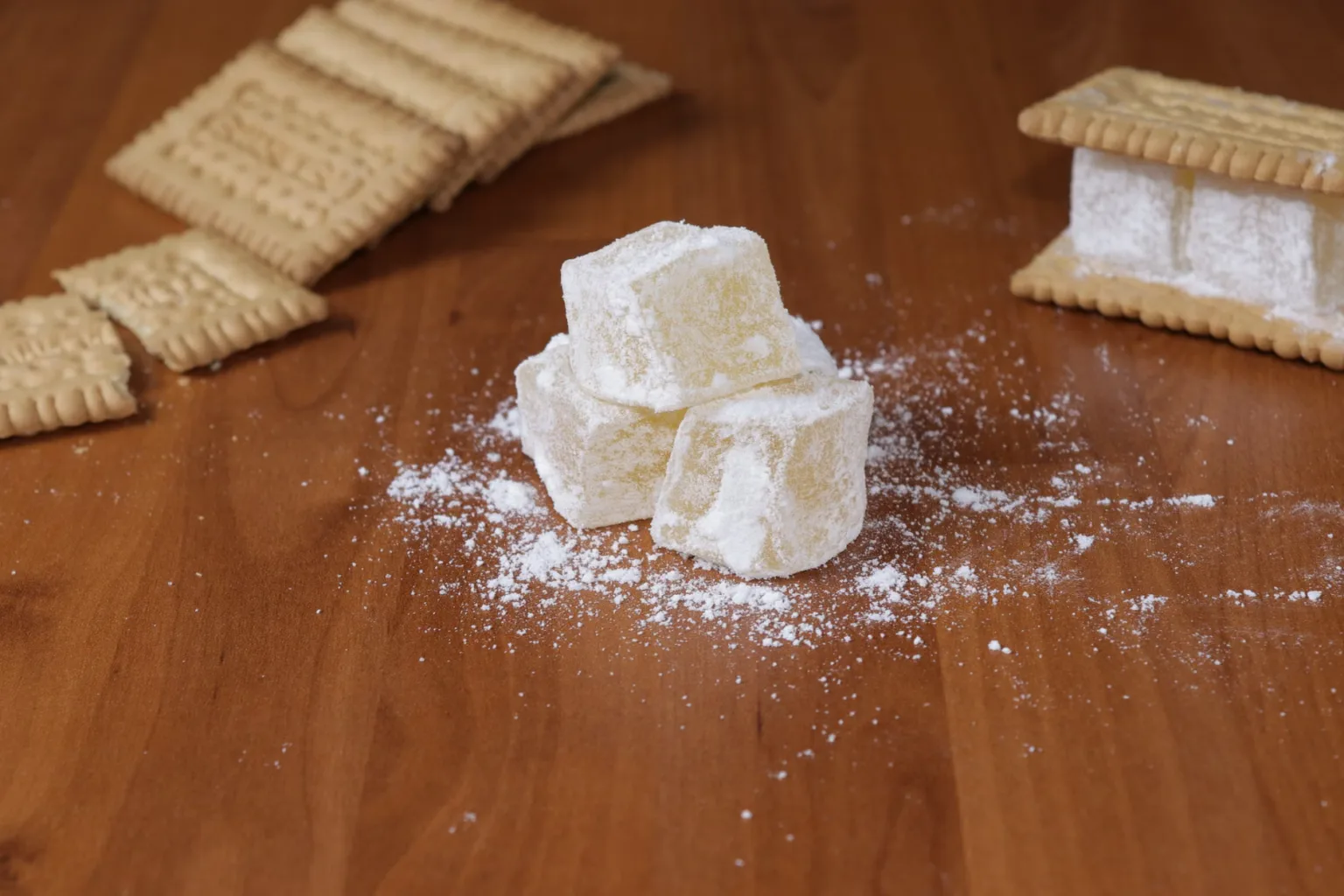
Choose these biscuits when you want a simple sweet accompaniment to a drink or a convenient component for assembling a dessert without making a pastry layer. Serve them whole, arrange them in layers in a sweet dish, or crumble them to create a biscuit layer. They can also be paired as two biscuits enclosing chocolate or cream. Dipping softens them as they absorb liquid, so use them this way when a softer texture is welcome. For a crisp bite, serve them alongside the drink and dip just before eating.
How to use it
Serve whole with tea, coffee or milk, or eat them plain as a sweet biscuit. To soften them, dip briefly in the drink and eat soon afterwards; the best dipping time depends on the biscuit and the texture you want. For a layered dessert, arrange whole biscuits in the dish and add the other components of your recipe. You can also crumble them for a layer or base, bearing in mind that crumb size affects texture. For a filled snack, spread chocolate or cream between two biscuits. Before serving them to anyone with an allergy or dietary restriction, check the ingredients and allergen information on the specific package.
Flavour and texture
They are generally sweet and mild, with a dry, thin, crisp texture. Dipping softens the biscuit, while crumbling it leaves pieces that can add a crisp layer to a dessert. Sweetness, firmness and ingredients can vary between brands and versions, so the result is not always identical.
How to choose it
Choose a sealed package and check that product’s ingredient list and allergen information. Biscuits sold as Maria-style do not follow one universal formula, and both composition and texture can differ. If you need them for dipping, layering or serving to someone with an allergy, make sure the particular product suits the intended use and the person’s needs.
Storage
Store the package according to the manufacturer’s instructions and close it between uses to help keep the biscuits dry and crisp. There is no single storage period established here for every brand; use the date and directions on the package. If the package is damaged or the product has an unusual appearance or smell, do not use it.
Substitutions
Another plain, sweet, crisp biscuit can stand in when a recipe needs biscuits for dipping, crumbling or layering. A substitute may be sweeter, thicker or less firm, so adjust the amount and check the texture as you go. In desserts where the biscuit contributes a particular shape or consistency, a swap may change the result.
Common mistakes
Do not assume all Maria-style biscuits contain the same ingredients or stay crisp when dipped. Check the package when allergens matter. To control texture, dip just before eating or add the biscuits to a dessert as directed by the preparation rather than leaving them in liquid without checking the result.
Safety and allergens
Check the product label for ingredients and allergens because formulations vary by brand. No specific official safety warning for this biscuit style is provided here. If a damaged package or an unusual smell or appearance gives you concern, do not eat the product.
Culinary uses
- Sweet snack or accompaniment to drinks
- Crisp biscuit for layering or crumbling into desserts
Recommended techniques
- Eat plain or briefly dip in a drink
- Layer whole biscuits in desserts
- Crumble or crush for a dessert layer
- Sandwich two biscuits with chocolate or cream
Pairs well with
- Tea, coffee or milk
- Chocolate or cream
- Custard-style desserts
Frequently asked questions
Do Maria-style biscuits always have the same recipe?
No. The style does not mean there is one fixed formula. Ingredients can vary between brands and products, so check the package.
How can I serve them?
Eat them plain, serve them with a drink, dip them briefly, or use them whole or crumbled in desserts.
Are all brands suitable for people with allergies?
That cannot be assumed. Ingredients vary, so check the specific product’s label and allergen declaration before serving.
Estimated nutrition
- Fat
- 14.9 g
- Saturates
- 5.71 g
- Carbohydrate
- 30.6 g
- Sugars
- 2.62 g
- Fibre
- 1.4 g
- Protein
- 11.9 g
- Salt
- 2.17 g
Sources and review
Automatically researched, cross-checked and validated content. Sources consulted:
- Agencia Española de Seguridad Alimentaria y Nutrición aesan.gob.es
- Rosquitas de Nuez 1953 (Pecan Ring Cookies ) - lacocina.utsa.edu
- Free Standing, Slide In, and Drop In Electric housing.illinoisstate.edu
- Review Article The food environment in Latin America drexel.edu
- Reclaiming island food systems for nutrition and planetary ... dash.harvard.edu
- Introducción a las Buenas Prácticas Agrícolas extension.psu.edu
- Cabinet of Culinary Curiosities libraries.smith.edu
- Traffic-light Nutrition Labeling Preferences among Ecuadorian ... ageconsearch.umn.edu
- Galletas María: historia, origen y recetas para sacarles partido en casa abc.es
- ¿Qué son en realidad las galletas tipo María? - Garpa Alimentación - Almacenamiento y Distribución para las Islas Canarias garpa-alimentacion.com
- La aristócrata historia de la humilde galleta María de origen inglés que triunfó en la España de posguerra directoalpaladar.com
- - YouTube youtube.com
- GALLETAS MARIA | MI DULCE PECADO midulcepecado.com