- Category
- Vegetables
- State
- Fresh
- Usual unit
- unit
What it is
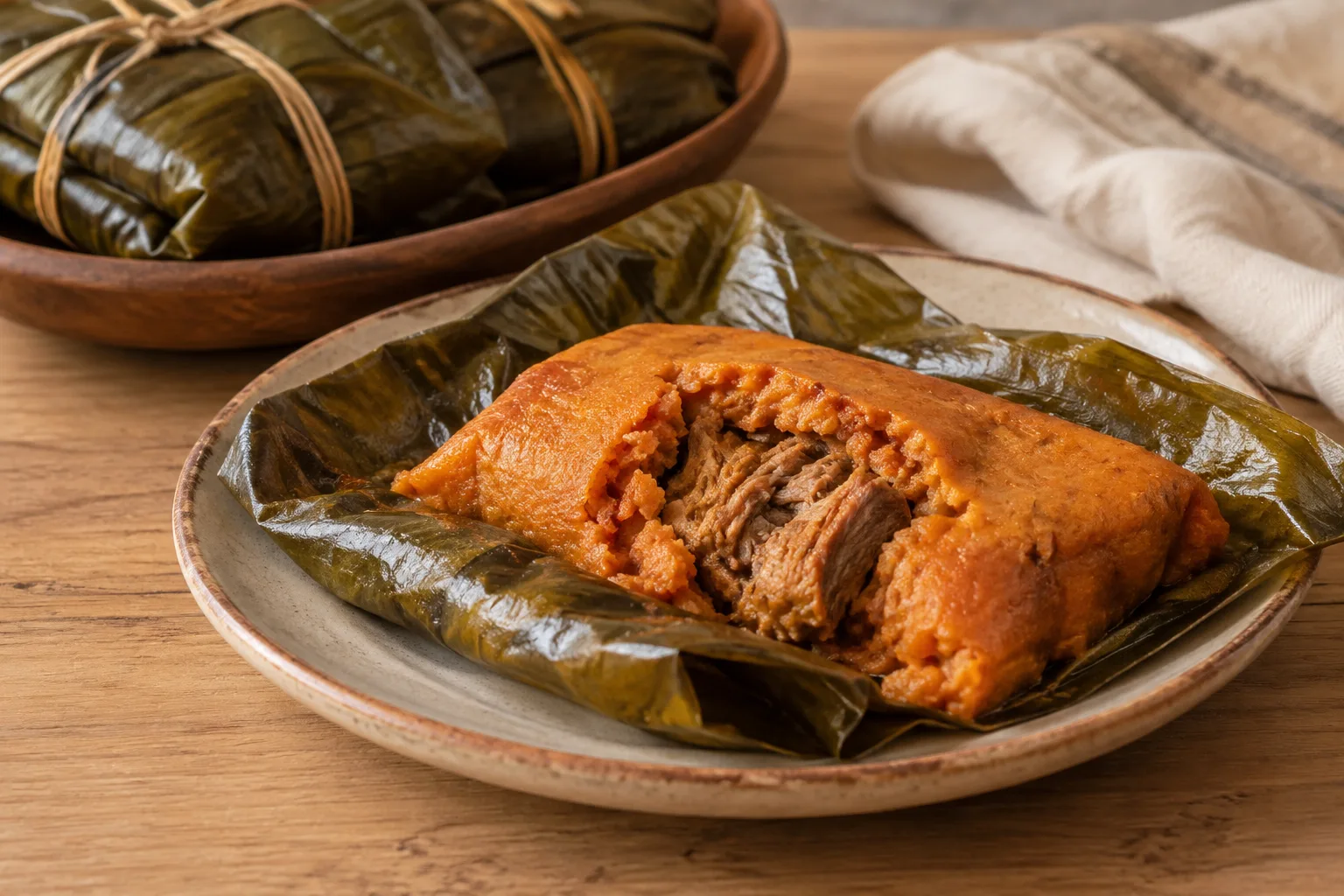
A maxán leaf is a culinary leaf used as a wrapper, especially for tamales. A Guatemalan source identifies it with the genus Calathea crotalifera and the family Marantaceae; another culinary source also assigns the leaves to the marantaceae, but does not provide a detailed botanical identification. Treat the family as reported rather than independently confirmed. In Guatemala, the leaves are described as being sold fresh in markets and used traditionally for tamal colorado. Smaller leaves are also mentioned for wrapping fresh cheese in tamalitos de chipilín, and leaves are used to wrap meat. Their culinary role is as an outer covering, with sources attributing aroma to the leaf during cooking.
When to use it
Use maxán leaves when you want to wrap food for cooking and are making a preparation associated with Guatemalan tamales, particularly tamal colorado. Sources also connect them with tamalitos de chipilín containing fresh cheese and with wrapped beef or pork. One publication reports especially high demand during the Christmas season, while another describes tamal colorado as popular in December but also eaten during the year. These are accounts of food customs and demand, not proof that the leaves are available only in one season.
How to use it
Open the bundle and inspect the leaves individually. Wash them thoroughly with plenty of water; one source recommends cleaning the central rib carefully, where dust may collect, and rubbing the rest of the surface with a cloth or brush. Drain the leaves and let them air-dry before use, as described in that source. Then use them to wrap the food you plan to cook, such as tamal colorado dough, fresh cheese for tamalitos de chipilín, or meat. Sources describe wrapping food during cooking and attribute an aromatic contribution to the leaves. They do not specify cooking times or temperatures, so follow the instructions for the dish itself.
Flavour and texture
Sources describe the leaf as deep or vivid green and say that its use in tamales gives the preparation a characteristic aroma. They do not provide a reliable description of the leaf’s taste on its own or of an edible texture, so it is best understood primarily as a culinary wrapper. The aroma refers to food prepared with the leaf and is not a promise that every bundle will produce identical intensity.
How to choose it
Look for fresh, green leaves, as described in the available accounts. One culinary publication says they are sold in Guatemalan popular markets in bundles of about 15 to 18 leaves; packaging may vary by seller and location. Check visually that the leaves are intact enough to wrap the food you plan to make. The evidence does not establish commercial grades or detailed quality standards, so ask the seller if you are unsure about freshness or intended use.
Storage
The available sources describe fresh leaves for sale and culinary use, but do not provide refrigeration instructions, a safe storage duration, or directions for freezing. It is therefore not possible to give a supported shelf-life recommendation here. Treat them as a fresh product and ask the seller how the particular batch has been handled; clean the leaves before use according to the documented culinary directions.
Substitutions
Sources about other wrappers mention banana leaves and corn husks or leaves in tamal preparations. They may be considered for wrapping, but the evidence does not show that they reproduce the aroma or result of maxán leaves exactly. Choose according to the recipe and availability, bearing in mind that changing the leaf changes the wrapper; no precise substitution ratio or method is established here.
Common mistakes
Do not assume the leaves are clean just because they come in a bundle: one source recommends washing each leaf and paying attention to the central rib, where dust may collect. Do not mistake the leaf’s role as a wrapper for an instruction to eat it. Also, do not assume another wrapper gives the same aroma or apply cooking times and temperatures that are not specified for the particular recipe.
Safety and allergens
Before cooking, wash each leaf thoroughly with plenty of water and clean the central rib carefully, following the available culinary recommendation. The sources consulted contain no specific official warning or time-based storage instructions; this profile is not official food-safety guidance.
Culinary uses
- Envoltura para tamales y otros alimentos
- Hoja aromática usada durante la cocción
Recommended techniques
- Lavar cuidadosamente antes de usar, prestando atención a la vena central
- Envolver alimentos para cocerlos
Pairs well with
- Masa y rellenos de tamal colorado
- Queso fresco y tamalitos de chipilín
- Carnes de res o cerdo
Frequently asked questions
What are maxán leaves used for?
They are mainly used to wrap tamales, including tamal colorado. Sources also describe wrapping fresh cheese for tamalitos de chipilín and wrapping meat.
How should I clean them before cooking?
Wash each leaf thoroughly with plenty of water, cleaning the central rib and the rest of the surface carefully. The culinary source recommends draining and air-drying them.
Can I replace them with another leaf?
Banana leaves and corn leaves are also mentioned as tamal wrappers, but the sources do not establish that they produce the same aroma or result as maxán.
Sources and review
Automatically researched, cross-checked and validated content. Sources consulted:
- ¿Por qué la muerte es origen de miedos y tabúes? doi.org
- Qué es (y qué no es) la estadística, usos y abusos de una disciplina clave en la vida de los países y las personas | Estudios económicos doi.org
- Investigaciones arqueológicas en K'o del 2005 bu.edu
- GEOGRAFÍA, ECOLOGÍA Y FORESTACIÓN DE LA ... digitalrepository.unm.edu
- Peru 1:100000. Iquitos, Peru. [J632 2263]. maps.lib.utexas.edu
- BOL AGOSTO wamis.gmu.edu
- No One Over Your Bones scholarworks.utep.edu
- kristin.karadzhova@ie.edu, Author at Observatorio de Derecho Digital IE - ECIJA ie.edu
- PERÚ, 2008 cdn-dev.vanderbilt.edu
- Madame et bien chère amie. - J'ai en hier des visites toute ... lib.uchicago.edu
- Hojas de maxán – EL BLOG DE DANIEL danielcaraballo.es
- Hoja de Maxán en Guatemala | Aprende Guatemala guatemala.com
- La Hoja de Plátano: El Envase Natural que Define Sabores chefyerika.com
- Hojas de maxán - EL BLOG DE DANIEL danielcaraballo.es