- Category
- Grains, flour and pasta
- State
- Dry
- Usual unit
- g
What it is
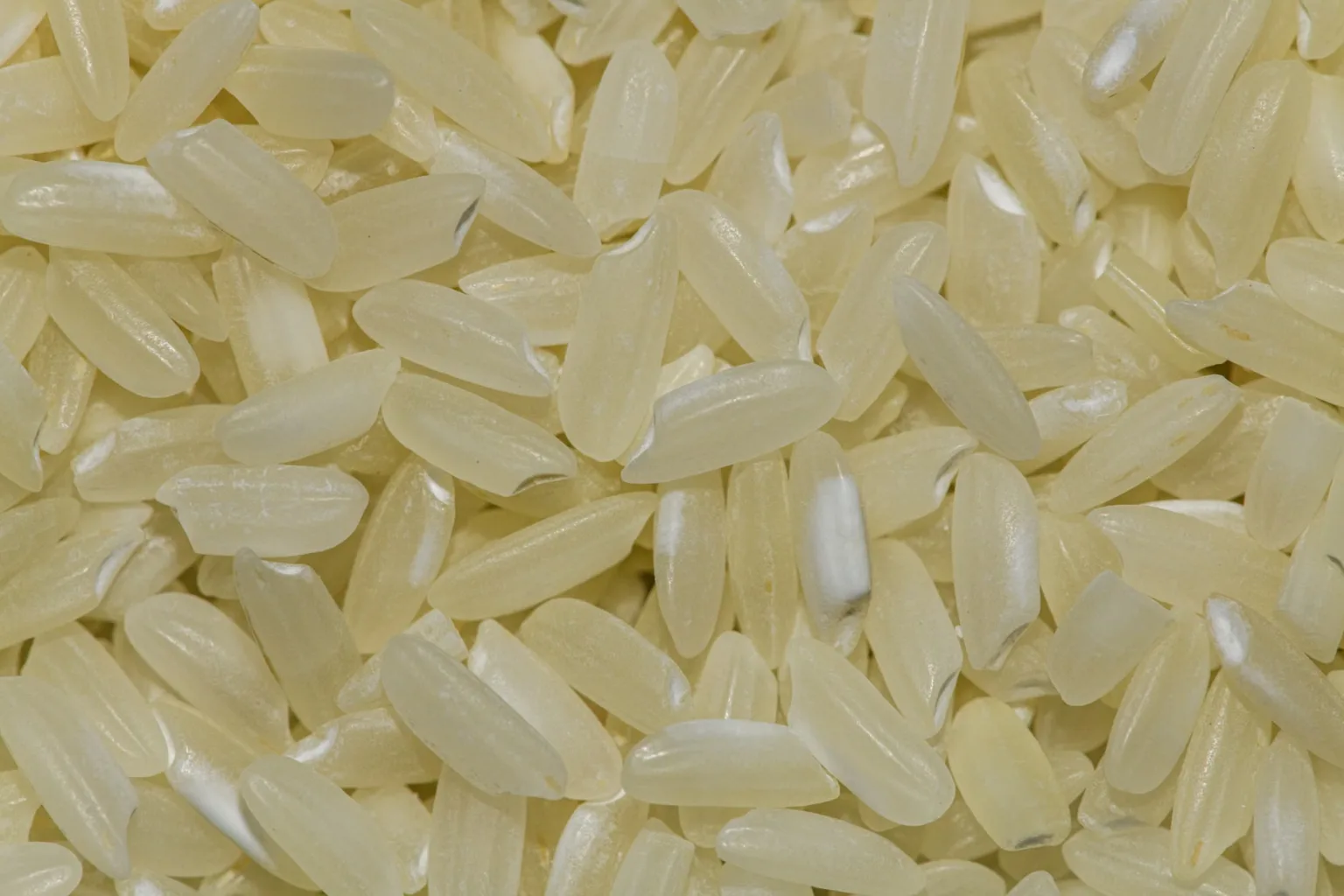
Medium-grain rice is a category defined by the grain’s shape and proportions, rather than one single variety. Its grains are longer than they are wide, but not as elongated as long-grain rice; the exact appearance can vary between products. In white medium-grain rice, polishing removes the hull and bran. When cooked, it is generally soft, moist, and slightly sticky, unlike long-grain rice, which tends to remain firmer and more separate. This describes the category as a whole: individual varieties and processing methods can produce different results.
When to use it
Choose medium-grain rice when you want tender, moist grains with some cling rather than the more separate result typical of long-grain rice. It can be used in rice dishes such as paella and soupy rice preparations; the outcome also depends on the variety and cooking method. If a recipe calls for a very separate or notably sticky texture, check whether it specifies another grain type, since long- and short-grain rice have different characteristics.
How to use it
Check the label to confirm that the product is medium-grain rice, and follow the package or recipe directions, since varieties and processing can affect how rice cooks. Cook it in liquid until it reaches the texture intended for the dish; do not assume there is one universal liquid ratio or cooking time. In paella or soupy rice, expect medium-grain rice to be tender, moist, and slightly sticky. For more separate grains, long-grain rice is generally a better fit; short-grain rice is usually stickier. Do not automatically transfer instructions for one grain category to another.
Flavour and texture
The available evidence describes the texture more clearly than any distinctive aroma. Cooked medium-grain rice is usually tender, moist, and slightly sticky. The result can change with variety and processing, so not every package will cook identically.
How to choose it
Choose a product clearly labeled medium-grain rice and buy from a trusted source. Before storage, inspect the grains and package for insects or discoloration. Do not judge the expected result by the name alone: variety and processing also affect the final texture.
Storage
For white rice, a university extension source recommends keeping it tightly sealed in a food-safe container; this limits exposure and helps protect quality. Inspect the package and grains before storage. That source’s long-term storage guidance is specifically for white rice and should not automatically be applied to brown rice or other products.
Substitutions
Long-grain rice can replace it when firmer, more separate grains are desired, but it will not reproduce medium-grain rice’s moist, slightly sticky texture. Short-grain rice tends to be stickier. These are alternatives based on the texture you want, not exact equivalents; choose according to the recipe and its directions.
Common mistakes
A common mistake is treating all rice types as interchangeable. Medium-grain rice is usually moister and stickier than long-grain rice, while short-grain rice tends to be stickier still. Do not assume every package will cook identically or use universal times and liquid amounts without checking the package or recipe.
Safety and allergens
Inspect the product before storage and follow the package directions. The available sources do not identify a specific safety warning for medium-grain rice.
Culinary uses
- base para platos de arroz
- guarnición
Recommended techniques
- cocción en líquido
- cocción como parte de arroces de una sola preparación
Pairs well with
- paella
- arroces caldosos
Frequently asked questions
What texture does cooked medium-grain rice have?
It is usually soft, moist, and slightly sticky, though the exact result can vary by variety and processing.
Can I use it for paella?
It can be used in dishes such as paella, although the recipe and specific variety affect the result.
Can I substitute long-grain rice?
Yes, if a firmer, more separate result is acceptable. It will not have exactly the same texture as medium-grain rice.
Estimated nutrition
- Fat
- 0 g
- Saturates
- 0 g
- Carbohydrate
- 78.7 g
- Sugars
- 0 g
- Fibre
- 0 g
- Protein
- 6.38 g
- Salt
- 0 g
Sources and review
Automatically researched, cross-checked and validated content. Sources consulted:
- The Essential Glossary of Cooking Terms for the Culinary Arts - Escoffier escoffier.edu
- ¿Qué tipos de arroz existen? Variedades y características vaellocampos.com
- Storing White Rice | USU extension.usu.edu
- educational content to support healthful lifestyle practices sjsu.edu
- Nutrition After Your Transplant - Health Online healthonline.washington.edu
- Memoria MAPA 2024 mapa.gob.es
- Food & Fun Afterschool hsph.harvard.edu
- CERVECERO ESPAÑOL aesan.gob.es
- Tipos de arroz, usos culinarios - Pepekitchen pepekitchen.com
- - YouTube youtube.com
- Ganar el gordo de Navidad es como encontrar un grano concreto de arroz en treinta platos de paella doi.org
- Harvest for Healthy Kids - Radishes wpcdn.web.wsu.edu
- El Arroz: Tipos de Arroz - Ybarra en tu cocina ybarraentucocina.com