- Category
- Vegetables
- State
- Fresh
- Usual unit
- unit
What it is
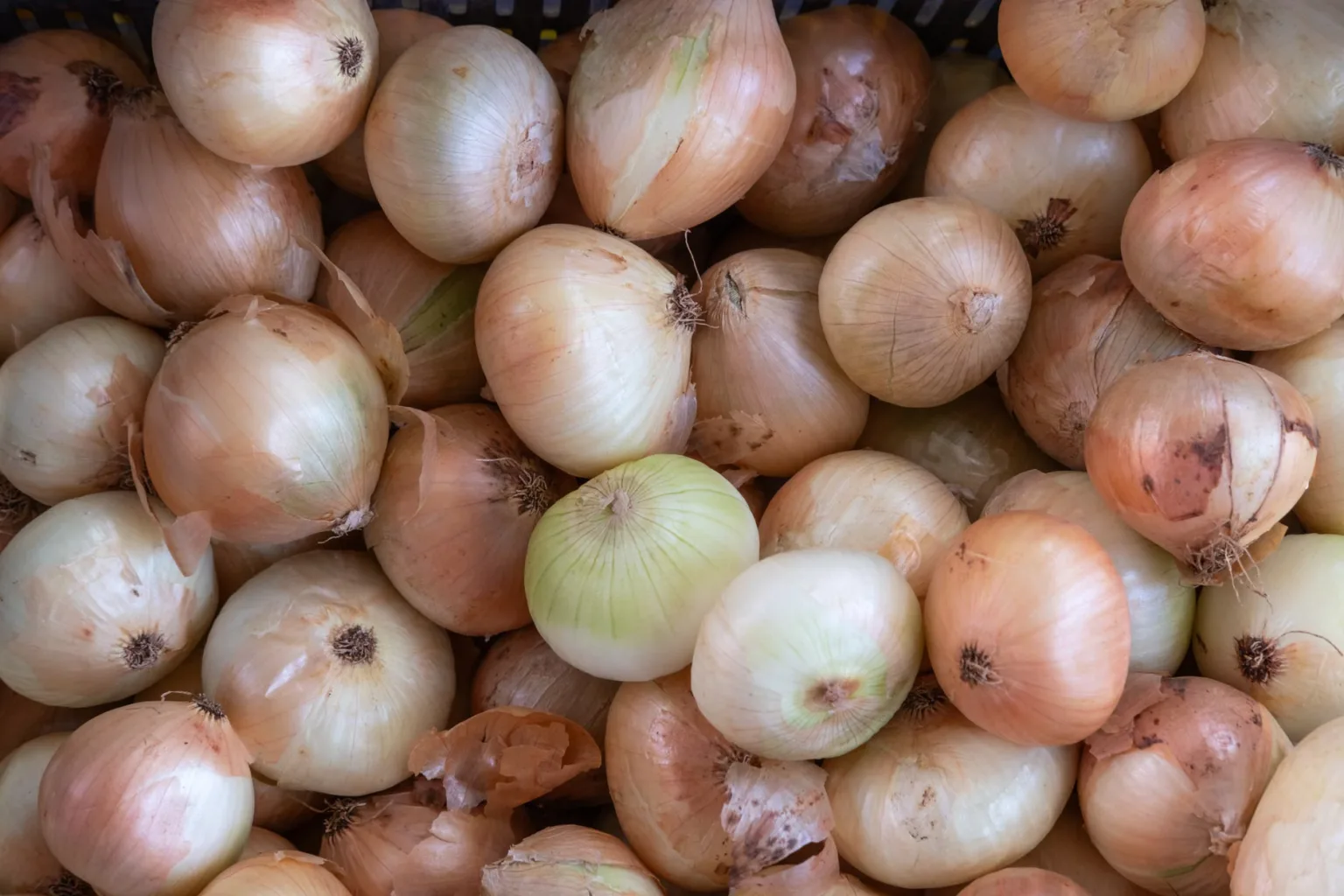
An onion is the edible bulb of Allium cepa, and one source in the evidence pack describes it as belonging to the allium family. “Medium” refers here to the size named for this ingredient; the supplied evidence does not set a weight or diameter for that category. Onions can be used in many ways: raw in salads, fried, baked, roasted, cooked in soups and sauces, or caramelized. Varieties also differ in color and culinary characteristics. The source consulted describes white onion as a common option and suggests fresh uses for red onion, while noting different profiles for other varieties. Therefore, the name “medium onion” alone does not identify a variety or guarantee a particular flavor.
When to use it
Use it when you want raw onion in a salad or when a recipe calls for onion in a soup, stew or sauce. It can also be fried, baked, roasted or caramelized. Choose a technique to suit the dish: the sources describe red onion for salads and other fresh preparations, and white onion as an option for omelets, sofrito, soups and stews. These are culinary suggestions, not a rule that makes every variety interchangeable.
How to use it
Remove the outer skin and cut the onion to suit the preparation; the available evidence does not prescribe one specific cut for this ingredient. Serve it raw, for example in salads, or cook it by frying, baking, roasting or boiling. It can also be added to soups, stews and sauces, or caramelized. For a salsa, the sources illustrate combinations with tomato, peppers and cilantro; a soup recipe combines onion with beans and tomato. Match the variety and cut to the dish and follow its recipe. Wash the onion before preparation, in line with general advice for fresh produce.
Flavour and texture
Flavor may range from mild and sweet to more pungent depending on the variety; the sources describe these differences but do not assign one fixed profile to all medium onions. Texture also varies with preparation: one source describes Figueres onion as crisp, and onions can be served raw, roasted or caramelized. Treat the named size and the actual variety as separate details.
How to choose it
Choose an onion sold as medium when a recipe specifies that size; the evidence does not define a standard weight or diameter. Also check which variety it is, since the sources describe differences among white, red and sweet onions and suggest different culinary uses for some of them. The evidence pack does not provide verified visual-quality, maturity or selection criteria, so this profile does not present them as buying rules.
Storage
The supplied evidence does not specify how to store fresh onions or establish a storage place, container or duration for this ingredient. For that reason, this profile does not recommend a method or storage period. For practical guidance, consult the package directions or an official onion-specific guide. Do not infer a storage duration from this profile, because the sources consulted do not confirm one.
Substitutions
White and red onions are options within the same ingredient, but the sources do not establish that they are identical substitutes in every recipe. White onion is suggested for sofrito, omelets, soups and stews; red onion for salads and fresh dishes. If you swap one for the other, bear in mind that flavor and suggested use may differ. There is not enough evidence here to establish quantity-for-quantity substitutions with other ingredients.
Common mistakes
Do not assume all varieties taste the same or that “medium” identifies a particular variety. Nor should the suggested uses for white or red onions be treated as universal rules. The evidence does not define size by weight or diameter, establish exact substitutions, or provide specific storage instructions for fresh onions.
Safety and allergens
The supplied sources do not include an onion-specific safety warning. As a general precaution for fresh produce, wash it adequately before eating or preparation, and use clean surfaces and utensils.
Culinary uses
- Base aromática para sopas, guisos y salsas
- Ingrediente crudo o cocinado para aportar sabor y textura
Recommended techniques
- Servir cruda, por ejemplo en ensaladas
- Freír, hornear, asar, cocer o caramelizar
Pairs well with
- Tomate, pimientos y cilantro, como en una salsa
- Frijoles y tomate, en una sopa
Frequently asked questions
Can a medium onion be eaten raw?
Yes. The evidence describes raw onion in salads and other fresh preparations. The variety can affect the flavor.
How can it be cooked?
The sources mention frying, baking, roasting, cooking in soups or sauces, and caramelizing. The recipe determines the appropriate technique.
Which variety should I use in a salad?
One source suggests red onion for salads and fresh dishes. This is a culinary suggestion, not an exclusive rule.
Sources and review
Automatically researched, cross-checked and validated content. Sources consulted:
- Client Challenge doi.org
- La cebolla, ese humilde ingrediente tan fundamental | Gastronosfera gastronosfera.com
- Salsa de Chiles Cayenas (Spanish) - National Center for Home Food Preservation nchfp.uga.edu
- Vamos a Conservar Alimentos: Raíces comestibles: remolachas, zanahorias, nabos y colinabos extension.psu.edu
- UCCE efforts improve quality of and demand for fresh ... ucanr.edu
- Pictorial Recipes - OSU Extension Service extension.oregonstate.edu
- EFNEP Hispanic Heritage Recipes | Community Nutrition | Extension/College of Agriculture, Health & Natural Resources | University of Connecticut communitynutrition.cahnr.uconn.edu
- La cebolla, la base de la gastronomía española - Enrique Romay eromay.com
- Tipo de Cebollas: usos y propiedades | Fruta y verdura Cal Fruitós calfruitos.com
- Sopa de Frijoles Negros 2000 (Black Bean Soup) - lacocina.utsa.edu
- Nutrition Education Materials for Food Pantries | UNL Food | Nebraska food.unl.edu
- Cenando con Diez Centavos 2014 agosto extension.k-state.edu