- Category
- Vegetables
- State
- Fresh
- Usual unit
- unit
What it is
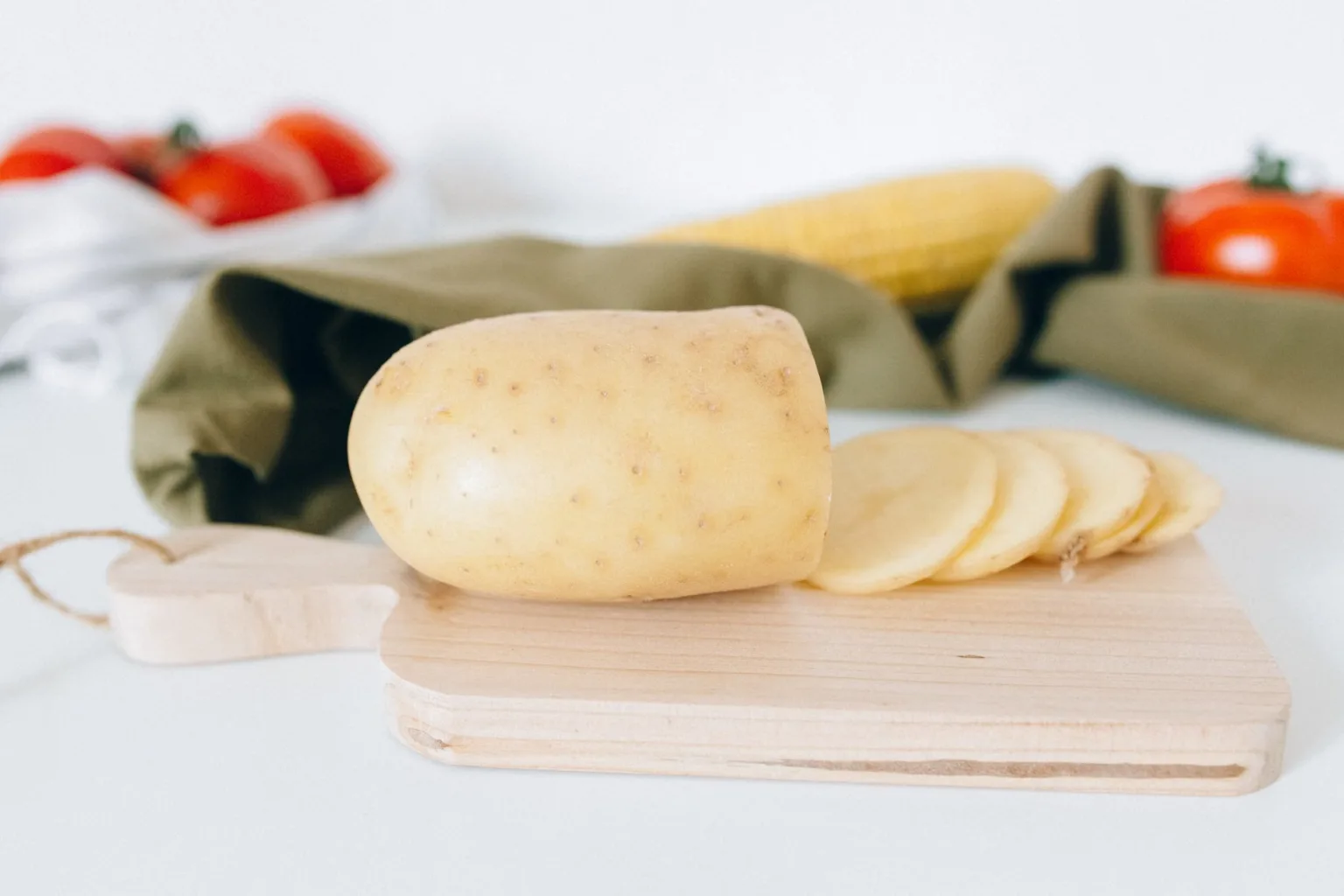
A medium potato is a fresh potato of an intermediate size, not a specific variety or a guarantee that it will cook up firm or floury. Potatoes vary in shape, skin and flesh color, texture, and how they respond to heat. Size can give you a sense of the individual piece, but it is not enough to determine whether it is best for salad, mash, or frying. Waxy-textured potatoes tend to hold their shape in boiled dishes and salads; flourier potatoes are more likely to break down and work well in mash and baked dishes. A potato can be cooked with its skin on or peeled, depending on the recipe and the result you want.
When to use it
Choose a firm-textured potato when you want recognizable pieces in a salad, boiled dish, or stew. For mash or a baked preparation where you want a soft, light interior, a flourier variety may be a better fit. A medium potato is also convenient when a recipe calls for an individual potato to bake or stuff. Since size does not determine texture, check the variety or its suggested use when that information is available, and match the cut and method to the recipe. If you do not know the variety, a test piece can help show whether it holds its shape.
How to use it
Rinse the potato under running water and scrub the skin to remove dirt; leave the skin on if the recipe allows. For boiling or steaming, cut the potatoes into similarly sized pieces to help them cook evenly. For roasting, baking, frying, or adding to a stew, cut the potato to suit the dish and the texture you want. Waxy-textured potatoes work well in salads and dishes where you want intact pieces; flourier potatoes break down more easily and can thicken a stew or become mash. Pair with onion, garlic, herbs, vegetables, cheese, cream, meat, or fish as the recipe calls for. Whether to peel before or after cooking depends on the method and the result you are after.
Flavour and texture
Potatoes generally have a mild flavor, so they work with a wide range of seasonings and accompaniments. Once cooked, their texture may be firm and moist or drier, flourier, and easier to break down, depending on variety and preparation. Medium size alone does not predict that difference. The skin gives a different texture from the flesh and can be left on when the recipe permits. For a salad, you usually want pieces that keep their shape; for mash, you want a soft interior that is easy to crush.
How to choose it
Look for potatoes that are clean, firm, and fairly smooth, without green areas, visible sprouts, soft spots, shriveling, major cuts, or signs of decay. Choose pieces of similar size if you want them to cook more evenly. For a salad or stew with intact pieces, ask for a variety that holds its shape; for mash, a flourier variety may be more suitable. A label or seller's advice can help identify the type, but medium size alone does not tell you how a potato will behave in cooking.
Storage
Keep potatoes in a cool, dark, well-ventilated place, and avoid damp conditions that leave the tubers wet. Protect them from light, which can turn the surface green, and handle them gently to reduce bruising. Do not store them in the refrigerator: refrigeration can encourage a sweeter taste and browning during cooking. Check them from time to time and remove any that are deteriorating. Storage life depends on the variety and conditions, so one fixed time limit does not apply to every potato.
Substitutions
To replace a medium potato, use another potato of a similar size and adjust the amount to suit the recipe. If the dish needs pieces that hold their shape, choose a waxy variety; for mash or dishes that benefit from a potato that breaks down, choose a flourier one. Firm red or white potatoes are options for boiling, stewing, and salads; flourier potatoes are better suited to mash and baking. A change of variety can alter the final texture, so check the potato as it cooks.
Common mistakes
Do not assume all medium potatoes cook alike: size does not identify the variety or its texture. A floury potato may fall apart in a salad, while a firm variety may not make the lightest mash. Avoid choosing potatoes that are soft, very shriveled, deteriorated, sprouting, or green in places. Do not store them in light or in the refrigerator if you want to avoid changes in color, flavor, and cooking texture.
Safety and allergens
Wash the potato before preparing it. AESAN states that peeling and cooking potatoes can reduce their naturally occurring glycoalkaloids, but this reduction is not a guarantee that they are completely eliminated. If the product is packaged, follow the storage and use directions on its label.
Culinary uses
- Guarnición
- Ingrediente principal para tortillas, purés y guisos
- Base para sopas y ensaladas
Recommended techniques
- Hervir
- Asar
- Freír
- Hornear
Pairs well with
- Cebolla
- Ajo y hierbas
- Queso y nata
- Carne, pescado o verduras
Frequently asked questions
Is a medium potato a specific variety?
No. “Medium” describes size; the variety and texture can differ.
Which potato is suitable for salad?
A waxy-textured potato that tends to hold its shape during cooking is usually a good choice.
How should fresh potatoes be stored?
Keep them somewhere cool, dark, and ventilated, and avoid refrigeration and exposure to light.
Sources and review
Automatically researched, cross-checked and validated content. Sources consulted:
- En el etiquetado alimentario hay algunas menciones que son obligatorias eletiquetadocuentamucho.aesan.gob.es
- Client Challenge doi.org
- 1.1.2-La Patata: historia, variedades y usos gastronómicos - GIRASOLES webgirasoles.com
- Patata española: Origen variedades y usos culinarios en la gastronomía española - LaRecetaSecreta.com larecetasecreta.com
- Variedades de patatas: tipos, características y usos culinarios – Patatas patatas.es
- Tipos de patatas: guía práctica de características y usos | Bartalent Lab bartalentlab.com
- Aesan - Agencia Española de Seguridad Alimentaria y Nutrición aesan.gob.es
- VARIEDADES DE PATATA DE SIEMBRA CERTIFICADA mapa.gob.es
- Sweet Potato Selection, Storage, and Prep Tips | UNL Food | Nebraska food.unl.edu
- Using & Storing Potatoes | Home & Garden Information Center hgic.clemson.edu
- Selecting, Storing, and Serving Ohio Potatoes | Ohioline ohioline.osu.edu
- Which potato varieties can be stored the longest? | OSU Extension Service extension.oregonstate.edu
- Potatoes, White – Cubed or Whole - National Center for Home Food Preservation nchfp.uga.edu
- Knowing the Types of Potato to Use in Your Cooking uaex.uada.edu
- Potatoes are a naturally healthy food. One content-hub.uidaho.edu
- Extension publications | University of Idaho extension.uidaho.edu
- Tipos de Patatas: Guía de Variedades y Usos | Supercash supercash.es