- Category
- Dairy and eggs
- State
- Fresh
- Usual unit
- slice
What it is
Processed melting cheese, often called processed cheese, is made by grinding, mixing, melting and emulsifying one or more varieties of cheese. The available description says it may be produced with or without added ingredients. It is not simply any natural cheese that melts when heated: it is a transformed cheese product. Its composition, flavor and behavior can differ according to the cheeses used and the formulation, so check the product’s legal or sales name and ingredient list rather than relying on appearance alone.
When to use it
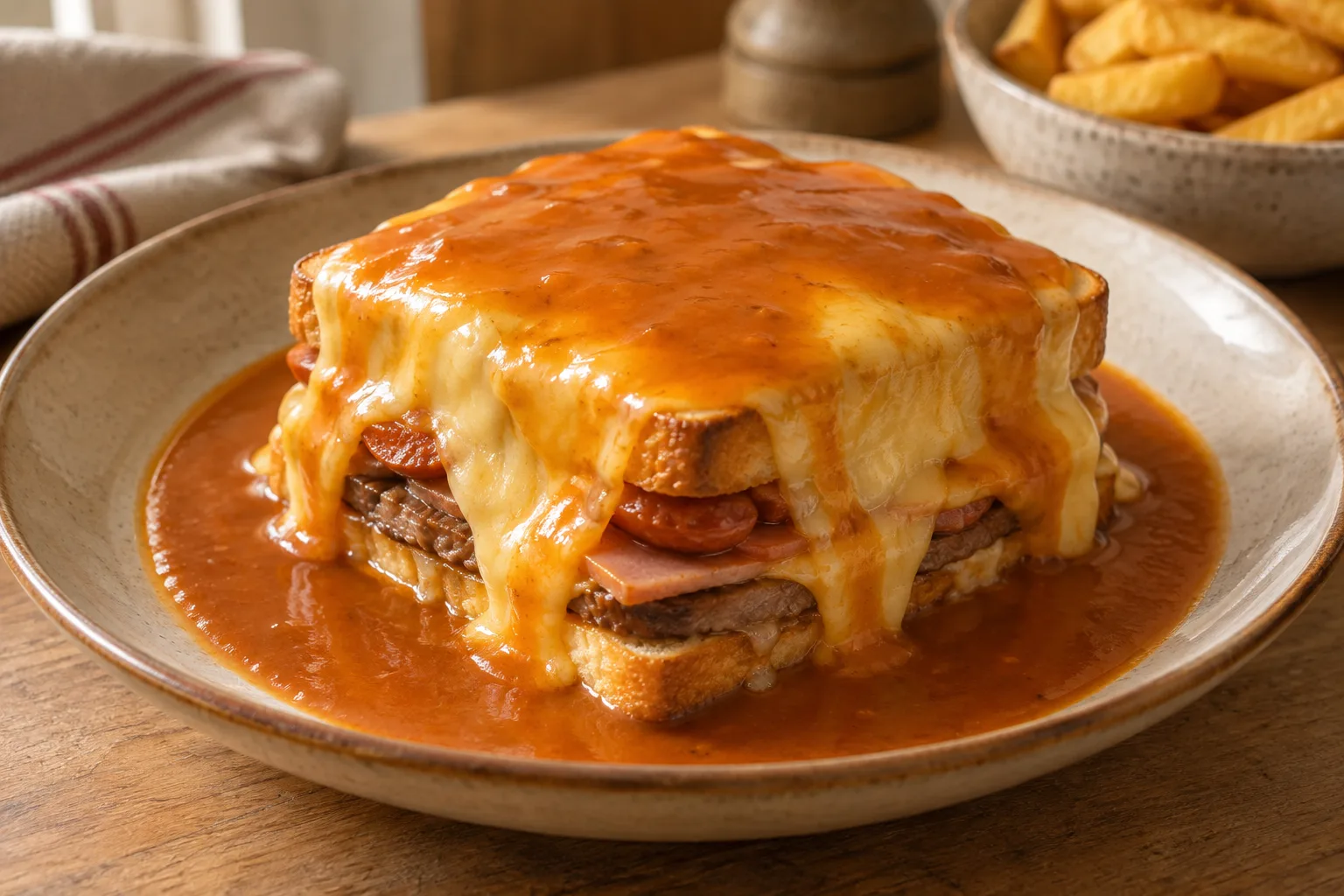
Use it when you want to add melted cheese to a hot dish or when a portion that is easy to incorporate suits the recipe, such as a slice in a sandwich or burger. It can also be used in nachos or pizza, examples given for melted-cheese preparations. Products and cheeses do not all behave identically when heated, so the result depends on the particular product and recipe. If the character of a particular cheese matters, compare the labels before choosing.
How to use it
Remove the product from its packaging and cut or separate it into portions suited to the recipe. Add it to a sandwich or burger before finishing the heating, or distribute it over nachos or pizza as part of a hot preparation. If heating it on its own, warm it gradually and watch the texture, since the formulation and cheeses used can affect the result. Follow the package directions, and do not assume a natural cheese will replace processed cheese in the same amount or produce the same texture.
Flavour and texture
Flavor and texture are not identical across all products: they depend on the cheeses used and the formulation. The product is made by grinding, mixing, melting and emulsifying cheese, and is used in dishes where melted cheese is wanted. Check the product name and ingredients if you need a particular flavor strength or texture.
How to choose it
Read the product name and ingredient list to distinguish processed melting cheese from sliced natural cheese or another product with a similar appearance. The available description says processed cheese may be made with one or more varieties, with or without added ingredients, so check the label of the specific product before buying.
Storage
Follow the storage directions printed on the package, both before and after opening. The available evidence does not establish a storage time or temperature that applies to every processed cheese product. Keep it in its packaging or close it securely as the manufacturer directs, and do not judge its storage life by appearance alone.
Substitutions
Mozzarella and Emmental can be alternatives in some hot dishes: mozzarella is described as suitable for pizza and lasagna, and Emmental as a cheese for melting. They are not exact equivalents to processed cheese; flavor, texture and how they incorporate into a recipe can differ.
Common mistakes
Do not confuse processed melting cheese with any natural cheese that melts when heated: they are made differently. Also, do not assume every product has the same ingredients or result; check the label and follow the package directions for heating and storage.
Safety and allergens
Contains milk. Check the label for ingredients and any manufacturer warnings, and follow the package storage directions. The available evidence does not provide a specific storage time or temperature for this category.
Culinary uses
- Aportar una capa de queso fundido a sándwiches, hamburguesas y nachos
- Dar una textura cremosa a preparaciones calientes con queso
Recommended techniques
- Fundir o calentar gradualmente
- Incorporar en una preparación caliente
Pairs well with
- Pan y sándwiches
- Nachos, pizza y hamburguesas
Frequently asked questions
Is processed melting cheese the same as natural cheese that melts?
No. Processed cheese is made by grinding, mixing, melting and emulsifying one or more cheeses. Natural cheese may melt when heated, but that does not make it the same product.
What dishes can I use it in?
You can add it to hot preparations such as sandwiches, burgers, nachos or pizza. The result depends on the product and recipe.
How should I store it after opening?
Follow the package directions. The available evidence does not establish a universal storage time or temperature for every product.
Estimated nutrition
- Fat
- 28.6 g
- Saturates
- 21.4 g
- Carbohydrate
- 3.57 g
- Sugars
- 0 g
- Fibre
- 0 g
- Protein
- 21.4 g
- Salt
- 3.22 g
Sources and review
Automatically researched, cross-checked and validated content. Sources consulted:
- Client Challenge doi.org
- 5 Major Cheese Styles Every Chef Should Know ice.edu
- Variedades e ingredientes del queso | Consumer consumer.es
- OSU research could help prevent Listeria growth in queso fresco | The Statewides: Our Impact ourimpact.oregonstate.edu
- Elaboración Segura del Queso Fresco | University of Idaho uidaho.edu
- FOOD PRESERVATION AND STORAGE content.libraries.wsu.edu
- College Cooking – Carleton Admissions carleton.edu
- Walnut Hill College | World-Class Culinary, Pastry, and Hospitality Degrees walnuthillcollege.edu
- Characterization of US Queso Fresco and endolysins for Queso Fresco implementation | IDEALS ideals.illinois.edu
- Cooking Collaborative Recipe & Video Collection - High Point Dining dining.highpoint.edu
- Central Sierra: Say Cheese! (in person - Sutter Creek) | UC Master Food Preservers of Central Sierra ucanr.edu
- ➤ Mejor Queso Fundido ▷ Delicioso para derretir en la pizza ilujorquesos.es
- Quesos más utilizados en la cocina | CONtexto Ganadero contextoganadero.com