- Category
- Fish and seafood
- State
- Fresh
- Usual unit
- g
What it is
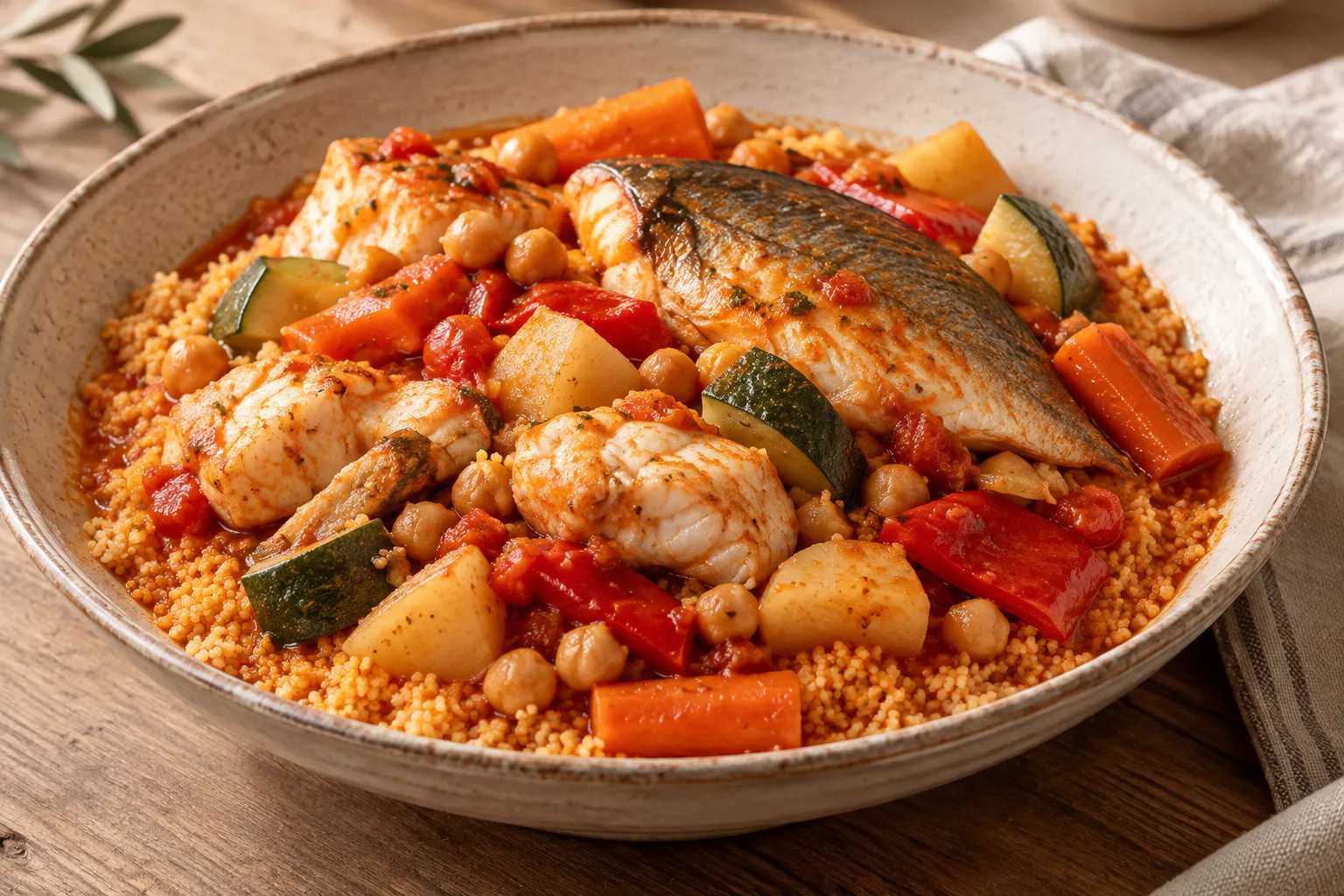
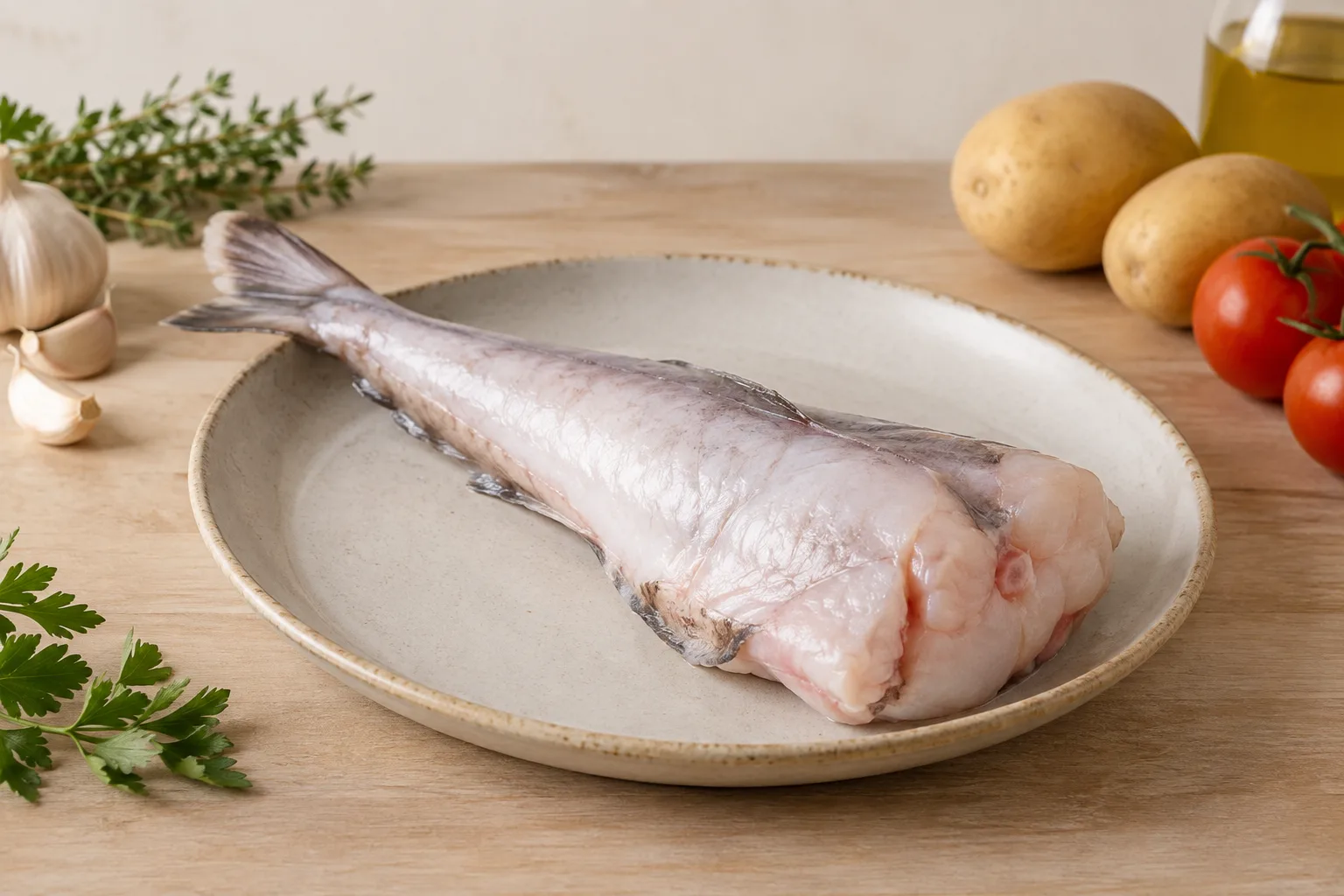
Monkfish tail is the tail portion sold for cooking, either whole or cut into portions or medallions. Monkfish appears in a range of preparations: it can be simmered with tomato and white wine, added to soups and rice dishes, or served grilled or roasted. Its firm flesh holds its shape in broths and stews, giving distinct bites alongside more tender ingredients or flakier fish. The name of the cut does not by itself tell you whether the skin or bone has been removed, or how the tail has been portioned. Ask the fish seller how it has been prepared before deciding how to cut or cook it.
When to use it
Choose monkfish tail when you want pieces of fish that keep their shape in a soup, stew or rice dish rather than readily breaking apart among the other ingredients. It can also be served as the main feature, grilled or roasted, or simmered with tomato and white wine. Its firmness suits preparations with potatoes, garlic, herbs or rice. The available information describes culinary uses but does not establish a buying season. Check local availability and ask the seller how the tail is presented when planning a dish.
How to use it
Check whether the tail has been cleaned, whether skin or bone remains, and whether it is sold whole or cut; ask for it to be prepared to suit your dish. Divide it into portions or medallions, then grill or roast it, or add it to a tomato-and-white-wine stew. It is also used in soups and rice dishes, where its firm flesh contrasts with tender rice or flakier fish. Try the described combinations with potatoes, garlic, olive oil and herbs, or serve it with a sauce. Do not treat the timing in one recipe as a rule for every piece: the cut and preparation can vary.
Flavour and texture
The preparations described present monkfish as clean-tasting, with firm flesh that can hold its shape in soups and stews. That consistency gives distinct bites and contrasts with tender rice, sauces or flakier fish. Some recipes serve it with sauce or wrap it in pancetta. The result depends on the preparation; the available sources do not establish one description that applies to every piece and recipe.
How to choose it
Ask whether the tail has been cleaned, whether skin or bone remains, and whether it is sold whole or as medallions, since each presentation may need different preparation. If you want the bone for stock, check whether it is included or ask whether it can be supplied separately. The available sources do not specify a buying season or a universal visual test for choosing fresh monkfish tail. Ask the seller and use the product information rather than judging quality from the cut’s name alone.
Storage
The available information does not specify storage conditions or time limits for fresh monkfish tail. Follow the package instructions or the seller’s advice; if these are unavailable, consult an official food-safety source in your area. Do not infer a storage period from the name of the cut or from a recipe. This profile describes culinary uses and does not establish a storage method or duration.
Substitutions
The available evidence describes monkfish as an option in dishes otherwise made with cod or haddock. It does not establish that those fish are equivalent substitutes for monkfish tail. If you replace another fish with monkfish in a recipe, the sources do not say that the texture or cooking requirements will be identical. Adapt the dish to the piece you have and the seller’s instructions.
Common mistakes
Do not assume every tail has been cleaned or that its central bone has already been removed; check how the piece has been prepared before cooking. Do not expect another fish to have the same texture or cook in the same way. The evidence cites monkfish as an alternative to cod or haddock, but does not confirm the substitution in the opposite direction. Finally, do not treat the timing from one particular recipe as a rule for every size or cut.
Safety and allergens
The supplied evidence identifies no monkfish-tail-specific warning. Handle it carefully as raw fish, follow the package or seller instructions, and consult official local food-safety guidance if you are unsure.
Culinary uses
- Main course
- Fish soups and stews
- Rice and pasta dishes
Recommended techniques
- Grilling
- Simmering
- Roasting
- Pan-frying
- Papillote cooking
Pairs well with
- Tomato and white wine
- Potatoes and herbs
- Garlic and olive oil
- Rice
Frequently asked questions
What can I cook with monkfish tail?
It can be grilled or roasted, or used in soups, stews and rice dishes. The preparations described also include tomato and white wine.
What ingredients pair well with monkfish tail?
The combinations described include tomato, white wine, potatoes, garlic, herbs and rice. Choose according to the dish and how the tail is presented.
Can I substitute cod or haddock for monkfish?
The evidence describes monkfish as an alternative to cod or haddock in some dishes, but does not confirm that the reverse substitution gives the same result. Texture and preparation may differ.
Sources and review
Automatically researched, cross-checked and validated content. Sources consulted:
- ¿Por qué la muerte es origen de miedos y tabúes? doi.org
- El rape en el mundo: Usos culinarios y tradiciones culturales | Easyfish easyfish.net
- Comité Científico aesan.gob.es
- 165. Nutritious food prices in Malawi.docx - AgEcon Search ageconsearch.umn.edu
- UNDERSTANDING NEW YORK CITY'S FOOD ... - Columbia SIPA sipa.columbia.edu
- Food is fundamental, fun, frightening, and far-reaching psych.upenn.edu
- CHARLOTTE CAMPUS 2018–2019 CATALOG jwu.edu
- Corner Stores as Food Sources and Third Places for the ... dl.tufts.edu
- Las mejores recetas con rape | Recetas | Pescanova pescanova.es
- Recetas Con Colas De Rape | Galicia Marisco galiciamarisco.com