- Category
- Herbs and spices
- State
- Dry
- Usual unit
- teaspoon
What it is
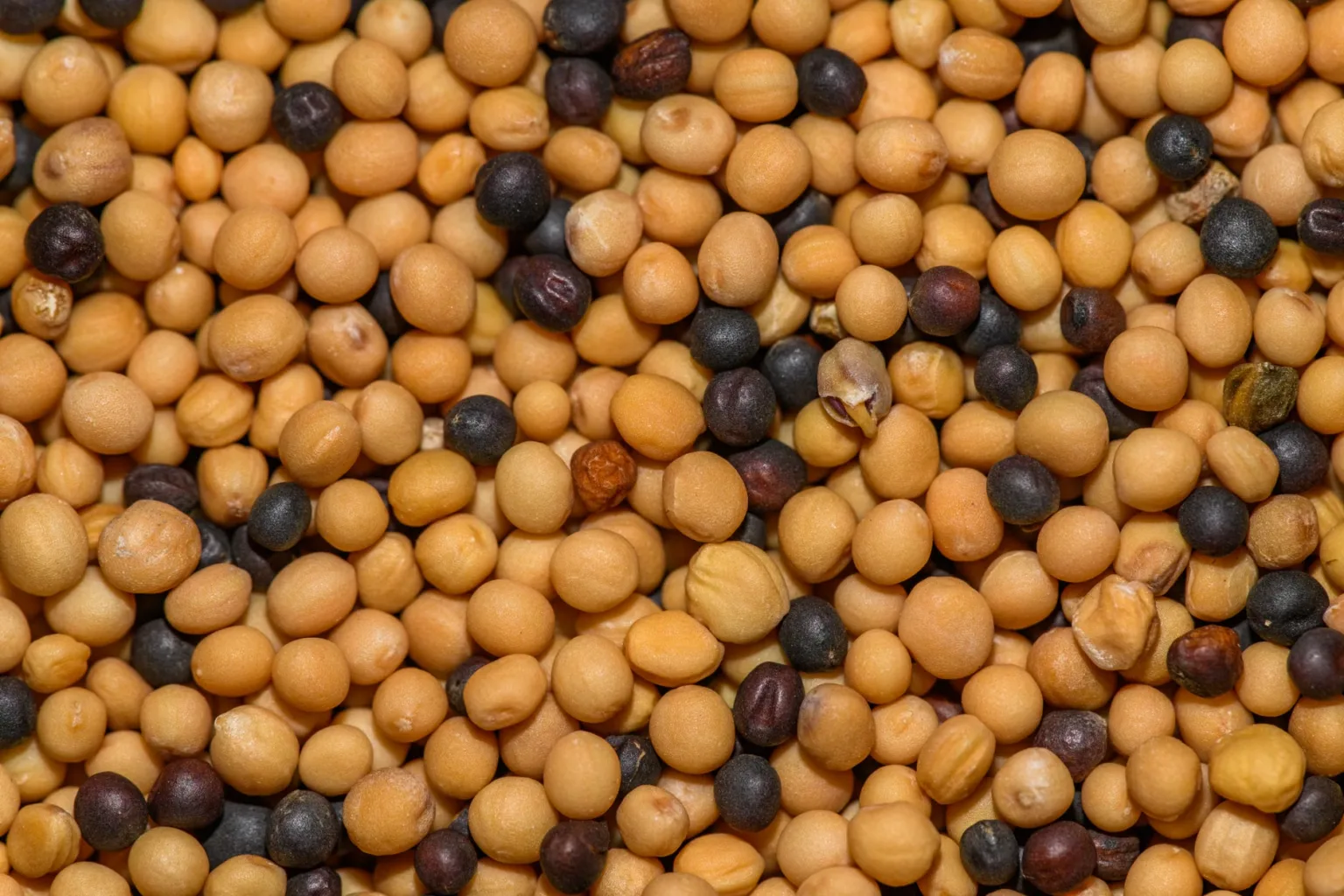
Mustard seeds are the small seeds of the mustard plant, used in cooking as a spice. They are commonly used whole and can also be crushed or ground before being added to a dish. Their flavor is distinctive and may be pungent, with intensity that varies by seed type. They are not the same as prepared mustard: prepared mustard is made from seeds along with other ingredients, so it adds moisture and can affect a recipe’s flavor and texture.
When to use it
Use mustard seeds when you want mustard seasoning in a savory dish and want to choose the texture. Whole seeds remain noticeable in the finished food, while crushed or ground seeds disperse differently. They can be included in seasoning blends for sausages and are also used in meat or fish preparations. Since seed intensity varies, start with a modest amount and adjust to taste rather than assuming every type will taste equally strong.
How to use it
Measure the amount called for by your recipe and decide whether you want the seeds whole or crushed. For a finer, more integrated seasoning, crush or grind the seeds before adding them; for visible grains, use them whole. They can also be combined with other seasonings, including in a blend for sausage. If you replace seeds with prepared mustard, remember that the prepared condiment contains other ingredients and adds liquid. Use it sparingly and adjust the rest of the recipe as needed.
Flavour and texture
Mustard seeds have a distinctive flavor that can be pungent, with intensity varying by seed type. Whole seeds remain as small, perceptible grains; crushing or grinding makes them finer and changes how they disperse through a dish. Prepared mustard is not an identical substitute because it contains additional ingredients.
How to choose it
Choose a product clearly labelled as mustard seeds and check whether it is sold whole or in another form. Read the ingredient information and any use or storage directions on the package. Whole seeds give you the option of using them as they are or grinding them when a recipe calls for a finer texture.
Storage
Follow the storage directions on the package and close it after use. The evidence available does not establish one universal storage period or special storage conditions for every product and form, so check the label for the specific item rather than assuming a fixed shelf life.
Substitutions
Ground mustard can stand in for whole seeds when you need a finer form, but the texture and distribution of seasoning will change. Prepared mustard can provide a mustard flavor, but it also contains other ingredients and liquid; it is not a like-for-like replacement and may require recipe adjustments.
Common mistakes
Do not treat mustard seeds and prepared mustard as identical: they have different forms, and prepared mustard adds moisture. Do not assume all seeds have exactly the same intensity, either. Decide whether you need whole or ground seeds before adding them so the texture suits the dish.
Safety and allergens
Check the product label and allergen information, especially when cooking for someone else or avoiding specific ingredients. Required food information can vary with the product and how it is sold; if its composition is unclear, ask the seller or manufacturer.
Culinary uses
- Condimento para aportar sabor a platos salados
- Ingrediente de mezclas de especias, como algunos sazonadores para embutidos
Recommended techniques
- Usar las semillas enteras
- Machacar o moler las semillas antes de incorporarlas
Pairs well with
- Mezclas para sazonar carne y embutidos
- Preparaciones de carne o pescado
Frequently asked questions
Can I use mustard seeds whole?
Yes. They can be used whole, or crushed or ground if you want a finer texture.
Are mustard seeds the same as prepared mustard?
No. Prepared mustard is made with seeds and other ingredients, so it adds liquid and may change a recipe’s texture.
How should I store mustard seeds?
Follow the package directions and keep the package closed after use. No single storage period is established here for every product.
Estimated nutrition
- Fat
- 50 g
- Saturates
- 0 g
- Carbohydrate
- 0 g
- Sugars
- 0 g
- Fibre
- 0 g
- Protein
- 0 g
- Salt
- 0 g
Sources and review
Automatically researched, cross-checked and validated content. Sources consulted:
- En el etiquetado alimentario hay algunas menciones que son obligatorias eletiquetadocuentamucho.aesan.gob.es
- ¿Por qué la muerte es origen de miedos y tabúes? doi.org
- The Essential Glossary of Cooking Terms for the Culinary Arts - Escoffier escoffier.edu
- Washington State Food Access English-Spanish Glossary wpcdn.web.wsu.edu
- 04 AB Vocabulary List – Semillas: Elementary Spanish I pressbooks.uiowa.edu
- UCCE efforts improve quality of and demand for fresh ... ucanr.edu
- Encurtir los Alimentos - Illinois Extension extension.illinois.edu
- tico en la alergia alimentaria aesan.gob.es
- Pantry Staples and Other Commodity Food Recipes – Page 4 – Food Smart Colorado foodsmartcolorado.colostate.edu
- nabos • mostaza aggie-horticulture.tamu.edu
- Summer sausage and deli-style meats | Servicio de Extensión de OSU extension.oregonstate.edu
- Mostaza con ajo | Extensión de la UMN es.extension.umn.edu
- Descubre la mostaza friolisa.es
- Mostaza: origen, tipos, propiedades y usos en la cocina bonviveur.com
- El origen de la mostaza • Boroa Jatetxea boroa.com