- Category
- Fruit
- State
- Fresh
- Usual unit
- unit
What it is
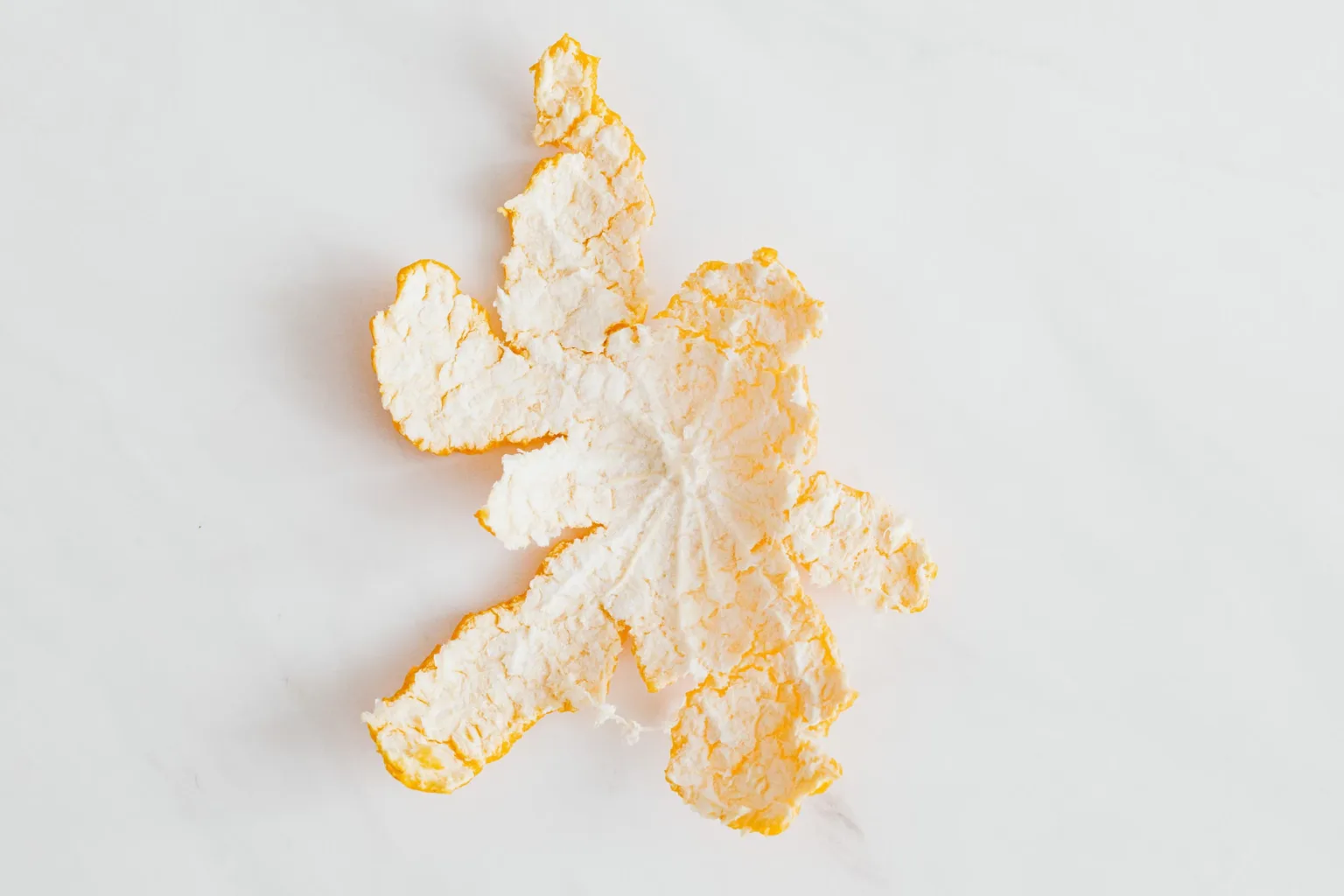
Orange peel is the outer covering of the fruit. In cooking, it can be finely grated for its aroma, cut into strips or rounds, candied, or dried for other culinary uses. Zest comes from the coloured outer layer; avoid grating in the white layer beneath it. Fresh peel is not the only format available: dried and frozen forms are also described in the supplied material. Orange peel is different from a dried orange slice, which retains some of the fruit’s flesh. It is used as an aromatic ingredient and is not an automatic replacement for orange juice or pulp.
When to use it
Use orange peel when a dish needs citrus aroma without necessarily adding juice. A little finely grated peel can scent cakes, sweets and sugar; strips or rounds can be used in drinks, as a garnish, or for candying. It can also flavour oils, marinades, dressings or water. In savoury cooking, add it when its citrus character suits the other ingredients, and avoid letting it dominate the dish. Dried peel can also be added to tea or spice blends for infusions.
How to use it
Wash the orange before preparing its peel. To make zest, use a fine grater on the coloured outer layer only, taking care not to grate in the white layer. Add the zest to batters, sugar or other aromatic preparations as the recipe directs. For drinks or flavoured water, add fresh peel and let it infuse or remove it according to the flavour you want. You can also use peel to scent oil or make marinades and dressings, or cut it into strips or rounds and candy it; candied peel can be served with chocolate. Another option is to dry the peel and grind it for citrus salt, or add small pieces to an infusion blend. Use clean, edible peel and choose a cut suited to the intended use.
Flavour and texture
Its main culinary contribution is a concentrated citrus aroma that can perfume both sweet and savoury preparations. Finely grated, it disperses readily through batters and mixtures; in strips or rounds, it is more visible and can infuse liquids. Candying transforms it into a distinct preparation that can be served with chocolate. Aroma and intensity can vary between fruit and formats, so adjust the amount while tasting the dish.
How to choose it
Choose whole oranges in good condition when you plan to use fresh peel; the supplied evidence does not provide official selection criteria or establish a particular variety as best. If buying prepared peel, check that it is orange peel and note its format, such as grated, strips, dried or frozen. Think about the recipe: fine zest blends in easily, while strips can be useful for infusing or garnishing. Follow the product information on the package.
Storage
The available evidence describes fresh-peel uses and also mentions dried and frozen peel, but it does not establish storage times or conditions for each format. Keep the product in its packaging and follow the manufacturer’s instructions rather than assuming a shelf life. For homemade dried peel, the culinary source describes drying it before grinding or using it in infusions. Do not keep peel that shows visible deterioration, and check the label for packaged products.
Substitutions
Lemon peel can provide a citrus alternative when orange peel is unavailable, although the cited culinary source confirms that the two can be combined, not an exact flavour or quantity equivalent. Dried or frozen orange peel may also serve an aromatic role in recipes that suit those formats. Adjust the cut and amount to the preparation; the available sources do not document a universal conversion.
Common mistakes
Grating too deeply and including the white layer when making fine zest can change the result; the culinary source advises grating the outer peel without taking that layer. Another mistake is treating fresh, dried and frozen peel as interchangeable formats: the evidence gives no quantity conversions. Do not assume that the flesh in a dried orange slice works just like peel alone.
Safety and allergens
The supplied sources contain no specific official warning about orange peel. Use peel from an orange intended for consumption, wash it before grating, and follow package directions for prepared products. The included official source describes AESAN’s general role but provides no ingredient-specific handling advice.
Culinary uses
- Aromatizante cítrico para preparaciones dulces y saladas
- Ingrediente para bebidas, infusiones y decoración
Recommended techniques
- Rallar finamente la parte exterior de la piel
- Infusionar en líquidos o aceites
- Confitación en tiras o rodajas
- Secado y triturado para mezclas aromáticas
Pairs well with
- Chocolate
- Jengibre y cúrcuma
- Canela, romero o tomillo
- Té, manzanilla y bebidas cítricas
Frequently asked questions
Which part of an orange should I zest?
Finely grate the coloured outer layer and avoid the white layer beneath it, as advised by the culinary source.
What can I use orange peel in?
It can scent cakes and other sweets, drinks, water, oils, marinades and dressings. It can also be candied or added dry to infusion blends.
Can dried orange peel replace fresh peel?
Dried peel is mentioned for infusions and aromatic blends, but the sources do not give an amount equivalent to fresh peel. Adjust it to the recipe and aroma.
Estimated nutrition
- Fat
- 0 g
- Saturates
- 0 g
- Carbohydrate
- 72 g
- Sugars
- 72 g
- Fibre
- 2 g
- Protein
- 4 g
- Salt
- 0.21 g
Sources and review
Automatically researched, cross-checked and validated content. Sources consulted:
- ¿Por qué la muerte es origen de miedos y tabúes? doi.org
- The Essential Glossary of Cooking Terms for the Culinary Arts - Escoffier escoffier.edu
- Agencia Española de Seguridad Alimentaria y Nutrición aesan.gob.es
- Page 7 | See All Home Food Preservation and Safety - Home Food Preservation and Safety - Food Safety and Quality extension.psu.edu
- melons - Extension St. Croix County stcroix.extension.wisc.edu
- No tires la piel de la naranja, aprovéchala en estos cinco usos que quizá no conocías directoalpaladar.com
- Proveedores de Piel de Naranja Congelada - A granel & al por mayor | Nutrada nutrada.com
- Naranja Seca: Comparativa y análisis de los mejores productos para potenciar tus recetas asiáticas thaibistro.es