- Category
- Fish and seafood
- State
- Fresh
- Usual unit
- unit
What it is
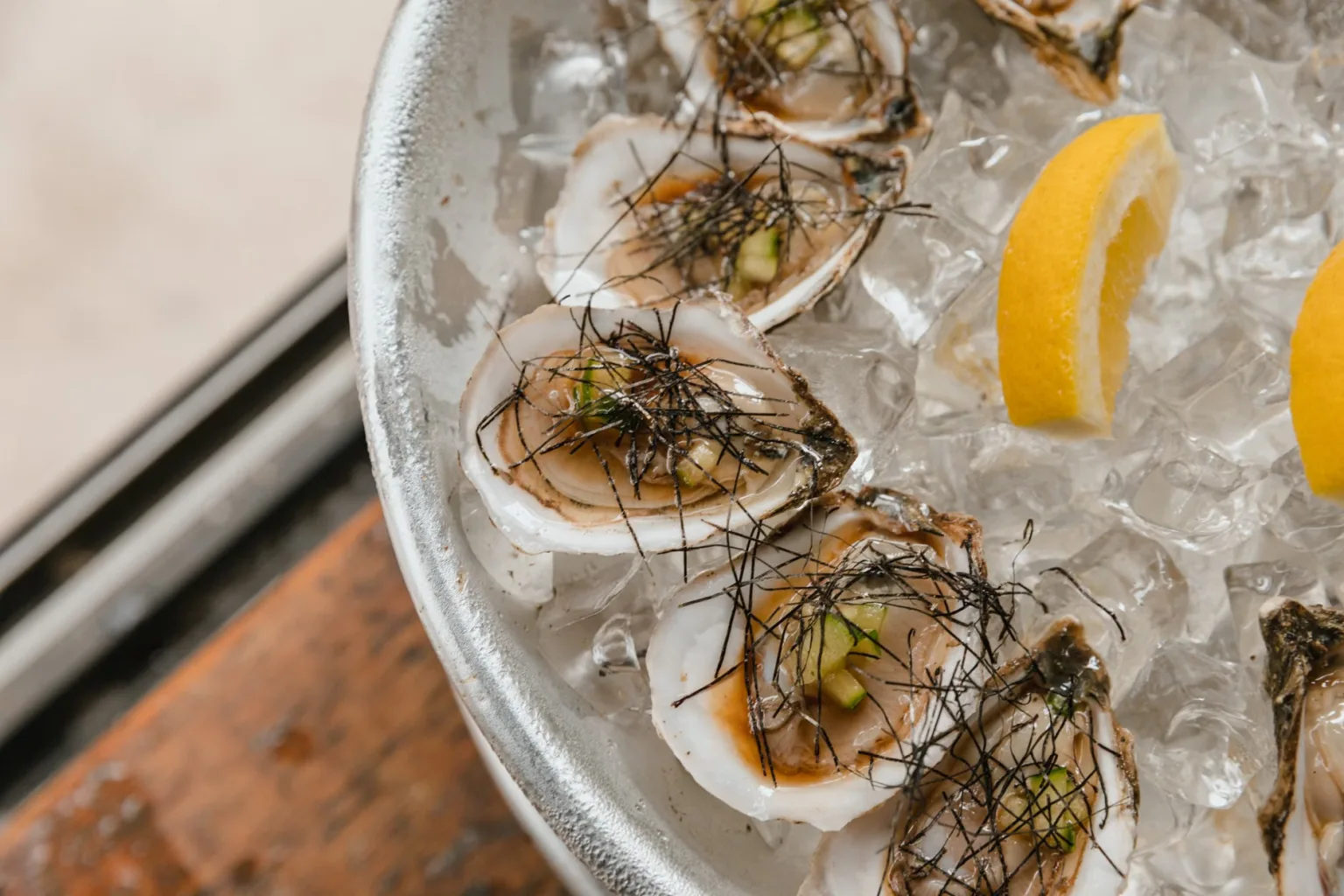
An oyster is a marine bivalve mollusk whose soft body is protected by a two-part shell. Flat and cupped oysters are among the types found in food markets and kitchens. Sources describe differences between them: cupped oysters are often described as more intense in flavor, while flat oysters are described as more delicate; texture can also vary with the individual oyster and how it was raised. The flesh may have different hues, so color alone does not identify a variety or guarantee quality. Oysters are eaten on their own and used in both raw and cooked preparations. Fresh oysters should not be confused with oyster sauce, a condiment made using oysters.
When to use it
Choose oysters when you want a sea-like flavor to take center stage, whether serving them on their own or adding them to a dish. Raw oysters with lemon or mignonette make a simple presentation; cooked options include roasting, grilling or gratinating, steaming, and tempura. They can also be included in soups and other seafood preparations. Keep in mind that flat and cupped oysters are not identical: sources describe differences in flavor and texture, so choose according to the result you want. Judge availability and quality by the local selection and the seller’s information rather than assuming a fixed season.
How to use it
For a raw presentation, serve oysters plain with lemon or alongside mignonette; avoid completely masking their delicate flavor. For cooked dishes, sources describe roasting or grilling, gratinating, steaming, and frying in tempura batter. They also mention steaming oysters with ginger, green onion, and soy sauce, as well as using them in soups and sauces. Match the accompaniments to the cooking method, bearing in mind that varieties can differ in intensity and texture. Opening the shell requires care: use suitable tools and follow reliable instructions from the seller. For handling, preparation, and consumption, consult the official food-safety recommendations that apply in your area.
Flavour and texture
Oysters are commonly described as briny, mineral, and distinctly marine, with nuances that can differ between individual oysters and varieties. Some have a slight sweetness. The flesh is described as soft or delicate, although its consistency may be firmer or crisper depending on the oyster and how it was raised. Sources describe many cupped oysters as more intense and flat oysters as more delicate. These are normal variations, not automatic signs of quality.
How to choose it
Buy oysters from a seller who can provide information about the product and its handling. If the seller can tell you about variety or serving suggestions, use that information to choose the profile you prefer: sources describe differences between flat and cupped oysters. One commercial source suggests that an opened oyster should look bright and smell of the sea, but this observation does not replace official advice or the seller’s instructions. If you are unsure about the product’s condition or handling, ask the seller before eating it.
Storage
The evidence available does not specify a storage method or home storage time for fresh oysters. Do not improvise a duration or storage instruction: follow the storage and consumption directions on the packaging or from the seller, and consult the official food-safety guidance for your area. If you cannot confirm how the product has been handled or which instructions apply, ask the seller before using it. This profile is not a guarantee of safe storage.
Substitutions
Flat and cupped oysters may be interchangeable in some preparations, but they are not identical substitutes: sources describe differences in flavor and texture. Choose flat oysters for the profile described as more delicate, or cupped oysters for one described as more intense, and adapt the presentation to the oyster. The supplied evidence does not support recommending other shellfish as direct substitutes.
Common mistakes
Treating every oyster as if it had the same flavor and texture can lead to a poor match for a dish. Do not confuse a fresh oyster with oyster sauce: they are different products. Flesh color alone is not a quality test, and visual appearance or smell alone should not be treated as proof of safety. Check the seller’s instructions and follow official guidance.
Safety and allergens
Follow the seller’s instructions and consult the official food-safety recommendations in your area for handling, storage, and preparation. The available evidence does not provide specific instructions for serving oysters raw or a storage time; do not infer either from this profile. If you have questions about the product’s condition or whether it is suitable for you, consult a health authority or qualified professional.
Culinary uses
- Marisco para servir crudo
- Ingrediente para preparaciones cocinadas
- Ingrediente para salsas y platos de marisco
Recommended techniques
- Servir cruda
- Asar o gratinar
- Cocinar al vapor
- Freír en tempura
Pairs well with
- Limón
- Salsa mignonette
- Jengibre y cebolla verde
- Salsa de soja
Frequently asked questions
What is the difference between flat and cupped oysters?
Sources describe differences in flavor and texture: cupped oysters are often more intense, while flat oysters are described as more delicate. Individual oysters can vary.
How can oysters be prepared?
They can be served raw with lemon or mignonette, or prepared roasted, gratinated, steamed, or as tempura. Always consult applicable official food-safety guidance.
How long do fresh oysters keep?
The available evidence does not provide a reliable storage time. Follow the packaging or seller’s instructions and consult your local official guidance.
Estimated nutrition
- Fat
- 1.71 g
- Saturates
- 0.47 g
- Carbohydrate
- 2.72 g
- Sugars
- 0.62 g
- Fibre
- 0 g
- Protein
- 5.71 g
- Salt
- 0.21 g
Sources and review
Automatically researched, cross-checked and validated content. Sources consulted:
- Client Challenge doi.org
- Agencia Española de Seguridad Alimentaria y Nutrición aesan.gob.es
- Nutrition After Your Transplant - Health Online healthonline.washington.edu
- Perspectivas de mercado mapa.gob.es
- Second Harvest Food Bank of East Central Indiana - East Central Indiana's largest hunger relief organization purdue.edu
- How to Freeze Sweet, Bell and Hot Peppers | UNL Food | Nebraska food.unl.edu
- C lim ate C hange and the R ight to Food hri.law.columbia.edu
- Participatory Assessment of Shellfisheries in the Estuarine ... crc.uri.edu
- Ostras en la gastronomía mundial - Ostras Sorlut ostrasorlut.com
- Ostras: guía rápida para gozar del alimento más lujurioso | El Comidista | Gastronomía | EL PAÍS elpais.com
- Descubrí las ostras y la salsa de ostras | Recetas Nestlé recetasnestle.com.ar
- Las ostras, un auténtico tesoro gastronómico - El Blog de Mariskito mariskito.com
- Ostra: historia y leyenda gastronómica mariscosgallego.es