- Category
- Dairy and eggs
- State
- Preserved
- Usual unit
- Variable
What it is
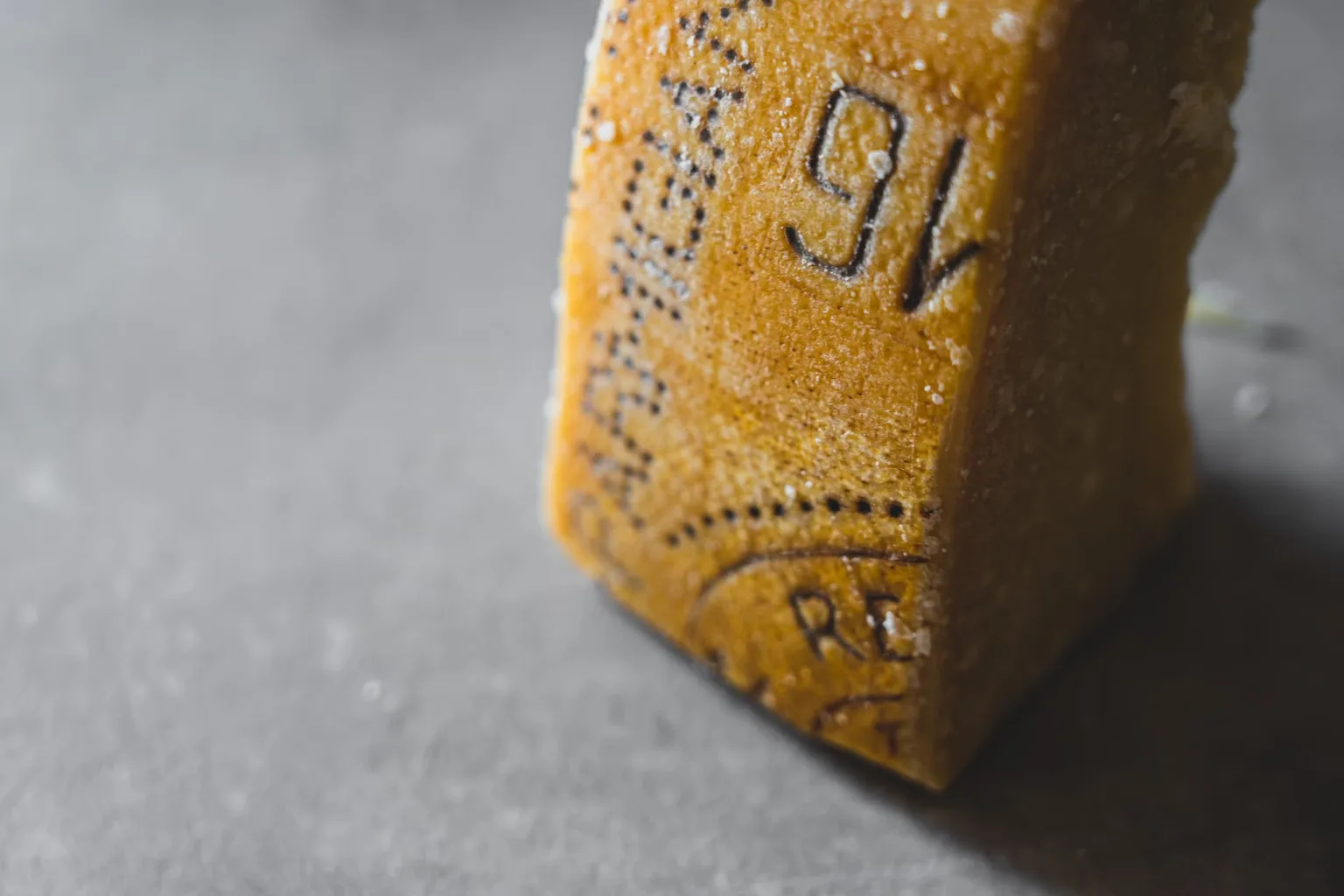
Parmesan is a name used for Italian-style hard cheeses, but not every product sold under that name is Parmigiano-Reggiano. The sources describe Parmigiano-Reggiano as a cow’s-milk cheese with a hard, granular texture that is matured before eating. Its texture makes it easy to grate or break into irregular pieces. Flavor and texture can vary with the cheese and its maturation. If you specifically want Parmigiano-Reggiano, check the product’s designation and label; the word Parmesan alone does not confirm that identity.
When to use it
Use it when you want to add pronounced flavor and a granular or crumbly texture rather than just a creamy layer. Grated or sprinkled cheese works over pasta, salads, and soups; it can also be used in sauces or risotto. Shavings or pieces can be served as part of an appetizer. Choose the form for the result you want: grated cheese distributes easily, while shavings and pieces make its texture more noticeable.
How to use it
Grate or crumble the cheese over pasta, salads, or soups, or cut it into shavings to serve as a finishing touch or appetizer. For risotto, culinary sources recommend stirring in grated cheese at the end of cooking. You can also mix it into sauces or use it to gratin dishes: heat melts the cheese and may create a browned surface, depending on the recipe. Adjust the amount to suit the dish and taste before adding more; hard cheeses of this style can contribute a pronounced salty character. Follow the recipe and the product instructions.
Flavour and texture
Descriptions of Parmigiano-Reggiano emphasize a pronounced flavor with salty, fruity, nutty, and umami notes. Its paste is hard and granular, and it can crumble or break into pieces. Characteristics change with maturation: sources describe more mature cheeses as more concentrated and crumbly. Products called Parmesan can vary, so do not assume they all have exactly the same flavor or texture.
How to choose it
Read the food designation and ingredient list, especially if you need to confirm that you are buying Parmigiano-Reggiano or want to check for milk. Parmesan and Parmigiano-Reggiano are not necessarily interchangeable names for identifying a product. Choose a whole piece, grated cheese, or shavings according to how you plan to use it; also check the package condition and any date or storage instructions on the label.
Storage
Check and follow the label’s storage instructions, as they may depend on the product and its presentation. Keep the cheese protected and do not leave it unattended after opening; store any portion according to the instructions from the manufacturer or retailer. The date and guidance on the package provide information about storage and use. Do not assume that appearance or smell alone can establish whether a food is safe.
Substitutions
Grana Padano is a cow’s-milk alternative with a granular texture, described as somewhat sweeter and less crumbly than Parmigiano-Reggiano. Pecorino is another option if a sheep’s-milk cheese suits the dish; it is often saltier and sharper. Neither substitute is identical, so flavor and results may change. Adjust the amount to taste and to the cheese’s role in the recipe.
Common mistakes
Do not assume every cheese labeled Parmesan is Parmigiano-Reggiano; check the product designation if that distinction matters. Avoid adding a fixed amount without tasting the dish, since the cheese can contribute pronounced saltiness. For storage, do not disregard the label’s instructions or treat quality and safety as the same thing.
Safety and allergens
This cheese contains milk. If you have a milk allergy or intolerance, check the product information and ask the seller for details when needed. Follow the label’s storage and use instructions. Allergen information requirements can depend on whether a food is sold packaged or unpackaged.
Culinary uses
- queso para rallar o espolvorear
- ingrediente para aportar sabor y textura
Recommended techniques
- rallar o desmenuzar
- añadir al final de la cocción
- gratinar
Pairs well with
- pasta y risotto
- ensaladas y sopas
- frutas y frutos secos
Frequently asked questions
Do Parmesan and Parmigiano-Reggiano always mean the same thing?
No. The sources distinguish EU-protected Parmigiano-Reggiano from cheeses sold as Parmesan that imitate it. Check the product designation.
How can I use Parmesan?
Grate it over pasta, salads, or soups, stir it into risotto at the end of cooking, or use it to gratin a dish, depending on the recipe.
What can I use instead?
Grana Padano can be a cow’s-milk alternative; Pecorino offers a sheep’s-milk option that is often saltier and sharper. The result will differ.
Estimated nutrition
- Fat
- 5 g
- Saturates
- 3.11 g
- Carbohydrate
- 40 g
- Sugars
- 1.5 g
- Fibre
- 0 g
- Protein
- 40 g
- Salt
- 2.88 g
Sources and review
Automatically researched, cross-checked and validated content. Sources consulted:
- En el etiquetado alimentario hay algunas menciones que son obligatorias eletiquetadocuentamucho.aesan.gob.es
- Client Challenge doi.org
- Cooking Food Storage | USU extension.usu.edu
- Aesan - Agencia Española de Seguridad Alimentaria y Nutrición aesan.gob.es
- Queso Parmesano Reggiano: historia, usos, maridaje y recetas elpaladar.es
- ▷ Queso parmesano: origen, sabor y cómo usarlo devasgourmet.es
- Queso parmesano - Wikipedia, la enciclopedia libre es.wikipedia.org
- Historia y origen del queso Parmesano y sus usos en la cocina italiana gourmetdemexico.com.mx
- Parmigiano Reggiano: qué lo hace único y cómo usarlo totale.es
- Food Selection & Storage | Home & Garden Information Center hgic.clemson.edu
- Cheese-Storage-Bulletin-4-8-20.pdf cdr.wisc.edu
- Food Storage for Safety and Quality - El Paso County Extension elpaso.extension.colostate.edu
- Horticultura Revista de Industria Distribución y ... mapa.gob.es
- The Difference Between Parmigiano-Reggiano, Grana Padano & Pecorino ice.edu
- (PDF) The Invention of Typicality: Parmigiano-Reggiano Cheese Between Tradition and Industry academia.edu
- 1 • FN579 • Food Storage Guide NDSU Extension FN579 (Reviewed Jan. 2023) ndsu.edu