- Category
- Fruit
- State
- Fresh
- Usual unit
- tablespoon
What it is
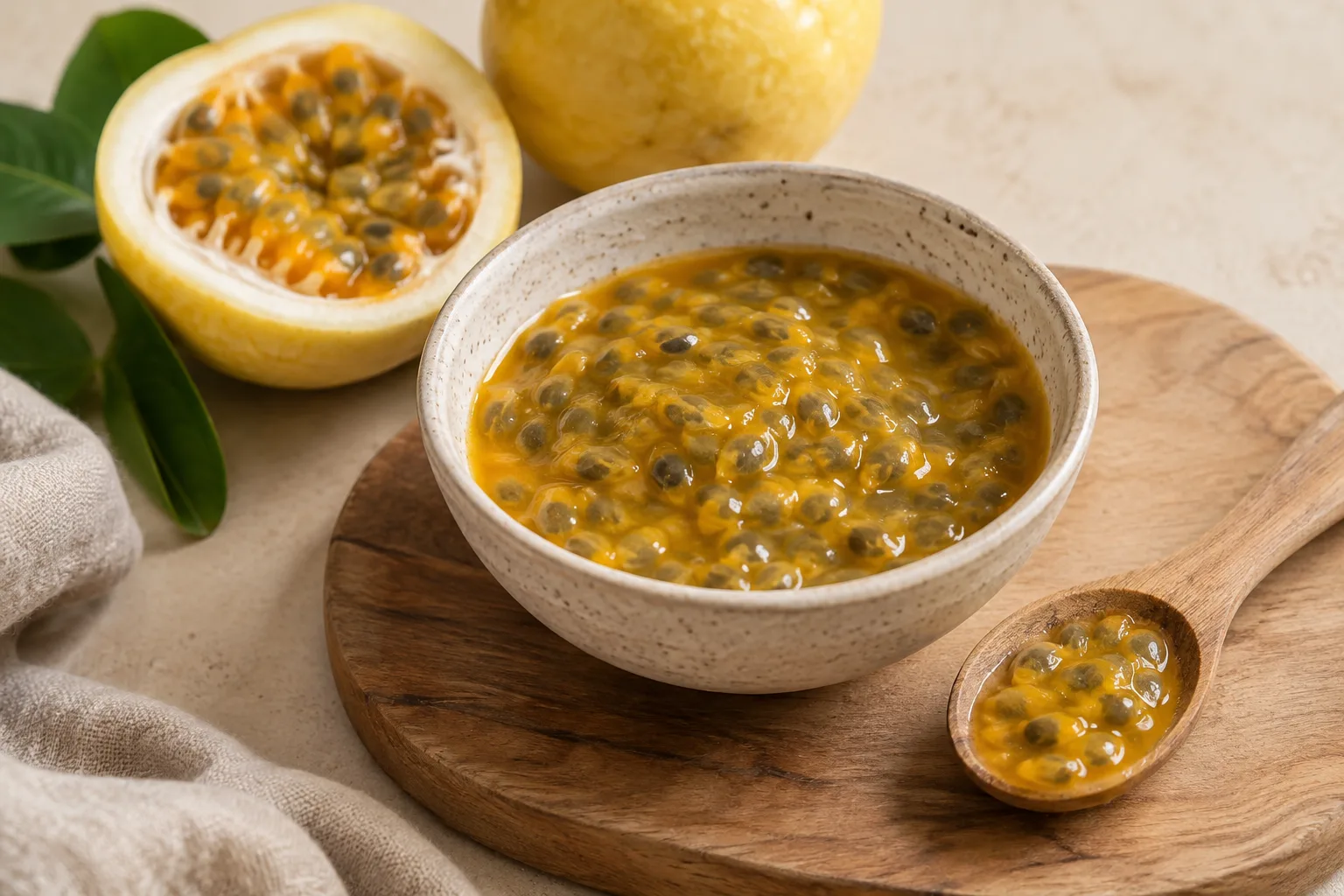
Passionfruit pulp is the juicy interior of Passiflora edulis. When the fruit is opened, gelatinous, often orange-toned pulp surrounds many seeds; fruits may be purple or yellow. Use the pulp with its seeds or strain it to separate the juice, depending on the texture you want. This profile refers to fresh pulp, not juice, dehydrated pulp or packaged products, which may behave differently. Flavor and acidity vary among fruits and varieties, so taste the pulp before sweetening it or adding it to a mixture. Its aromatic, tart-sweet character can stand out even when used alongside other fruit.
When to use it
Use it when you want to add a vivid, aromatic sweet-tart fruit flavor to a drink or dessert. It works in juices and blends with other fruit juices, and in sweet preparations where it can be served as a component or topping. Pulp with seeds gives a visible, crisp texture; strained pulp is more uniform. If you add it to an already balanced recipe, taste the mixture before adjusting sweetness, since acidity can vary from fruit to fruit.
How to use it
Open the fruit and scoop out the pulp. For a textured drink, mix it with water or another juice; it can also be blended with yogurt or milk. If you want a smoother drink or a seed-free sauce, pass the pulp through a strainer and use the juice. In desserts, serve it as a topping or fold it into a mixture, first considering its acidity and liquid content. Add it gradually and adjust the rest of the recipe to its flavor and consistency. Fresh pulp should not be treated as interchangeable with concentrate or a sweetened packaged product.
Flavour and texture
Its flavor is typically aromatic, fruity, tart and sweet, though the balance varies among fruits. The pulp is juicy and gelatinous; the seeds add dark specks and a crisp bite. Straining removes the seeds and leaves a more uniform liquid, but also changes the texture and appearance.
How to choose it
If buying whole fruit to make pulp, choose passionfruit without visible damage. The available evidence describes purple and yellow fruits and notes that the skin may wrinkle as the fruit ripens; appearance varies, so do not judge every variety by a single color or surface. For prepared pulp, check that the package identifies the product and read the label to distinguish pure pulp from juice, concentrate or sweetened blends.
Storage
The evidence consulted does not establish a storage period or specific instructions for fresh passionfruit pulp; follow the package directions when buying it prepared. If you choose to freeze pulp, use a freezer-suitable container or bag, seal it well and reduce the air inside to help protect quality. Freezing does not eliminate microorganisms already present, so careful handling and preparation remain important.
Substitutions
Another aromatic fruit pulp can approximate the fruit component, but it will not reproduce passionfruit’s exact tart, perfumed profile. Juice from another fruit can also replace some liquid in drinks; adjust the amount and taste, since acidity, sweetness and texture will differ.
Common mistakes
Do not assume every batch has the same acidity or sweetness, and do not add sweetener without tasting first. Avoid replacing pulp with juice or concentrate in equal amounts without checking consistency: these are different products. Straining also changes the texture because it removes the seeds.
Safety and allergens
Handle the pulp with clean utensils and follow package storage directions where applicable. Freezing helps preserve quality but does not destroy microorganisms already present; use careful handling after thawing.
Culinary uses
- Flavoring for drinks
- Fruit component for desserts
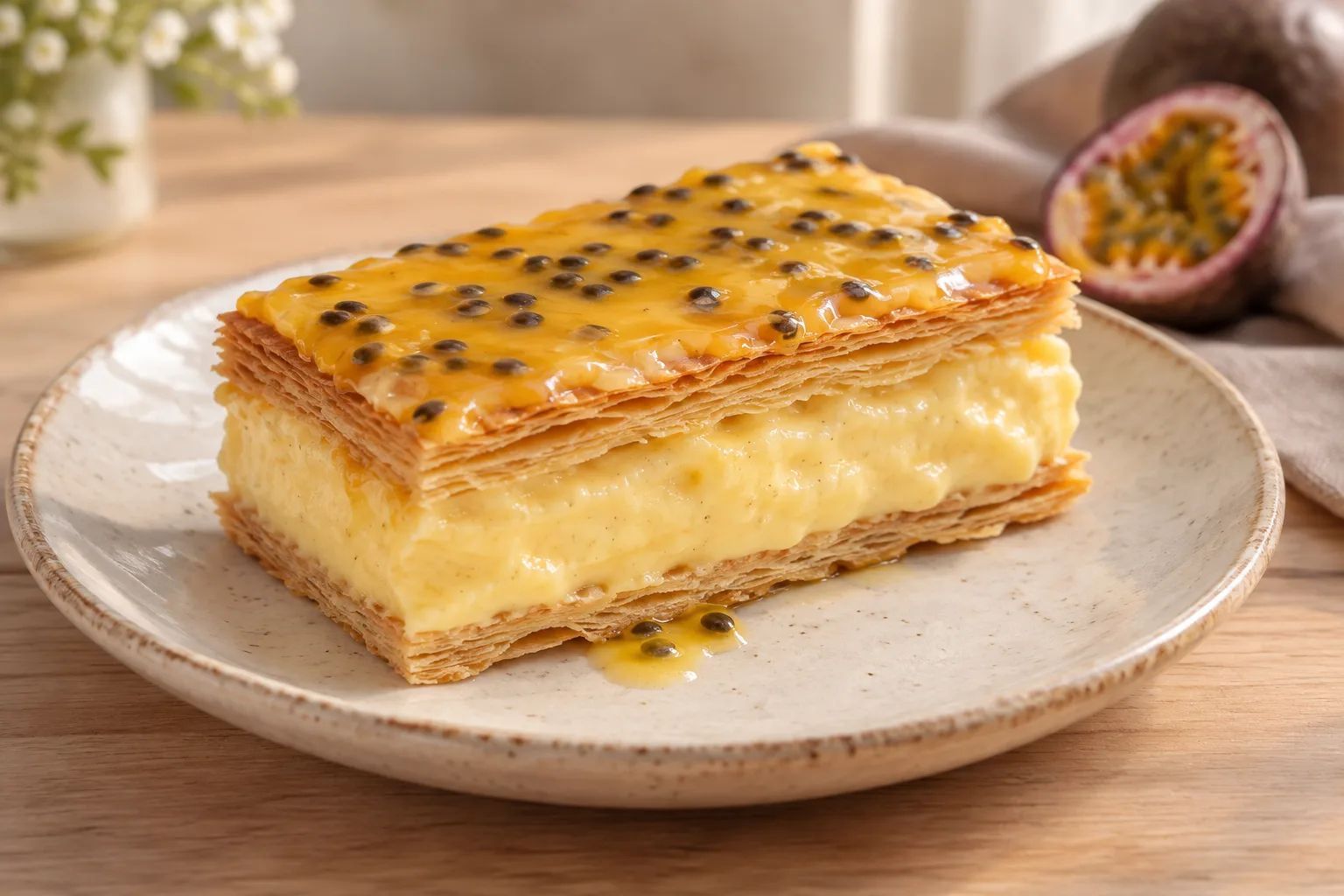
- Topping or sauce for sweet dishes
Recommended techniques
- Scoop the pulp from the opened fruit
- Strain to separate juice from seeds
- Dilute or blend into drinks
- Use as a topping or dessert component
Pairs well with
- Water
- Other fruit juices
- Yogurt
- Milk
- Mango
Frequently asked questions
Do I need to remove the seeds?
No. Keep them for texture, or strain the pulp if you want a smoother preparation.
Is passionfruit pulp the same as passionfruit juice?
Not necessarily. Pulp includes the juicy fruit interior and may contain seeds; juice is usually the liquid fraction and may be strained or diluted.
What can I mix passionfruit pulp with?
Try water, other fruit juices, yogurt or milk. Taste the mixture first and adjust for its acidity.
Sources and review
Automatically researched, cross-checked and validated content. Sources consulted:
- ¿Por qué la muerte es origen de miedos y tabúes? doi.org
- Maduración de la Fruta y Manejo del Etileno ucanr.edu
- Horticultura Revista de Industria Distribución y ... mapa.gob.es
- HS1406s/HS1421: El maracuyá en Florida ask.ifas.ufl.edu
- Postharvest quality of achachairú (Garcinia gardneriana) ... revistas.upr.edu
- Proceedings of the 2022 Passion fruit Conference scholarsjunction.msstate.edu
- Vamos a Conservar Alimentos: La Congelación de Frutas extension.psu.edu
- Qué hacer con pulpa de maracuyá: ideas creativas | Alimentos SAS alimentossas.com
- Maracuyá o Fruta de la Pasión, una fruta increible eladerezo.com
- Maracuja : bienfaits, propriétés et conseils d'utilisation nutrimea.com
- Fruta de la pasión o maracuyá, el fruto tropical de gelatinosa y dulce pulpa: propiedades y cómo usarla en la cocina directoalpaladar.com
- Maracuyá o fruta de la pasión: qué es, propiedades, beneficios y uso en la cocina bonviveur.com