- Category
- Fruit
- State
- Fresh
- Usual unit
- unit
What it is
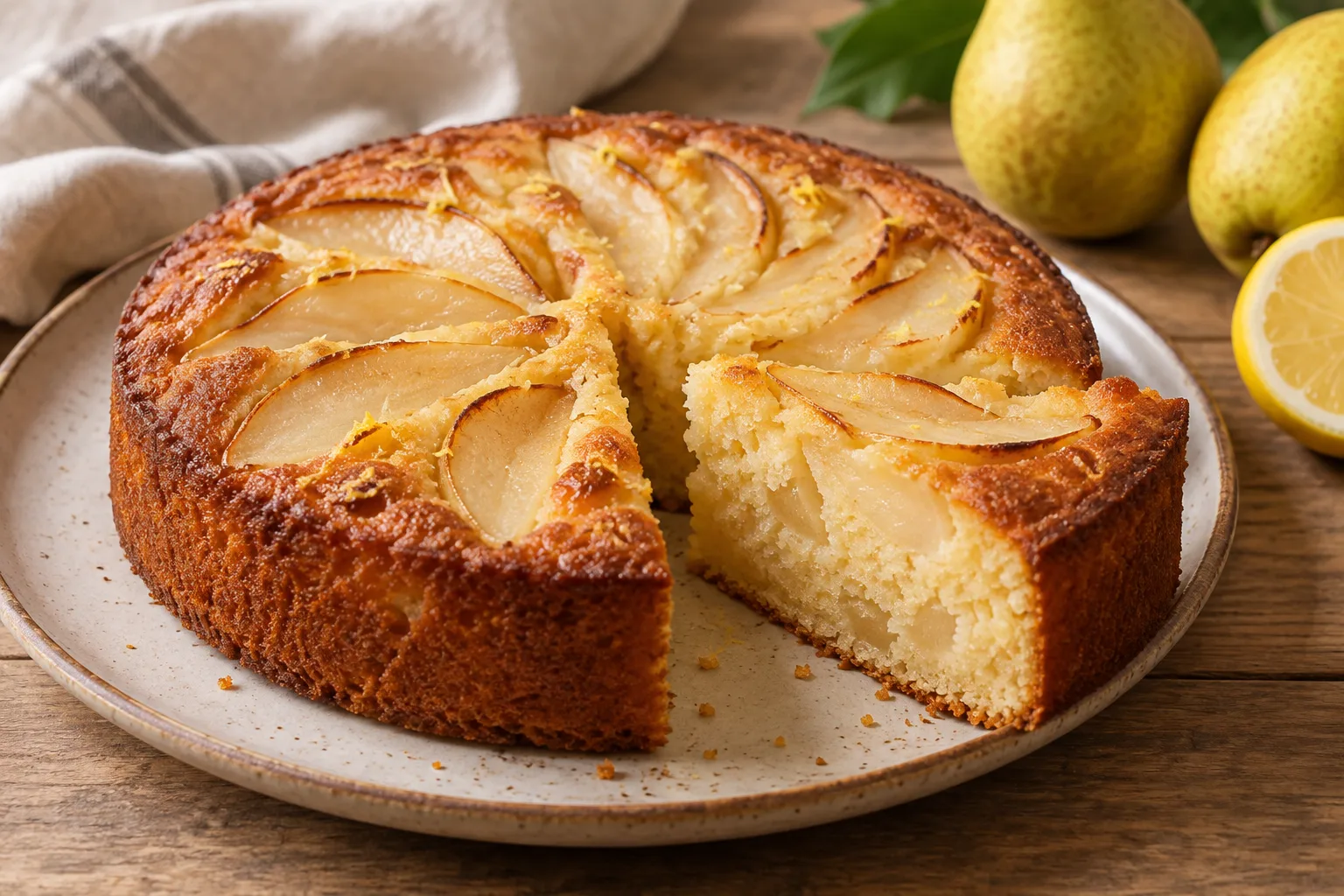
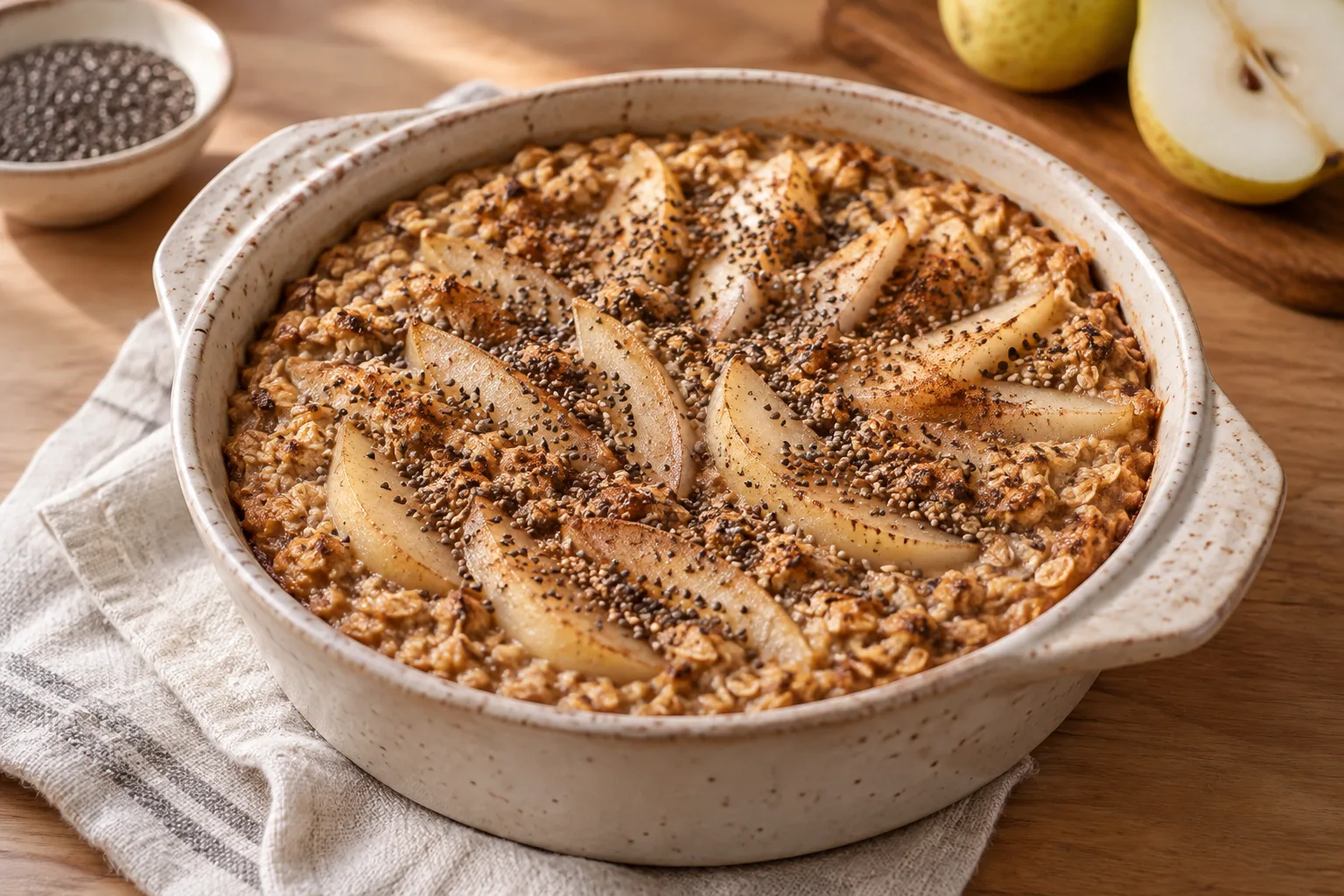
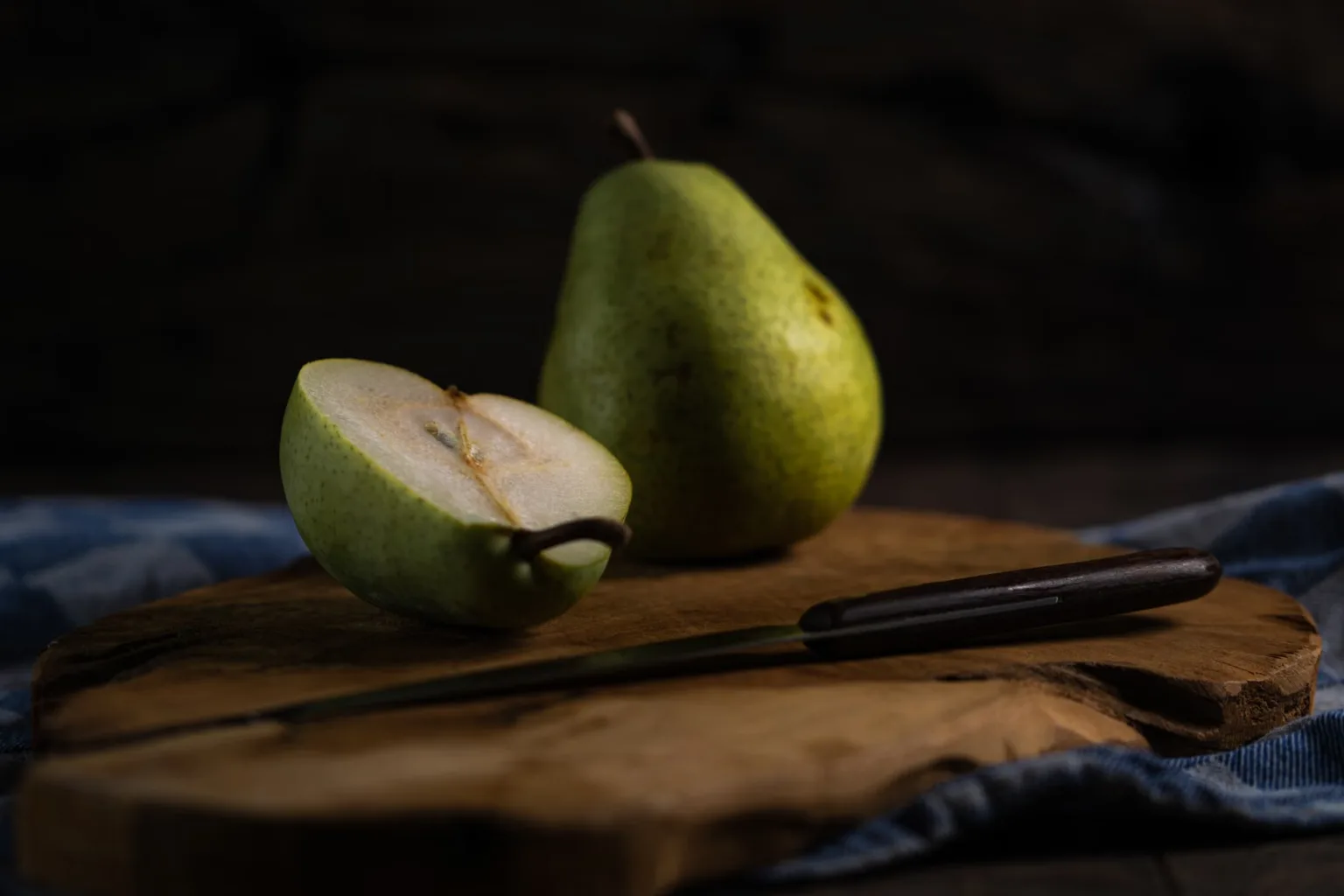
A pear is the edible fruit sold fresh in many varieties, differing in shape, color, sweetness, and texture. Some, such as Bartlett or Williams, are juicy and used both fresh and for preserving; Bosc is identified as a variety suited to cooking, while Comice is described as especially sweet and juicy. The variety name and the fruit’s ripeness can therefore help guide how to use it. There is no single pear texture: a pear may be firm and crisp or softer and juicier as it ripens. Pears are also used in salads, purées, compotes, and jams, as well as baked or poached desserts.
When to use it
Choose pears for fresh eating when you want a juicy, aromatic fruit, or add them to salads and desserts for sweetness and texture. For cooking, consider the variety: Bosc is noted as suitable for cooked dishes, and Bartlett/Williams is a recognized option for preserving. Pears can also contribute to savory combinations with cheese, charcuterie, or meat. Some pears reach shops while still firm: they can ripen at room temperature if not refrigerated, so ripeness matters as much as the recipe. Choose firm fruit when you want pieces to hold their shape better during preparation.
How to use it
Before eating or cooking, wash the pear and remove any parts you do not want; serve it whole or cut, with the skin on or peeled according to the recipe. Fresh pears work on their own, in salads, or alongside cheese and charcuterie. For sweet dishes, bake or poach them, turn them into purée or compote, or use them in jam. For a cooked recipe, choose a variety suited to cooking and consider its ripeness, since firmness affects the final texture. If freezing or canning pears, use a tested preservation procedure suited to the product rather than improvising a treatment. Penn State’s guidance lists Bartlett, Bosc, Anjou, and Comice as suitable varieties for preserving, and notes that Seckel works well in pickled or spiced products.
Flavour and texture
Pear flavor and texture vary by variety and ripeness: some are sweet, very juicy, and soft-fleshed, while others remain firmer or have a different texture. Comice is described as especially sweet and juicy; Bartlett/Williams as juicy and fragrant. A ripe pear can be softer than a firm one, so choose ripeness with the intended fresh or cooked use in mind.
How to choose it
Choose fruit without visible signs of decay and select firmness for the intended use: a firm pear may be useful when you want it to hold its shape during cooking, while a riper one may be more pleasant for fresh eating. Varieties differ in juiciness and texture; Bosc is recommended for cooking and Comice is noted for sweetness and juiciness. Do not judge ripeness by color alone: Anjou may remain green when ripe.
Storage
Pears can ripen at room temperature when they are not refrigerated; one preservation guide says this may take 7 to 14 days. Check firmness and use them when they reach the ripeness you prefer. If they are already at the desired stage, refrigerate them to slow ripening; the available evidence does not give a universal refrigerated storage duration. For freezing or canning, follow tested, product-specific preservation directions rather than improvising a method.
Substitutions
If a particular variety is unavailable, another pear may work, but the result depends on its firmness and juiciness. Bartlett/Williams is recommended for preserving and Bosc for cooking; Comice is sweet and juicy. Treat these as practical alternatives, and check texture during preparation instead of assuming every variety behaves the same way.
Common mistakes
Treating all varieties as interchangeable can produce a different texture from the one expected: some are described as better for fresh eating and others for cooking or preserving. Do not overlook ripeness; a very soft pear may not hold its shape, while a firm one may need time to ripen before eating. For canning and freezing, do not replace tested directions with an improvised method.
Safety and allergens
Wash the fruit before preparation, keep utensils clean, and follow label directions for packaged or processed products. For home canning or freezing, use tested, product-specific directions and do not improvise preservation treatments.
Culinary uses
- fruta fresca para comer sola
- ingrediente para postres y preparaciones saladas
Recommended techniques
- comer cruda
- hornear o escalfar
- hacer puré o compota
- conservar o congelar siguiendo una receta probada
Pairs well with
- quesos
- charcutería y carnes
- ensaladas
Frequently asked questions
Can pears be eaten raw?
Yes. Pears are eaten fresh and can also be added to salads. Wash them before serving and choose the firmness you prefer.
Which pear variety is suitable for cooking?
Bosc is identified as a variety suited to cooking. Bartlett/Williams is also recommended for preserving; choose according to the texture you want.
How do pears ripen?
One preservation guide says pears can ripen at room temperature in 7 to 14 days when not refrigerated. Check their firmness and use them when they suit your preference.
Estimated nutrition
- Fat
- 0 g
- Saturates
- 0 g
- Carbohydrate
- 11.9 g
- Sugars
- 7.28 g
- Fibre
- 0.1 g
- Protein
- 0 g
- Salt
- 0.02 g
Sources and review
Automatically researched, cross-checked and validated content. Sources consulted:
- En el etiquetado alimentario hay algunas menciones que son obligatorias eletiquetadocuentamucho.aesan.gob.es
- Client Challenge doi.org
- Cooking Food Storage | USU extension.usu.edu
- Food Selection & Storage | Home & Garden Information Center hgic.clemson.edu
- Preparing an Emergency Food Supply, Long Term Food Storage | Food Preservation | Food | Extension | UGA FACS fcs.uga.edu
- Aecosan - Agencia Española de Consumo, Seguridad Alimentaria y Nutrición aesan.gob.es
- HOJAS DIVULGADORAS LA CONSERVACION Núm . 14/86 HD FRIGORIFICA DE LAS PERAS mapa.gob.es
- Vamos a Conservar Alimentos: Peras extension.psu.edu
- Preserve Smart apps.chhs.colostate.edu
- Freezing Pears - National Center for Home Food Preservation nchfp.uga.edu
- Pera: Bartlett | Postharvest Research and Extension Center postharvest.ucdavis.edu
- Esto es la Pera... - Comer de Oficio por Luis Cepeda comerdeoficio.com
- Pera - Comer y Beber comerbeber.com
- Pera - Wikipedia, la enciclopedia libre es.wikipedia.org
- Pera | HerbaZest herbazest.com
- Pera, el ingrediente dulce casi desconocido en la cocina | Sobremesa sobremesa.es
- Pera | Origen y variedades | Frutas | EROSKI CONSUMER frutas.consumer.es
- 10 tipos de pera que debes conocer | El arte de comer bien | mentta mentta.com