- Category
- Vegetables
- State
- Preserved
- Usual unit
- g
What it is
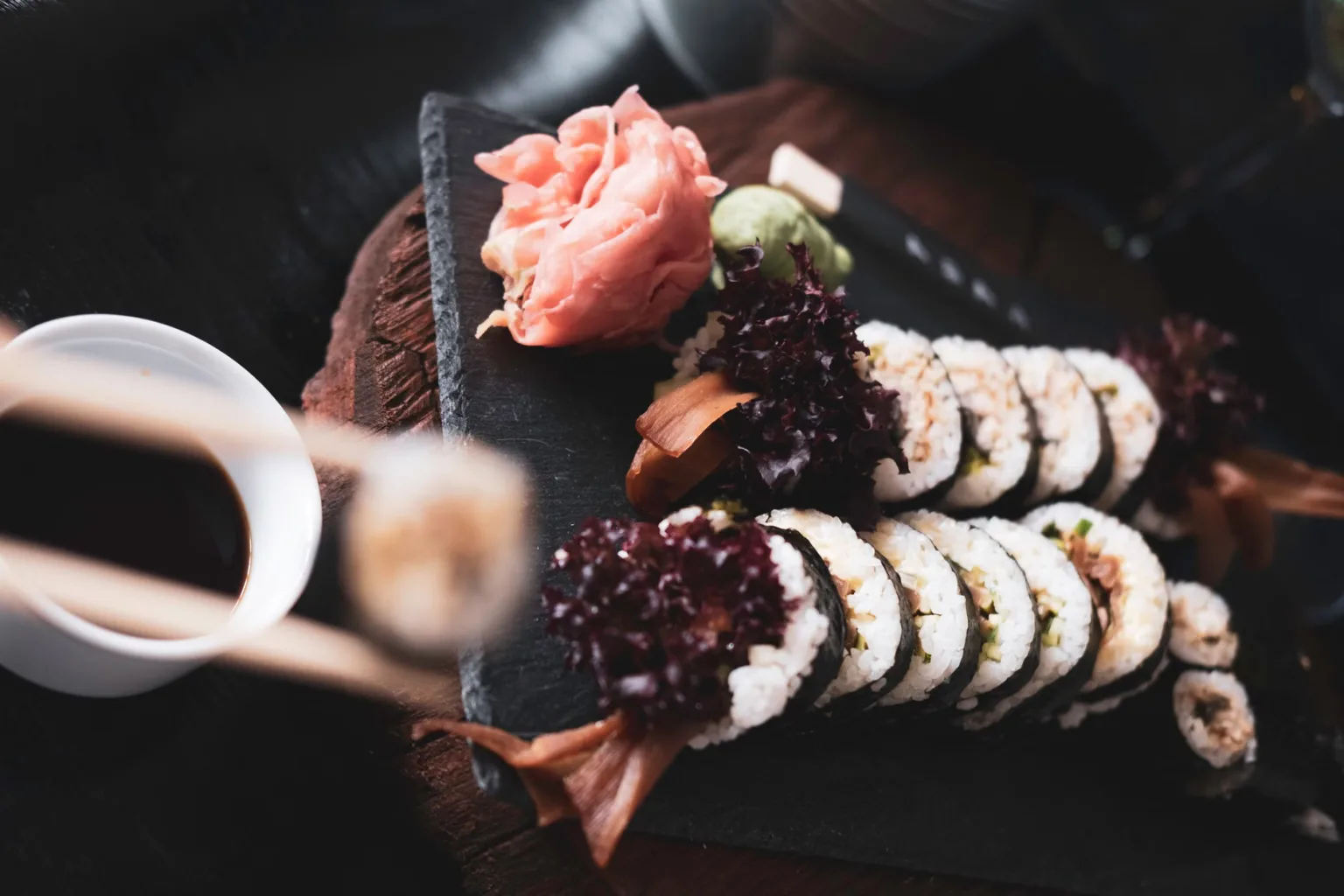
Pickled ginger is ginger cut and marinated in a vinegary mixture; a gari-style preparation is commonly served in thin slices alongside sushi. Some versions include sugar and salt, but recipes and colors vary from product to product. The ginger may look white, ochre, or faintly pink: its shade can depend on the age of the rhizome and on the ingredients or treatments used. Color alone therefore cannot establish quality or identify a particular recipe. It should not automatically be confused with beni shoga, another kind of pickled ginger that is cut differently and has a sharper, saltier, more pronounced flavor.
When to use it
Serve it alongside sushi or sashimi when you want a strongly flavored bite between pieces. At a meal with several kinds of sushi, a small slice between varieties can help separate one tasting experience from the next. It can also be offered as a separate garnish so diners can try it on its own. Its intensity may overwhelm delicate flavors, so offer small portions and do not assume it should be placed on the fish or eaten with every piece.
How to use it
Serve it in a small dish beside sushi or sashimi and, if you enjoy the contrast, eat a slice between pieces. You can also offer it separately as a garnish so each diner can choose how much to use. If it comes packed in liquid, follow the product label for serving and storage; do not assume that every brand has the same ingredients or directions. Distinguish gari from beni shoga: the latter is often cut into strips and has a stronger flavor, so it does not play exactly the same delicate role beside sushi.
Flavour and texture
Its flavor often combines vinegary, sweet, and peppery notes, although the balance depends on the preparation and brand. Thin gari slices can provide a firm, crisp texture as well as an aromatic, assertive bite. The color can range from white or ochre to soft pink; color alone is not a reliable measure of quality. Beni shoga, by contrast, is described as sharper, saltier, and more pronounced, so expect a different experience.
How to choose it
Read the product name, ingredient list, and package directions before buying: products can differ in composition, color, and intended use. Decide whether you want thinly sliced gari to serve with sushi or a stronger-tasting pickled ginger, such as beni shoga. Do not choose only by its pink shade; that can result from the raw ingredient or preparation and does not by itself prove freshness or quality. If you have an allergy or intolerance, check the product information and ask the seller when needed.
Storage
Use the storage directions on the label because they can vary with the product and its packaging. If the package gives special conditions or instructions for after opening, follow them rather than applying one general rule to every brand. Keep the product information available so you can check its date and use directions. No universal storage period can be established here for pickled ginger.
Substitutions
Beni shoga can stand in for a pickled-ginger garnish if you are happy with a sharper, saltier, more pronounced flavor; it is not an identical substitute for gari. You can also choose another white or pink gari: color differences alone do not imply a difference in quality. If you specifically want the milder contrast served with sushi, check the preparation style and flavor description, not appearance alone.
Common mistakes
Do not confuse gari with beni shoga: both are pickled ginger, but they can differ in cut and flavor. Avoid assuming that all pink ginger is fresher or better, or that every preparation has the same ingredients. It is also easy to serve too much or eat it at the same time as delicate fish; its intensity can mask other flavors.
Safety and allergens
Check the label for ingredients, relevant allergen information, and the product's storage and use directions. Follow the manufacturer's instructions, especially if it specifies special conditions or steps after opening. No specific safety warning can be applied here to every version of pickled ginger.
Culinary uses
- Acompañamiento para sushi y sashimi
- Bocado intenso para refrescar el paladar entre piezas de sushi
Recommended techniques
- Cortar en láminas muy finas
- Encurtir o marinar en una mezcla avinagrada
Pairs well with
- Sushi
- Sashimi
Frequently asked questions
How should I eat pickled ginger with sushi?
It is commonly served separately and eaten between pieces, rather than necessarily on top of sushi or with every bite.
Does gari have to be pink?
No. It can be white, ochre, or faintly pink; color depends on the ingredient and preparation and does not indicate quality by itself.
How is beni shoga different?
It is another kind of pickled ginger, often cut into strips, with a sharper, saltier, more pronounced flavor than gari.
Estimated nutrition
- Fat
- 0 g
- Saturates
- 0 g
- Carbohydrate
- 26.7 g
- Sugars
- 13.3 g
- Fibre
- 6.7 g
- Protein
- 0 g
- Salt
- 1.67 g
Sources and review
Automatically researched, cross-checked and validated content. Sources consulted:
- En el etiquetado alimentario hay algunas menciones que son obligatorias eletiquetadocuentamucho.aesan.gob.es
- Client Challenge doi.org
- Curry - Wikipedia, la enciclopedia libre es.wikipedia.org
- Dictionary of Health Related Terms: English – Spanish hia.berkeley.edu
- elBulli: un nuevo lenguaje en la gastronomía repositorio.ucjc.edu
- El jengibre en la cocina asiática dragonimperial.es
- El jengibre desde una perspectiva profesional | Alveus alveus.eu
- Vamos a Conservar Alimentos: Manzanas extension.psu.edu
- facultad de postgrado repositorio.unitec.edu
- Optimización del proceso Logístico en la comercialización ... repository.uniminuto.edu
- Jengibre encurtido del sushi, ¿cómo se come? sibuyaurbansushibar.com
- Jengibre encurtido hecho en casa | Gastronomía & Cía gastronomiaycia.com
- Jengibre encurtido, hecho en casa para disfrutar con el sushi bonviveur.com
- Los jengibres esenciales de la cocina japonesa - Telemaki telemaki.com
- Gari, jengibre encurtido – Gastronoming gastronoming.com