- Category
- Bread and dough
- State
- Fresh
- Usual unit
- unit
What it is
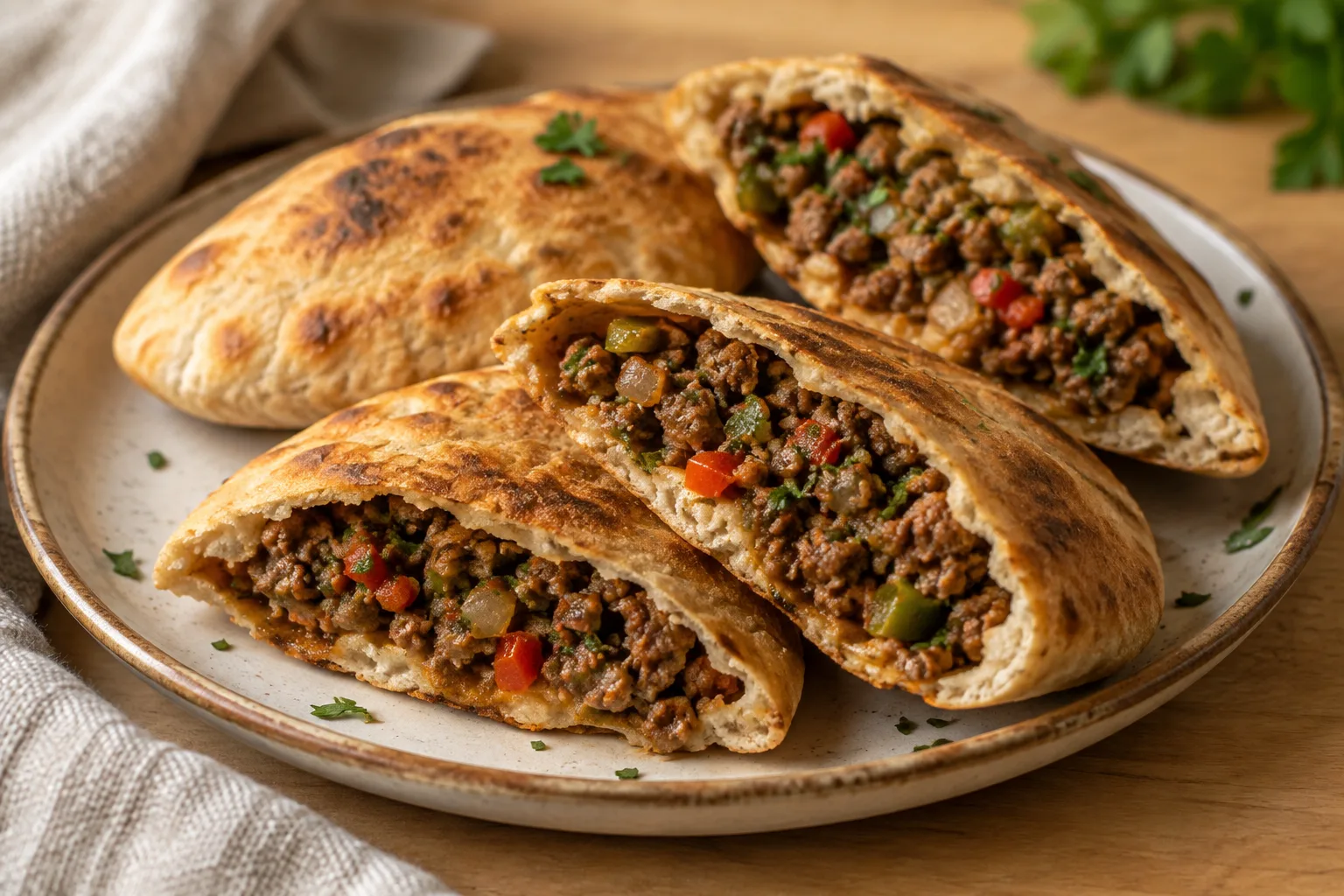
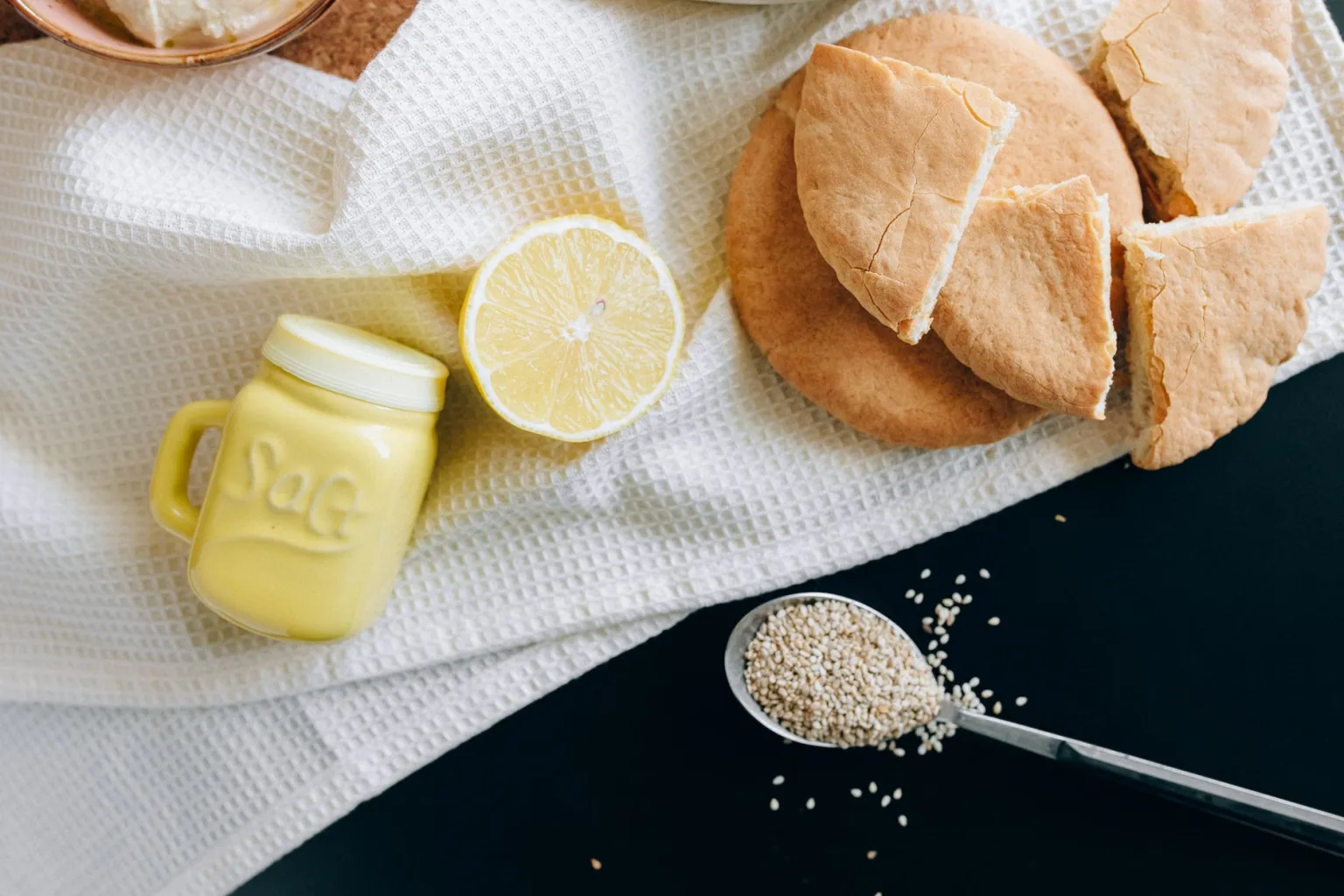
Pita bread is a soft, usually round flatbread commonly made with wheat flour. Some pitas separate into two layers and form an inner pocket that can be opened and filled; other varieties are closer to flatbread without a hollow centre. The name therefore does not guarantee that every piece has a pocket. In cooking, pita works both as bread served alongside other foods and as a holder for fillings or dips. It can be served as it is, warmed or toasted, and cut into pieces for chips. Products can differ in ingredients and shape, so check the package if you need a particular ingredient or style.
When to use it
Choose pita when you want soft bread to fill, wrap around ingredients, or serve alongside a meal. Pocketed pieces are convenient for adding a filling; pieces without a pocket can be served open, folded, or alongside dips. Pita is also useful as a quick base for pita pizza or as bread to cut and toast for dipping. Since varieties differ in thickness and whether they have a pocket, check the piece before deciding how to serve it.
How to use it
For a simple serving, offer pita whole or carefully open it if it has a pocket, then add a filling of your choice. You can also fold it or use it to wrap ingredients, or serve it with hummus for dipping. For a toastier texture, warm or toast it; to make chips, cut it into triangles, season if you like, and bake until crisp, keeping an eye on it to prevent burning. Another option is to use a piece as a pizza base: add sauce and other toppings and bake until the cheese melts, if using cheese. Cooking times and results depend on the product and method, so follow the directions for the recipe you are making.
Flavour and texture
Pita usually has a mild flavour that does not dominate other ingredients. Fresh pita is generally soft and flexible; warming it can make it easier to fold or fill. Toasting it or turning it into chips makes it drier and crisp. An inner pocket is not present in every variety, and thickness and texture can vary by bread style and product.
How to choose it
Choose a piece suited to the job: if you want to fill it, check that it has a pocket, since pocketless pitas are available. Read the label for ingredients, format, and any feature you need, such as whole-wheat flour or seeds. You can also compare size and thickness if you want bread for wrapping, serving with a dip, or cutting into chips. The name alone does not guarantee identical texture across brands.
Storage
Follow the storage directions printed on the package, since they can vary between products. When preparing to serve it at home, keeping pita covered helps prevent it from drying out. Do not infer a shelf life or a need for refrigeration from the bread’s name alone: check the product label and discard any piece whose condition gives you concern.
Substitutions
If pita is unavailable, another soft flatbread can work for serving alongside food or wrapping ingredients, although it may not have a pocket. You can also use a pocketless flatbread and serve the filling on top or alongside it. The substitute changes the serving style and texture, so it is not always equivalent for filling a closed pocket.
Common mistakes
Do not assume every pita has a pocket: pocketless varieties exist. Avoid forcing open a piece that does not separate into layers; serve it folded or open instead. Watch the bread when toasting or making chips, since crispness depends on baking and it can burn if left unattended.
Safety and allergens
Keep hands and preparation surfaces clean when handling food, and follow the package storage directions. The available evidence does not identify a pita-specific safety warning.
Culinary uses
- pan para rellenar o envolver
- acompañamiento y base para aperitivos
Recommended techniques
- calentar o tostar antes de servir
- cortar en triángulos y hornear para hacer chips
Pairs well with
- hummus
- falafel
Frequently asked questions
Does every pita have a pocket?
No. Some varieties form an inner pocket, while others are flatbreads without one. Check the piece before planning a filling.
How can I serve pita bread?
Fill it if it has a pocket, fold it around ingredients, serve it with hummus, or cut and bake it into chips.
How should I store pita?
Follow the package directions, because storage can vary by product. Keeping it covered while you prepare it helps prevent it from drying out.
Estimated nutrition
- Fat
- 2.32 g
- Saturates
- 0 g
- Carbohydrate
- 57.1 g
- Sugars
- 0 g
- Fibre
- 3.6 g
- Protein
- 10.7 g
- Salt
- 1.34 g
Sources and review
Automatically researched, cross-checked and validated content. Sources consulted:
- ¿Por qué la muerte es origen de miedos y tabúes? doi.org
- Chapter 2: In the Kitchen (Storing and Preparing Food; Preventing Food Waste) – Culinary Medicine opentextbooks.library.arizona.edu
- Pita Bread Persistence - Walnut Hill College walnuthillcollege.edu
- Greek bread and dips[55] hr.untsystem.edu
- Snack Time: Spicy Roasted Chickpeas, Edamame Hummus, and Home-Made Pita Chips | Sargent Choice Nutrition Center bu.edu
- Pita Pizzas/Pizzas De Pan Pita (LCH) | CSU Northridge w2.csun.edu
- The Changing Face of Thanksgiving: Many Culinary Choices Outside the ‘Turkey and Potato Box’ | News | SUNY Buffalo State University suny.buffalostate.edu
- Pita (pan) - Wikipedia, la enciclopedia libre es.wikipedia.org
- Pan de pita | Qué es, tipos, nutrientes y cómo combinarlo codinafoods.com
- Pan Pita (pan árabe) - Cravings Journal es.cravingsjournal.com
- Cómo los judíos inventaron el pan pita aishlatino.com
- Gotas de Azúcar y Vainilla: Pan de pita gotasdeazucaryvainilla.blogspot.com