- Category
- Grains, flour and pasta
- State
- Dry
- Usual unit
- g
What it is
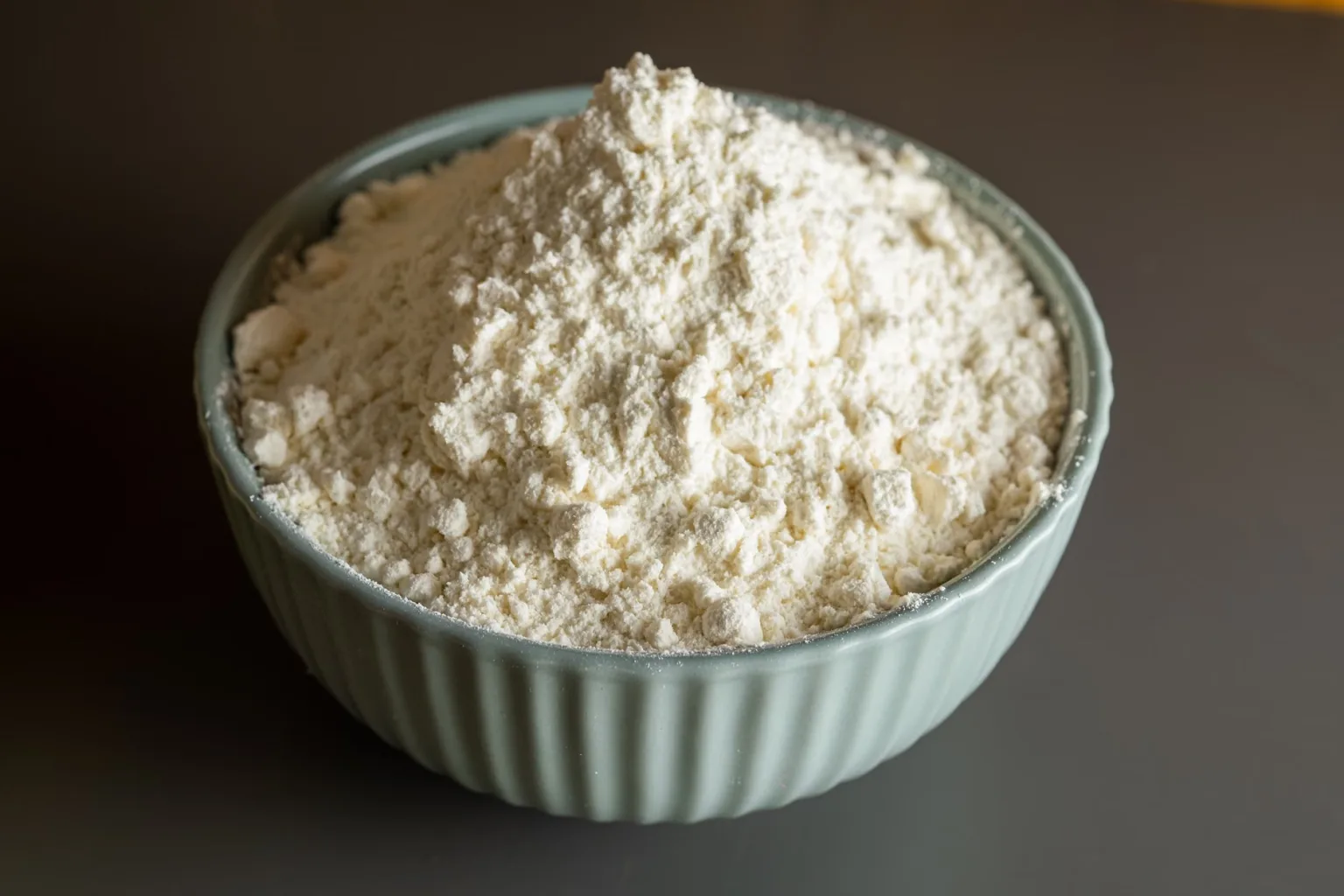
Wheat flour is the powder produced by milling wheat grains. Its fineness, degree of refinement, and the amount and quality of its protein can vary, so the label “plain flour” does not guarantee one precise specification. When hydrated, wheat proteins form gluten, which contributes elasticity and structure to dough. In cooking, flour is also used to thicken sauces and as a binder or coating ingredient. In a filling, it can help add body, although its behavior depends on both the flour and the preparation.
When to use it
Use it when a filling needs more body or when it is part of a dough that must hold its shape. It also suits sauces that will be incorporated into a filling, mixtures that need binding, and coating preparations. Wheat flour is not a single uniform product: strength varies with protein, and refinement affects the result. Follow the recipe’s directions, and do not automatically swap a low-strength flour for a strong one when texture matters.
How to use it
To thicken a filling, add the flour according to the recipe method and mix it thoroughly so it is distributed throughout the preparation. If the method allows, first combine it with some of the liquid or other ingredients to help make an even mixture. In dough, hydration allows wheat proteins to form gluten, which contributes elasticity and structure; the flour choice and mixing method affect the result. For coating, apply a light, even layer before cooking. Do not assume all wheat flours absorb liquid or behave alike: strength and degree of refinement matter.
Flavour and texture
Refined wheat flour usually has a fairly neutral flavor; flours retaining more parts of the grain can be more aromatic and flavorful. The powder may be fine or somewhat coarser. In a preparation, flour can add body and thickness, while gluten formed during hydration contributes elasticity to some doughs.
How to choose it
Choose flour for the intended use and the recipe directions, not just by a label such as “plain” or “all-purpose.” Strength depends on protein: a stronger flour can absorb more liquid and support more elastic dough. Refinement or extraction also changes appearance and performance. Check the package to identify the flour type and confirm that it is wheat flour when that matters for your recipe.
Storage
The available evidence does not specify a storage method, temperature, or shelf life for this flour. Follow the package directions and protect it from moisture and contamination during use. Close the pack after measuring what you need, and use clean, dry utensils when handling it.
Substitutions
Whole-wheat or chickpea flour can replace wheat flour in some recipes, but neither is a universal equivalent; each may change flavor, texture, and absorption. Chickpea flour is suggested for zucchini fritters, and whole-wheat flour is also listed as an option for that preparation. Adapt the method to the recipe rather than assuming a one-for-one swap.
Common mistakes
Treating all wheat flours as interchangeable can change absorption and texture. Another mistake is substituting without considering the purpose: an alternative flour may affect structure, flavor, or moisture. For a filling, mix it in evenly and follow the recipe’s quantities and method.
Safety and allergens
This flour is made from wheat and contains gluten proteins. If you need to avoid wheat or gluten, check the product label and choose a product suitable for your needs.
Culinary uses
- Espesante para salsas y rellenos
- Base estructural de masas
- Aglutinante y cobertura para rebozados
Recommended techniques
- Dispersar en líquido e incorporar para espesar
- Mezclar con líquido para formar una masa
- Usar en rebozados y frituras
Pairs well with
- Agua
- Huevo
- Calabacín y maíz
Frequently asked questions
Can wheat flour thicken a filling?
Yes. It is used as a thickener in sauces, including preparations that may be used in fillings. Follow the method and amount in your recipe.
Do all wheat flours work the same way?
No. They can differ in protein, strength, refinement, and fineness, and those differences affect absorption and dough results.
Can I replace it with chickpea flour?
It can work in some recipes; it is listed as an option for zucchini fritters. It is not a universal replacement and may change flavor and texture.
Sources and review
Automatically researched, cross-checked and validated content. Sources consulted:
- Tipos de harina de trigo, un alimento básico en la cocina: guía para usarlas directoalpaladar.com
- Evaluación de harina de amaranto como ingrediente antioxidante para la preparación de matrices alimentarias funcionales doi.org
- Como Utilizar el Calabacin | CSU Extension extension.colostate.edu
- cocinando lo auténtico: la comida como patrimonio cultural en la ideals.illinois.edu
- educational content to support healthful lifestyle practices sjsu.edu
- Dictionary of Health Related Terms: English – Spanish hia.berkeley.edu
- A Nutrition Education Curriculum for Grade 3 | Wsu s3.wp.wsu.edu
- Foods and Flavors to Savor in South America - UCEAP News and Features blog.uceap.universityofcalifornia.edu
- Harina de trigo: Qué necesitas saber: qué es, tipos, características y cómo usarla - Di Marco dimarco.it
- Comité Científico aesan.gob.es
- Tortillas (“Wraps”) con Harinas Compuestas de Trigo y Yuca scholar.uprm.edu
- 15 recetas con harina de trigo: uno de los ingredientes más versátiles de la cocina bonviveur.com
- Tipos de harina, diferencias y usos en cocina | IFEMA MADRID ifema.es