- Category
- Grains, flour and pasta
- State
- Dry
- Usual unit
- Variable
What it is
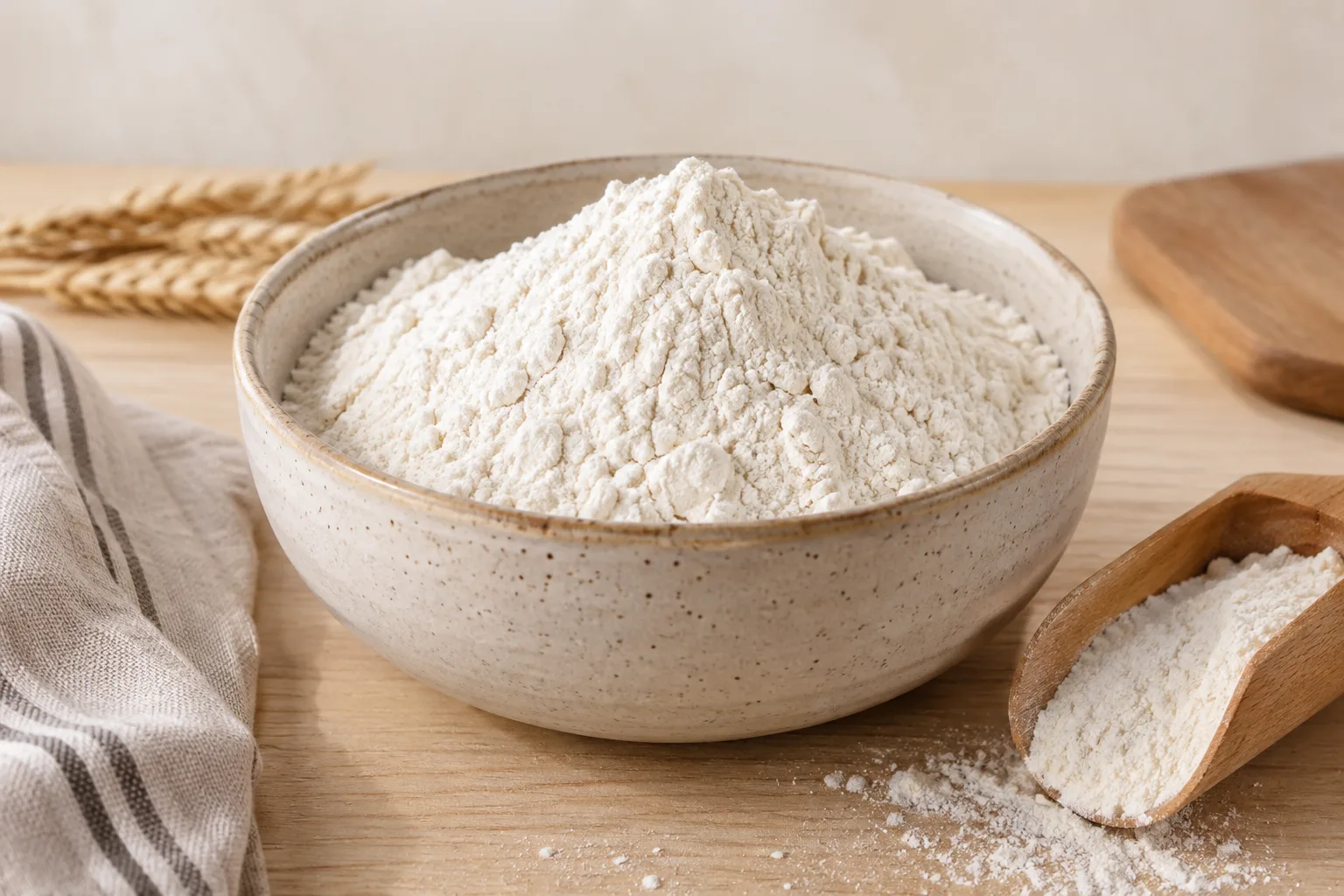
Wheat flour is made by milling wheat grains into a powder whose fineness can vary. The general label plain flour does not, by itself, define a single strength: flours can differ in protein content, liquid absorption and dough behavior. This profile concerns the ingredient named Type 405, but the available sources do not establish precise technical specifications for that designation or justify treating it as identical to flour from every other market. In wheat doughs, proteins that form gluten contribute to elasticity and structure.
When to use it
Use it when a recipe calls for plain wheat flour, particularly in baked preparations and doughs that do not call for especially strong flour. The choice matters: a fermented dough, an enriched dough containing fat or sugar, and a delicate cake may not need the same absorption or elasticity. If a recipe specifies a strength, a particular flour type, or bread or pastry flour, follow that instruction rather than making an automatic substitution.
How to use it
Weigh or measure the flour as directed by the recipe and mix it with the listed ingredients; add liquid gradually if you need to control dough consistency. For wheat doughs that need structure, knead as the recipe directs: when hydrated, wheat proteins contribute to an elastic network. For preparations that do not need that development, mix only until combined. Flour strength affects absorption and response to fermentation, so changing flour can change texture. Do not add extra liquid or flour without first checking the consistency.
Flavour and texture
Refined wheat flour is generally mild and fairly neutral in flavor; less refined flours tend to be more aromatic and more pronounced. It has a fine powder texture, though fineness varies. In dough, proteins and hydration affect elasticity and final structure. The result can therefore range from tender to firmer depending on the flour selected and how it is mixed.
How to choose it
Check that the package clearly identifies the flour and its intended use; terms such as plain or ordinary can vary between markets. If a recipe calls for a particular flour strength, look for that property on the label rather than relying only on color or a generic name. Flours also differ in refinement and absorption, so the Type 405 name alone does not establish every culinary result across countries.
Storage
Keep flour in a dry place and protect it from moisture; leave it in its packaging or transfer it to a clean, tightly closed container. Check the label for the manufacturer’s product-specific directions, and use the flour if its appearance and smell remain as expected. The available sources do not establish a storage duration or temperature for this product, so no specific timeframe is given here.
Substitutions
Wheat flours are not always interchangeable in the same culinary proportion. A stronger flour can suit doughs that need elasticity and tolerate longer fermentation; lower-strength flour is often a better fit for delicate bakes. Substitution can change absorption and texture, so follow the recipe and adjust cautiously rather than assuming an exact equivalent.
Common mistakes
A common mistake is treating all wheat flours as identical. Strength and refinement affect liquid absorption, elasticity and structure; changing flour may alter the dough even when the quantity stays the same. Avoid adding flour or liquid all at once as well: mix and check consistency before making an adjustment.
Safety and allergens
The available sources do not provide a specific official handling warning for this flour. Check the package for product-specific directions and review its ingredient information if you need to assess dietary suitability.
Culinary uses
- Base for doughs and batters
- Structure-building ingredient in baking
Recommended techniques
- Mixing into dough or batter
- Kneading wheat dough
- Baking
Pairs well with
- Water or other recipe liquids
- Fat and sugar in enriched doughs
Frequently asked questions
Does plain wheat flour always have the same strength?
No. Flours can vary in protein, absorption and dough behavior. Follow the recipe if it specifies a strength or intended use.
What does gluten contribute to wheat dough?
When hydrated, wheat proteins associated with gluten contribute elasticity; they also help retain gas and give dough structure.
Can I use it interchangeably for bread and pastry?
Not always. Bread doughs and delicate bakes can call for different flour characteristics. Choose according to the recipe and the result you want.
Estimated nutrition
- Fat
- 1.66 g
- Saturates
- 0.24 g
- Carbohydrate
- 72.5 g
- Sugars
- 0.31 g
- Fibre
- 2.4 g
- Protein
- 12 g
- Salt
- 0 g
Sources and review
Automatically researched, cross-checked and validated content. Sources consulted:
- Tipos de harina de trigo, un alimento básico en la cocina: guía para usarlas directoalpaladar.com
- Tipos de harina y su uso en la cocina profesional - EN LA COCINA Magazine enlacocina.telemesa.es
- educational content to support healthful lifestyle practices sjsu.edu
- Aplicaciones de la Biotecnología en Seguridad Alimentaria aesan.gob.es
- Memoria MAPA 2024 mapa.gob.es
- ¿Qué es el bien común? doi.org
- Recipes — UIC Heritage Garden heritagegarden.uic.edu
- Food & Fun Afterschool hsph.harvard.edu
- Foods and Flavors to Savor in South America - UCEAP News and Features blog.uceap.universityofcalifornia.edu
- Building Communication between Serve City and the Hamilton ... etd.ohiolink.edu
- Rolando A. Flores aces-dean.nmsu.edu
- Food as expression of social identity and intergroup relations in ... scholar.uc.edu
- Harina de trigo: Qué necesitas saber: qué es, tipos, características y cómo usarla - Di Marco dimarco.it
- ¿Sabes cuál es el origen de la harina? - Pastas Gallo : Pastas Gallo pastasgallo.es