- Category
- Meat
- State
- Fresh
- Usual unit
- g
What it is
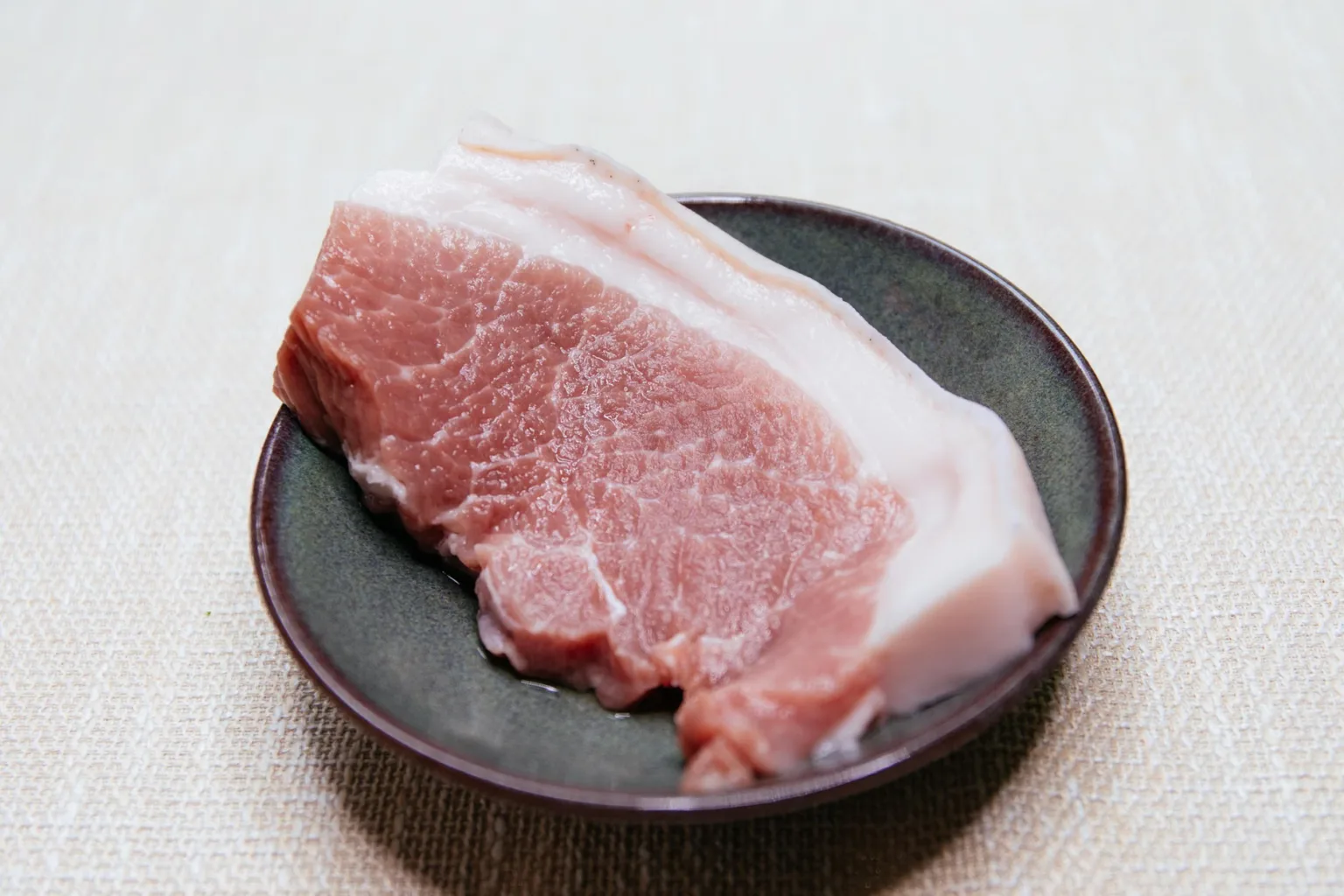
Pork belly is a cut from the ventral, or underside, area of the pig. It may include skin and contains fatty tissue alongside layers of lean meat; the balance varies from piece to piece. In this profile, “fresh” means uncured pork belly. Check the package, because the same cut may also be sold cured or smoked. Bacon is made by curing pork belly, and some versions are smoked. Although these products are related, they do not behave identically in a recipe: fresh pork belly does not necessarily bring the saltiness or smoky flavor of a cured product.
When to use it
Choose fresh pork belly when you want a dish to make use of both the meat and fat in the cut. It can go into stews and braises, be roasted or browned, or be served in sandwiches and other preparations. The amount of fat and whether the skin is present vary, so take the particular piece into account when choosing a method. If a recipe calls for bacon, cured pork belly or a smoked product, check whether it depends on that salty, smoky flavor: fresh pork belly is not an automatic substitute.
How to use it
Check the label to confirm that the product is fresh pork belly and, if needed, ask whether the skin is still attached. For a braise, cut it into portions and cook it as part of the dish until it reaches the texture you want; for roasting or browning, choose a piece size that suits the preparation and watch the result, since fat levels vary. It can also be cooked in its own fat, as in some preparations. Season with the understanding that fresh pork belly is not necessarily as salty as bacon. Do not improvise a home cure: curing salts must be used in precise amounts from a researched recipe.
Flavour and texture
The combination of meat and fat gives pork belly a pronounced flavor, while its texture depends on the cut and cooking method. Lean meat and fat occur in varying proportions, and some pieces include skin. Fresh pork belly does not automatically have the salty or smoky taste of a cured or smoked product. Browning can create a seared exterior and firmer texture; a braise produces a different result, depending on how it is cooked.
How to choose it
Read the package description to distinguish fresh pork belly from cured or smoked pork belly; do not rely on the cut name alone. Choose a size and thickness that suit the dish, and ask a butcher for help assessing the piece if the meat-to-fat balance matters. Check whether skin is included and whether the belly is sold whole or cut into portions. There is no single fixed meat-to-fat ratio: it can vary with the section and the individual piece.
Storage
Keep fresh pork belly chilled and follow the package’s storage directions and date; the available evidence does not establish a universal storage period for fresh belly. Do not treat fresh pork belly as though it were cured or ready to eat. If making bacon or cured belly at home, use a researched recipe and follow its curing and refrigeration instructions exactly. The technical source on bacon recommends refrigerating belly during curing and chilling the cooked product; do not automatically apply those instructions to every commercial product.
Substitutions
Cured pork belly or bacon may work when a recipe specifically calls for cured belly, but it will add salt and, if smoked, smoke flavor. Adjust the seasoning and do not treat these as unchanged, one-for-one equivalents for fresh belly. Another fresh pork cut may provide meat but may not have the same fat balance. Choose a substitute based on what the dish needs, not just the name of the cut.
Common mistakes
A common mistake is treating fresh pork belly and bacon as the same thing: bacon is usually cured belly and may be smoked, changing both its flavor and saltiness. It is also easy to assume that every piece has a fixed meat-to-fat ratio or includes skin. Check the label and the piece before cooking. Do not cure pork belly by guesswork or change the curing-salt amounts in a tested recipe.
Safety and allergens
Handle fresh pork belly as raw meat and follow the official handling and cooking guidance that applies in your area; do not treat it as ready to eat. For home-cured bacon, use a researched recipe and follow its quantities and refrigeration controls precisely. Curing salts are not interchangeable with ordinary salt.
Culinary uses
- Aporta carne y grasa a guisos y estofados
- Se dora o se cocina para añadir sabor y textura a otros platos
- Puede usarse fresca o en productos curados, según el etiquetado
Recommended techniques
- Estofar
- Asar
- Freír en su propia grasa
- Curar solo con una receta probada y siguiendo sus instrucciones
Pairs well with
- Ajo y especias para preparaciones adobadas
- Huevos y pan en platos de desayuno o sándwiches
- Azúcar o especias en preparaciones de panceta curada
Frequently asked questions
Is fresh pork belly the same as bacon?
Not necessarily. Pork belly is the cut; bacon is usually cured pork belly and may be smoked. Check the label.
How can pork belly be cooked?
The evidence describes braising, roasting and frying. Choose a method to suit the piece and its balance of meat and fat.
Can I cure pork belly at home?
Only with a researched recipe and precise adherence to its quantities and instructions. Do not guess the curing-salt proportions.
Estimated nutrition
- Fat
- 32.24 g
- Saturates
- 11.68 g
- Carbohydrate
- 0 g
- Sugars
- 0 g
- Fibre
- 0 g
- Protein
- 26.58 g
- Salt
- 1.12 g
Sources and review
Automatically researched, cross-checked and validated content. Sources consulted:
- ¿Por qué la muerte es origen de miedos y tabúes? doi.org
- The Essential Glossary of Cooking Terms for the Culinary Arts - Escoffier escoffier.edu
- Free Standing, Slide In, and Drop In Electric housing.illinoisstate.edu
- Trabajo electrónico aesan.gob.es
- La diabetes y la alimentación: Cómo planificar y cocinar comidas sabrosas y saludables | CAES Field Report fieldreport.caes.uga.edu
- 2026 CMC Culinary Dinner at Keystone Ranch - Colorado Mountain College coloradomtn.edu
- Making cured bacon at home | Servicio de Extensión de OSU extension.oregonstate.edu
- Nitrosyl-Heme and Heme Iron Intake from Processed ... diposit.ub.edu
- MENU May 19th - May 23rd 2025 - CNG Food Services Weekly Menu - LibGuides at Colegio Nueva Granada libguides.cng.edu
- CHIVITO MILANESA SANDWICH MILANESA NAPOLITANA shop.fiu.edu
- Panceta - Wikipedia, la enciclopedia libre es.wikipedia.org
- De Dónde Sale la Panceta: Origen, Anatomía y Usos Culinarios – Eatdrinkmore.es eatdrinkmore.es
- Panceta: Historia, Variedades y Recetas Para Disfrutar — Ibéricos Sofía Luengo ibericossofialuengo.es
- Panceta de cerdo: ¿qué parte es y de dónde sale? comemascarnedecerdo.co
- Descubre los Secretos de la Panceta Cocida y Frita: Usos Culinarios Irresistibles y Variedades Deliciosas - Restaurante Marcos restaurantemarcos.es