- Category
- Meat
- State
- Fresh
- Usual unit
- kg
What it is
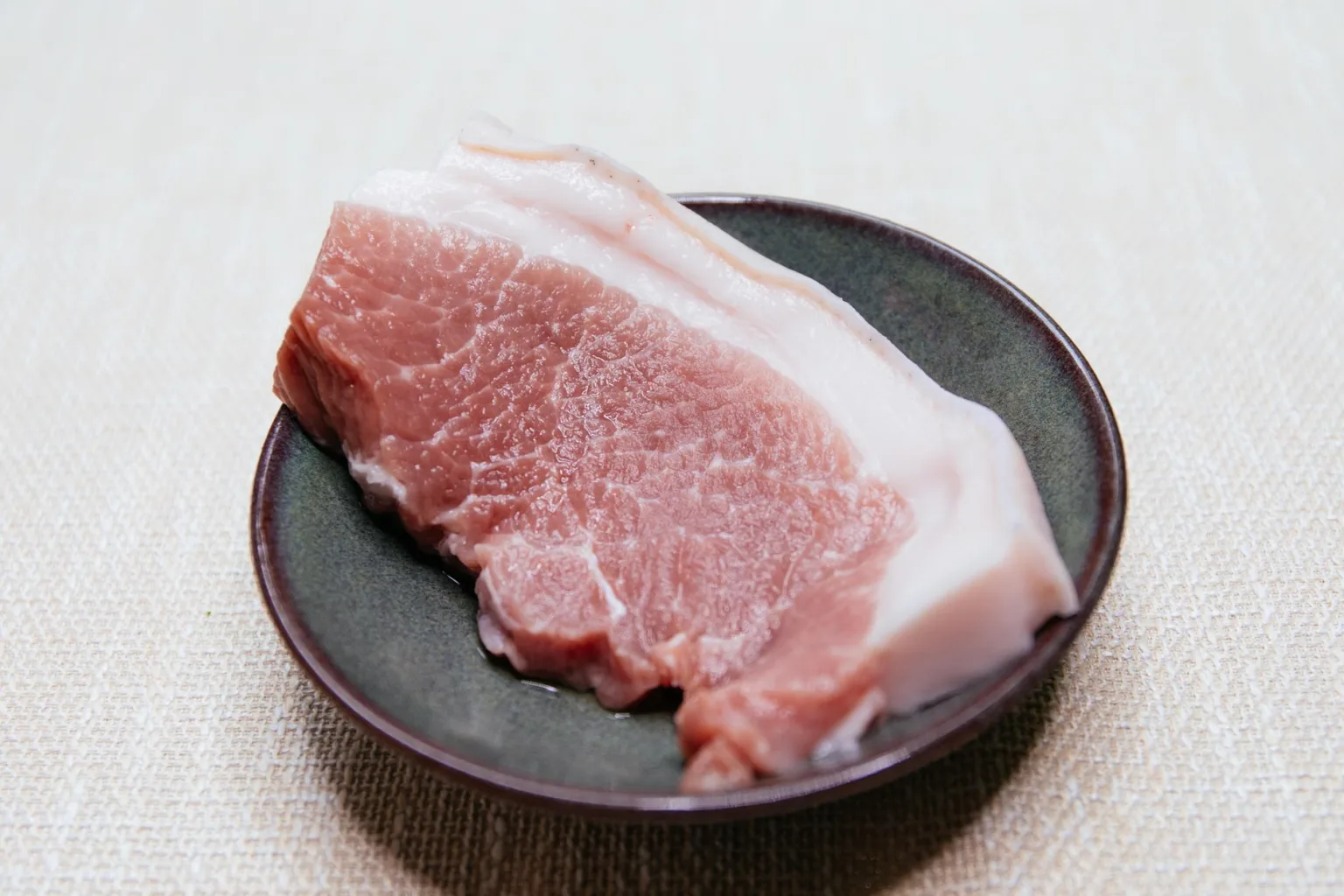
Fresh pork loin comes from the loin area beside the backbone and beneath the ribs. The cut is commonly elongated and may be sold whole, as steaks, or in other forms. It should not automatically be confused with tenderloin or the shoulder-end cut: these are different cuts. Pork loin can be very lean, although fat content and texture vary across the piece and between products. This profile is about fresh loin, not cured or stuffed loin, which is a different product.
When to use it
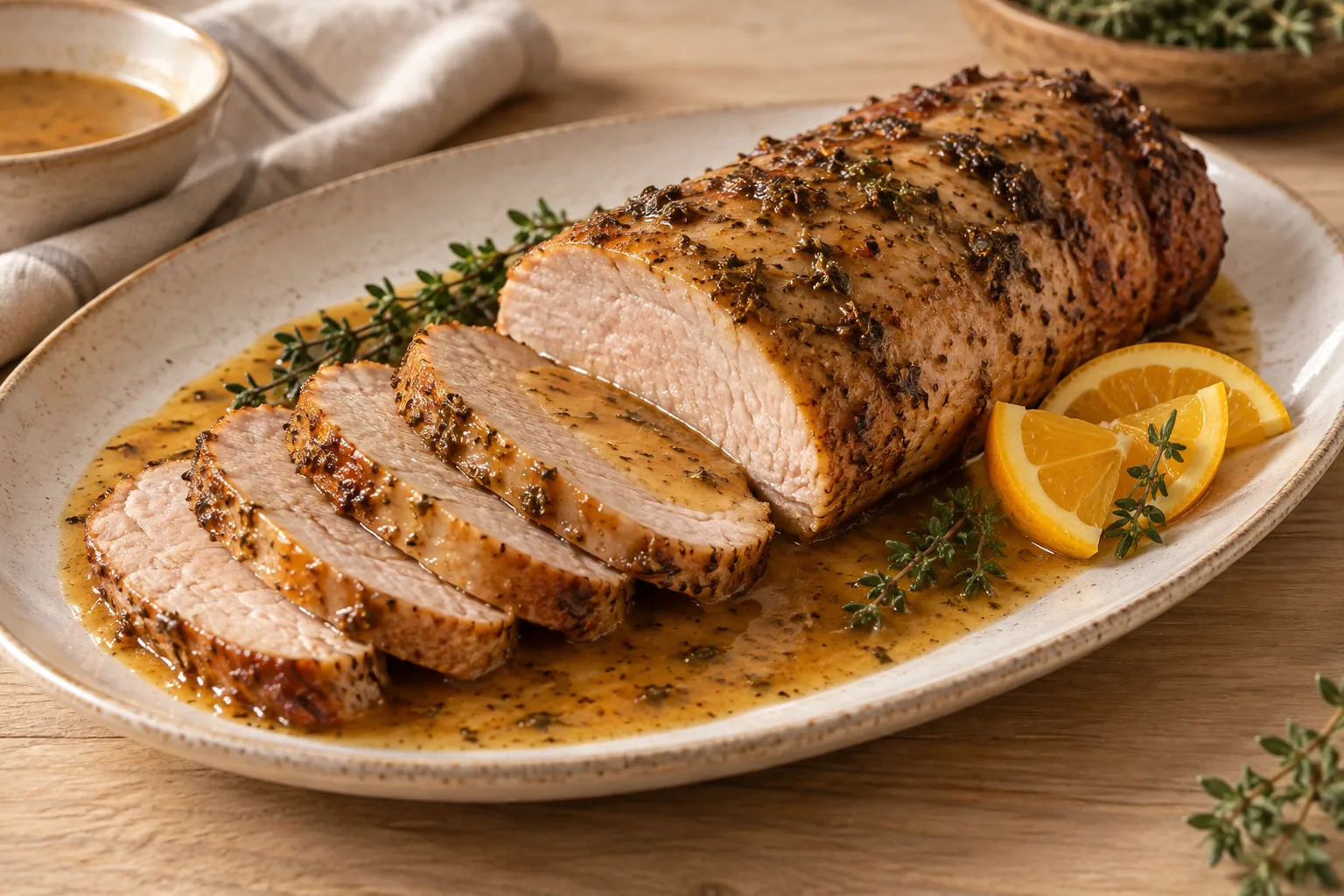
Choose fresh pork loin when you want a pork cut that can be cooked whole or divided into steaks, cubes, or strips. Steaks work for quick griddle or pan cooking; a whole piece can be roasted and sliced afterward. The cut can also be used for skewers, sandwiches, breaded preparations, or stews. If a particularly juicy result matters, remember that leaner portions can dry out when overcooked. The thickness and shape of the cut affect how it cooks.
How to use it
Keep the loin refrigerated until preparation, and keep raw meat separate from ready-to-eat food. Cook it whole as a roast, cut into steaks for a pan or griddle, cube it for skewers, or use pieces in a stew. It can also be breaded or served in a sandwich with accompaniments. Garlic and parsley, or combinations involving onion, orange, lime, and cumin, appear in pork preparations and can guide seasoning choices. Check doneness with a food thermometer and follow reliable guidance for the cut; a university-extension pork-roast recipe specifies a minimum internal temperature of 145°F.
Flavour and texture
Fresh pork loin is described as a lean, tender cut, but its texture is not uniform throughout. The leanest portion can become dry if overcooked, while other parts of the loin are described as more succulent. Its flavor works with accompaniments such as garlic, parsley, peppers, potatoes, or sauces; these are serving ideas, not ingredients inherent to the cut.
How to choose it
Look for firm meat with a grayish-pink color and packaging that feels cold and has no punctures or damage. A small amount of intramuscular fat can help with tenderness and flavor. Select the meat shortly before checkout and keep it apart from other groceries to prevent raw juices from contaminating them. Check any date on the package and choose a whole piece or steaks to suit the planned dish.
Storage
Refrigerate or freeze fresh pork loin as soon as you get home, and keep it cold until cooking. Store it apart from cooked and ready-to-eat foods, in packaging or a container that contains its juices. University-extension guidance advises keeping whole fresh cuts in their original wrapping in the coldest part of the refrigerator for up to four or five days after purchase, and freezing them if they will not be used within four days. Thaw in the refrigerator, cold water, or microwave, never at room temperature.
Substitutions
If a recipe calls for steaks, a fresh loin can be cut into portions; if it calls for a whole roast, steaks will not have the same shape or cook in the same way. The shoulder-end pork cut is different and is described as fattier, so consider it only in recipes that can accommodate that difference and adjust the preparation. Cured or seasoned loin is not the same as fresh loin: its treatment and seasoning can change the dish.
Common mistakes
Do not confuse loin with tenderloin or the shoulder-end cut; they are different pieces. Avoid overcooking the leanest portion, which can dry out, and never thaw raw pork at room temperature. Do not reuse plates, utensils, or surfaces that touched raw meat without washing them, and do not put cooked pork on the plate that held it raw.
Safety and allergens
Keep raw pork refrigerated and separate from ready-to-eat foods; wash hands and clean utensils and surfaces that have touched it. Thaw in the refrigerator, cold water, or microwave, not at room temperature. For a pork roast, a university-extension recipe recommends at least 145°F internally; check with a food thermometer and follow local food-safety guidance.
Culinary uses
- Centerpiece for a main course
- Sliced or cubed pork for sandwiches, skewers, or mixed dishes
Recommended techniques
- Pan-frying or cooking on a griddle
- Roasting
- Grilling
- Braising or stewing
- Breading and frying
Pairs well with
- Garlic and parsley
- Potatoes
- Peppers and cheese
- Orange, lime, onion, and cumin
Frequently asked questions
Is pork loin the same as tenderloin?
No. Loin and tenderloin are different cuts. Pork loin is beside the backbone and beneath the ribs.
Can pork loin be cooked whole or as steaks?
Yes. It is sold in different forms and can be roasted whole or prepared as steaks, among other options.
What is a safe way to thaw pork loin?
Thaw it in the refrigerator, in cold water, or in a microwave. Do not thaw it at room temperature.
Estimated nutrition
- Fat
- 11.06 g
- Saturates
- 3.52 g
- Carbohydrate
- 0 g
- Sugars
- 0 g
- Fibre
- 0 g
- Protein
- 25.61 g
- Salt
- 0.14 g
Sources and review
Automatically researched, cross-checked and validated content. Sources consulted:
- ¿Por qué la muerte es origen de miedos y tabúes? doi.org
- The Essential Glossary of Cooking Terms for the Culinary Arts - Escoffier escoffier.edu
- Revista del comité científico de la aecosan número 24 aesan.gob.es
- Informe del Desperdicio Alimentario en los hogares 2022 mapa.gob.es
- Asado de cerdo en olla de cocción lenta - Spend Smart Eat Smart spendsmart.extension.iastate.edu
- Procesamiento y compra de carne | Extensión de la UMN es.extension.umn.edu
- Nutrition | Label - Lomo Saltado (Peruvian Beef Stir-Fry) nutrition.umd.edu
- Safe Handling of Pork | Home & Garden Information Center hgic.clemson.edu
- 11/9/23, 3:57 PM Lomo Saltado (Peruvian Beef Stir Fry) - Little Spice Jar dining.media.uconn.edu
- Nutrition Label nutritionanalysis.dds.uconn.edu
- Sabores de nuestras tierras/recetas - 2024 | Agricultura y Recursos Naturales ucanr.edu
- Vegetable Freezing Methods | USU extension.usu.edu
- Lomo de cerdo - Wikipedia, la enciclopedia libre es.wikipedia.org
- El Lomo: Un Delicioso Corte De Carne carnicasdiscarpe.com
- ¿Qué es el Lomo? Análisis y Comparativa de los Mejores Quesos y Embutidos para Disfrutarlo donquesotori.es
- Tipos de lomo: ¿Los conoces todos? ibericosmarcelino.com
- Comprar Lomo de Cerdo Fresco Online degustateruel.com
- Recetas de lomo de cerdo | Gastronosfera gastronosfera.com