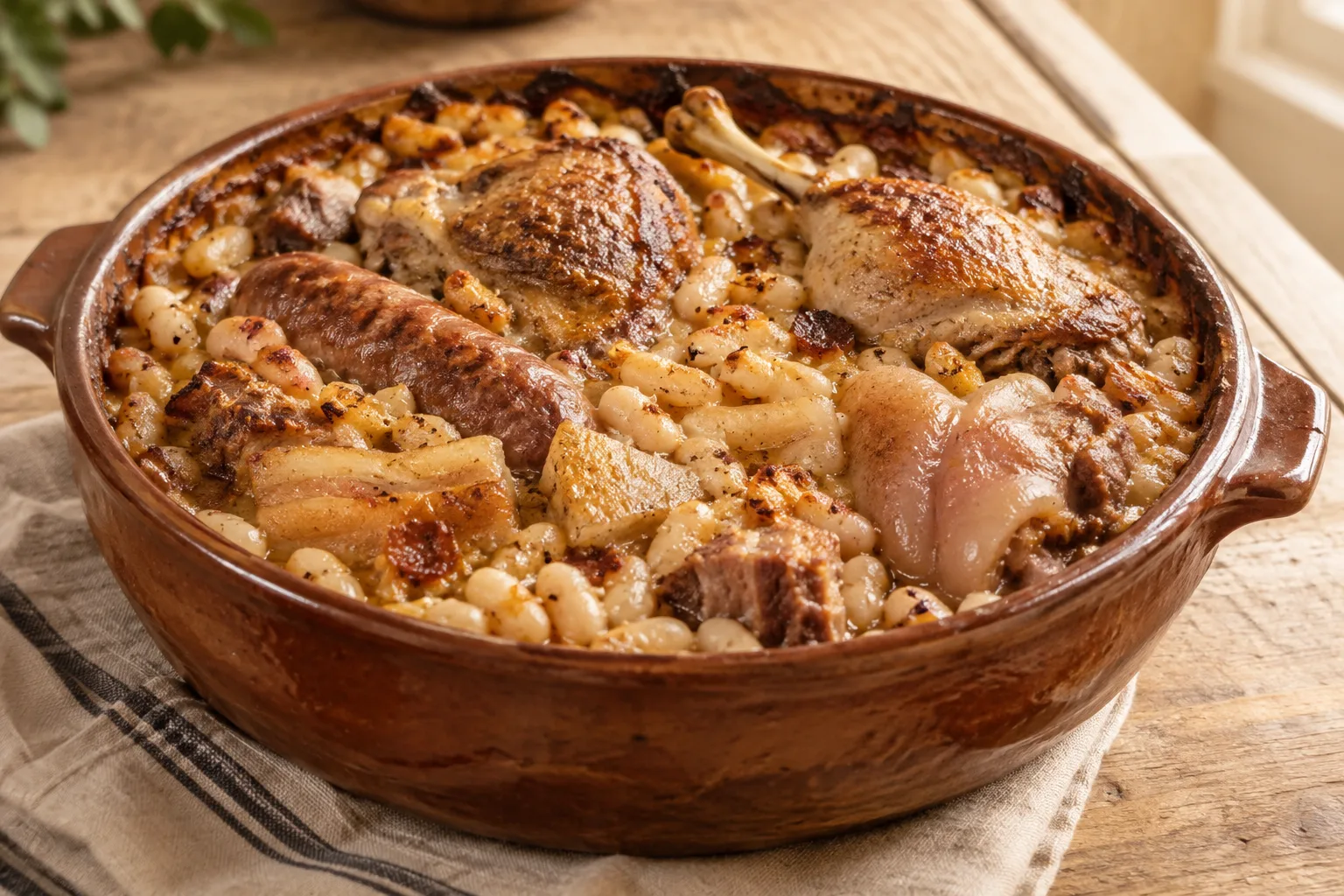
- Category
- Meat
- State
- Fresh
- Usual unit
- g
What it is
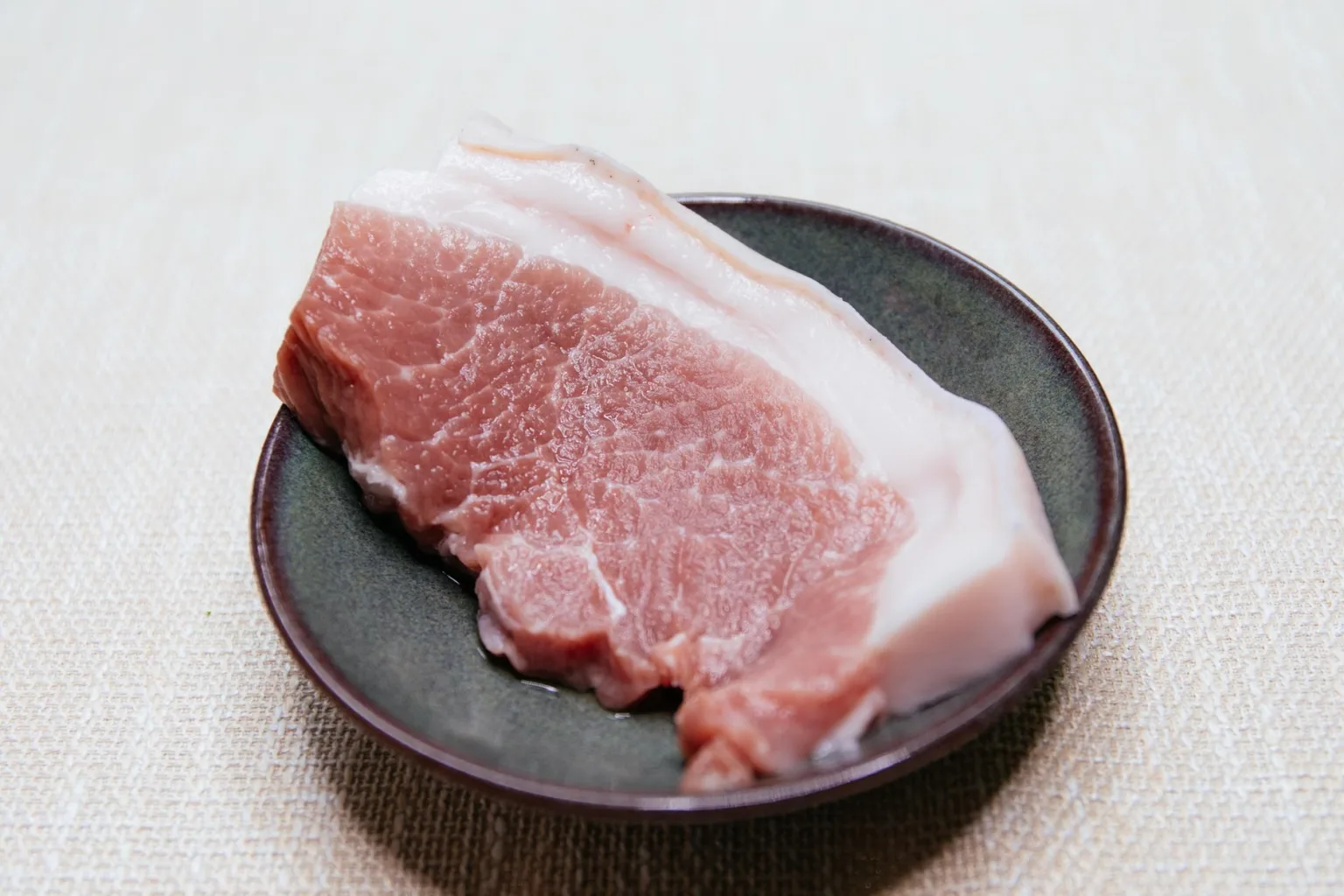
Pork rind is the skin of a pig, also referred to as pork skin in culinary contexts. This profile covers fresh, unprepared rind, not a ready-to-eat snack. Check the condition and instructions for the particular product you buy before using it. Frying or cooking the skin in an oven can produce a crisp preparation; cooked rind can also be ground into a powder for finishing dishes. The finished form varies: products may be sold as crisp skin, while a fresh piece may have fat or other material attached. Do not assume that fresh rind already has the light, crisp texture of a packaged snack.
When to use it
Use pork rind when you want to prepare a crisp snack or add a crunchy contrast to salads, soups and purées. Cooked and chopped rind can also be added to other dishes, or ground into a powder to sprinkle as a finishing touch. Distinguish fresh rind from rind that has already been fried or baked: fresh rind needs cooking before serving and is not immediately interchangeable with a ready-to-eat snack. Choose the form that suits your intended use and follow the directions on its packaging.
How to use it
Before cooking, check the package and prepare the rind according to the product directions. Culinary sources describe frying the skin or cooking it in an oven as ways to make a crisp preparation. No cooking times or temperatures are given here because they may depend on the product, and the available evidence does not provide a validated guide for every cut. Once cooked and crisp, serve the rind as a snack, crumble it over salads, soups or purées, or grind it into a powder to sprinkle over other dishes. It can also be chopped to add texture. Keep raw rind separate from ready-to-eat food, and clean hands, utensils and surfaces that have touched raw pork.
Flavour and texture
Available culinary descriptions characterize cooked pork rind as savory and crisp. Fresh rind has not yet developed that finished texture; the result depends on how it is prepared. Thickness, attached fat and the final texture can vary from piece to piece, so check the product rather than assuming every rind will become light or airy.
How to choose it
Choose a refrigerated product with intact packaging and check its date and the seller’s or manufacturer’s directions. The available purchasing guidance is general for fresh pork, not specific to every rind product, so ask the supplier if the package does not make clear how the rind is prepared or intended to be used. Keep raw pork separate from ready-to-eat foods while shopping and transporting it.
Storage
Refrigerate or freeze fresh rind promptly after bringing it home and keep it separate from cooked foods. Follow the package date and directions: the available sources do not set a storage period specifically for fresh rind. Keep it cold during transport; do not leave it in a hot car or at room temperature. Thaw it in the refrigerator, in cold water or in a microwave, not on the counter. If thawing it in a microwave, cook it immediately afterward.
Substitutions
The available sources do not document a different ingredient that directly replaces pork rind while retaining its characteristics. For convenience, you can choose pork rind that is already crisp, fried or oven-cooked, but that is another form of the same ingredient, not an equivalent substitute for fresh rind.
Common mistakes
Do not confuse fresh skin with ready-to-eat crackling: the crisp texture comes from cooking it. Nor is pork-rind powder a different ingredient; it is made by grinding cooked rind. For safety, keep raw rind and its juices away from ready-to-eat foods, and wash utensils that have touched it before using them again.
Safety and allergens
Treat fresh rind as raw pork: keep it refrigerated, prevent contact with ready-to-eat foods, and wash your hands. Clean utensils and surfaces that have touched raw pork with hot, soapy water. Follow the package directions and cook the product before serving; no specific cooking times or temperatures are provided here.
Culinary uses
- Aperitivo crujiente
- Ingrediente o acabado crujiente para platos
- Base para un polvo de corteza
Recommended techniques
- Freír
- Hornear hasta que quede crujiente
- Triturar corteza cocinada para hacer polvo
Pairs well with
- Ensaladas, sopas y purés
- Carnes y verduras asadas
Frequently asked questions
Is fresh pork rind already crisp?
Not necessarily. Fresh rind is unprepared skin; a crisp texture is produced by cooking it, for example by frying or oven-cooking.
How can I serve pork rind?
Once cooked and crisp, it can be served as a snack or used as a topping for salads, soups and purées. It can also be ground into a powder.
How should I store fresh pork rind?
Refrigerate or freeze it promptly, keep it separate from cooked foods and follow the package directions. The available sources do not specify a storage period for fresh rind.
Sources and review
Automatically researched, cross-checked and validated content. Sources consulted:
- ¿Por qué la muerte es origen de miedos y tabúes? doi.org
- The Essential Glossary of Cooking Terms for the Culinary Arts - Escoffier escoffier.edu
- Safe Handling of Pork | Home & Garden Information Center hgic.clemson.edu
- Free Standing, Slide In, and Drop In Electric housing.illinoisstate.edu
- Vamos a Conservar Alimentos - Home Food Preservation and Safety - Food Safety and Quality extension.psu.edu
- \r\n \n El Cerdo y su Deliciosa Versatilidad en la Gastronomía\n \r\n recetasexplicadas.com
- alergias Alimentarias aesan.gob.es
- EFNEP Puerto Rican Foods Substitution Guide ucanr.edu
- Loeffel Meat Shoppe | Department of Animal Science | Nebraska animalscience.unl.edu
- Cortezas o chicharricos de cerdo: tradición crujiente con sabor a oportunidad - BR Spanish Gourmet brspanishgourmet.com
- Elaboraciones con corteza de cerdo - https://www.carniceriasjuanortiz.com/ carniceriasjuanortiz.com
- ▷ Cortezas de Cerdo | Chicharrones, Características y donde Comprarlo gastronomicspain.com