- Category
- Vegetables
- State
- Liquid
- Usual unit
- cup
What it is
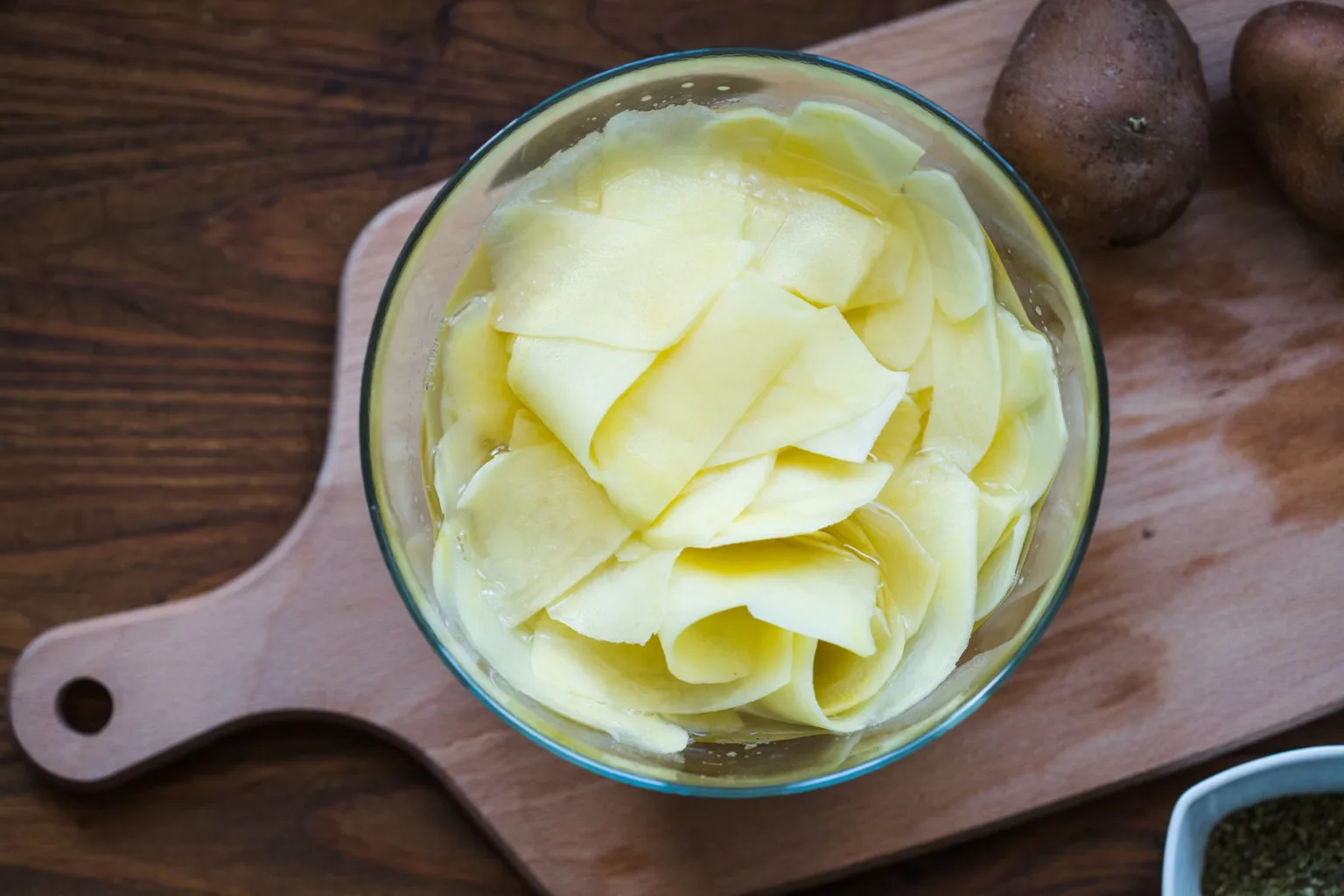
Potato cooking water is the liquid left in a pot after potatoes have been boiled in water. It is not a standardized ingredient: its characteristics can vary with the potatoes, the amount of water, and the cooking method. Potato starch changes as it heats and absorbs water, so the reserved liquid may feel more or less dense; the available evidence does not establish a particular concentration. This is a home-kitchen by-product, not a standardized stock or packaged product. If salt or other ingredients were added to the pot, they will also be present in the liquid. Knowing what was cooked in it helps you decide whether it suits a dish and what to tell anyone who will eat that dish.
When to use it
Use it when you want to make use of the liquid left from boiling potatoes and need liquid for a vegetable soup or stew. It is best suited to dishes that work with a potato flavor; start with a small amount and taste before adding more, because concentration is not consistent. It can also be tried to adjust the liquid level of a dish while it cooks, but the available evidence gives no fixed ratio and does not guarantee a particular thickening effect. If the cooking water was salted, account for that before seasoning. Do not choose it as a substitute when a recipe depends on a specific flavor that potato water does not provide.
How to use it
Before cooking, rinse the potatoes under running water and scrub them with a clean vegetable brush. After boiling, reserve the liquid with a clean utensil before draining, if you intend to use it in a compatible dish. Add a small amount to a soup or stew and stir; add more only if the dish needs liquid and the flavor remains suitable. Since the consistency can vary, there is no universal measure for every recipe. If salt was added to the water, taste the dish before adjusting its seasoning. Potato cooking water is not an automatic replacement for a stock with a defined flavor. The supplied evidence gives no specific storage times or conditions for this preparation, so do not invent them: follow applicable official food-safety guidance for cooked foods and avoid keeping it without reliable guidance.
Flavour and texture
Its flavor may be mild and potato-like, but intensity depends on how the potatoes were cooked and whether salt or other ingredients were in the water. Texture can also vary: potato starch changes during cooking, so reserved liquid may feel more or less dense. Do not assume that it will always thicken a dish or that every pot produces the same liquid. Taste it and add it gradually to assess its effect.
How to choose it
It is generally not bought as a separate ingredient; it is produced by boiling potatoes. Choose firm potatoes without green areas, sprouts, or soft spots, and rinse them under running water before cooking. If you want a more predictable liquid, remember that potato cooking water depends on the potatoes, the water used, and anything added to the pot. The available evidence does not identify potato varieties that guarantee a particular concentration or texture in the liquid.
Storage
The supplied evidence does not establish a specific storage period or conditions for potato cooking water. Do not assign it a precise shelf life or assume it can be kept safely at room temperature. If you plan to store it, consult official guidance that applies to cooked foods and your circumstances. To avoid confusion, label the contents and note whether salt or other ingredients were added; if reliable storage guidance is unavailable, it is preferable not to keep it for later.
Substitutions
Water can replace it when the only need is additional liquid, although it will not contribute a potato character. Mild broth is another option when more flavor is wanted, but it may change the dish's seasoning. Neither substitute necessarily recreates the texture of cooking water, which varies with preparation. Add any alternative gradually and adjust seasoning after tasting.
Common mistakes
A common mistake is assuming that every batch has the same concentration or will thicken any dish. Avoid adding a large amount all at once or seasoning without tasting first, especially if the water was salted. Do not treat it as a stock with a uniform flavor: its composition depends on what was cooked in the pot. Do not invent a storage period when no specific guidance is available.
Safety and allergens
Rinse potatoes under running water and scrub them with a clean brush before preparation. The supplied official evidence gives no specific warning about potato cooking water and no storage instructions for it; follow official guidance that applies to cooked foods and do not assume it is safe at room temperature.
Culinary uses
- Aportar líquido a sopas y guisos
- Contribuir a la textura de preparaciones con patata
Recommended techniques
- Incorporar poco a poco a una sopa o un guiso
- Reservar una pequeña cantidad antes de escurrir las patatas
Pairs well with
- Sopas de verduras
- Guisos de patata
Frequently asked questions
What is potato cooking water?
It is the liquid left after potatoes are boiled in water. Its flavor and consistency can change with the potatoes and any ingredients added.
How can I use it?
Try adding a small amount to a soup or stew that suits potato flavor. Add it gradually and taste before adjusting the seasoning.
Can it be stored for several days?
The available evidence does not give a specific storage period or conditions. Consult official guidance for cooked foods and do not assume it is safe at room temperature.
Sources and review
Automatically researched, cross-checked and validated content. Sources consulted:
- En el etiquetado alimentario hay algunas menciones que son obligatorias eletiquetadocuentamucho.aesan.gob.es
- The Essential Glossary of Cooking Terms for the Culinary Arts - Escoffier escoffier.edu
- 1.1.2-La Patata: historia, variedades y usos gastronómicos - GIRASOLES webgirasoles.com
- La patata, origen y datos curiosos | masymas supermercados supermasymas.com
- Tipos de patata y qué patata elegir según la cocción margavilan.substack.com
- ¿Qué es la Iniciativa de Codificación de Textos? - Las variedades de la estructura textual - OpenEdition Press doi.org
- Agencia Española de Seguridad Alimentaria y Nutrición aesan.gob.es
- Vamos a Conservar Alimentos: Papas y Batatas (Camote o Papa Dulce) extension.psu.edu
- GastroWiki - Blog sobre Gastronomía gastroalianza.es
- 2026 CMC Culinary Dinner - Colorado Mountain College coloradomtn.edu
- Sopa Espesa de Verduras Mezcle y Combine | Servicio de Extensión de OSU extension.oregonstate.edu
- Blog | Community Nutrition | Extension/College of Agriculture, Health & Natural Resources | University of Connecticut communitynutrition.cahnr.uconn.edu
- Papas - Spend Smart Eat Smart spendsmart.extension.iastate.edu
- 04 AB Vocabulary List – Semillas: Elementary Spanish I pressbooks.uiowa.edu
- SLU-Madrid Honors High School Students for Research in Information Technology and Astrophysics : SLU - Saint Louis University slu.edu