- Category
- Nuts and seeds
- State
- Fresh
- Usual unit
- g
What it is
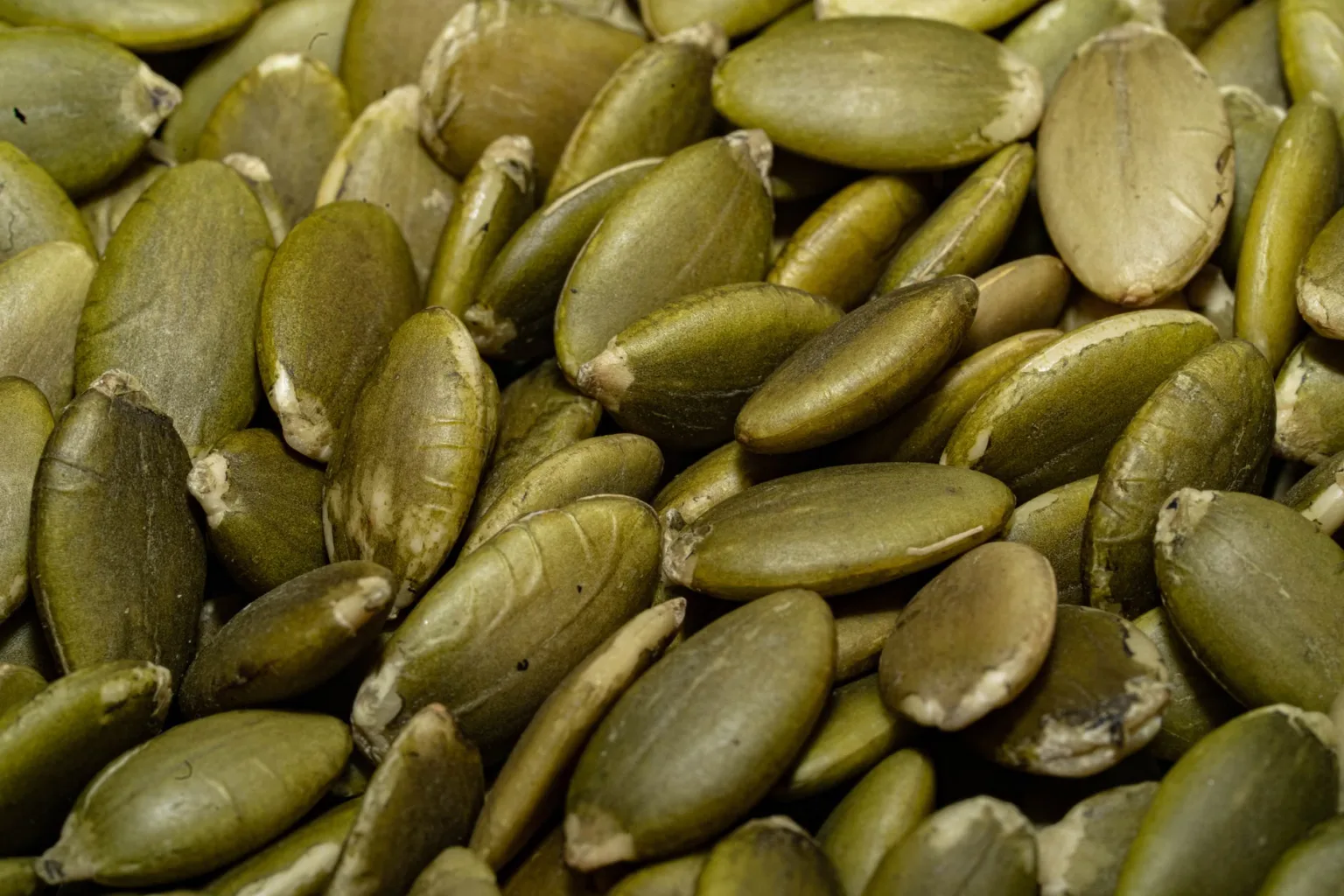
Pepitas are pumpkin seeds used as an ingredient or as a crunchy finish for savory dishes. The culinary evidence available here includes them in a sautéed chard recipe: they are toasted in a pan first and then added with other ingredients. They also appear in a roasted squash salad with pomegranate and goat cheese. The Spanish word “pepitoria” can refer to different dishes; in this ingredient profile it means the pumpkin seeds specified for the ingredient, not a poultry stew.
When to use it
Use them when you want to add a crunchy texture to a vegetable dish or salad. One documented combination adds them to chard with raisins, garlic and balsamic vinegar; another serves them with roasted squash, pomegranate and goat cheese. These examples show their use both in a warm vegetable dish and in a salad. The available evidence does not establish a season or a universal quantity, so follow the recipe you are making rather than assuming a standard amount.
How to use it
One documented method is to toast the seeds in a pan before adding them to a dish: a chard recipe says to toast them for about two minutes and shake the pan so they brown evenly. They are then set aside and added to the chard with raisins, garlic and balsamic vinegar. You can also use them as a crunchy element in a salad with roasted squash, pomegranate and goat cheese. Follow your recipe or package directions; the evidence does not establish other cooking times or a universal method.
Flavour and texture
In the documented preparations, pumpkin seeds provide a crunchy contrast in vegetable dishes and salads. The toasting recipe aims for even browning before the seeds are added, but the available source does not give a detailed description of their flavor or texture in other forms. Use them in the amount your recipe calls for, and do not assume the result will be identical across different preparations.
How to choose it
The available material does not compare varieties, sizes, brands or freshness criteria, so it cannot support a specific selection recommendation. Look for a product identified as pumpkin seeds or pepitas and check that its packaging and label are legible. If you plan to toast them, check whether they are already toasted so you do not repeat that step unnecessarily. Follow the use information provided by the manufacturer.
Storage
The available sources do not state how long pumpkin seeds keep or specify storage conditions. To avoid inventing a shelf life or method, follow the instructions on the package and consult them again after opening. If the product gives no clear guidance, ask the manufacturer or retailer. Do not use this profile as a substitute for the product’s storage instructions.
Substitutions
In the documented sautéed chard recipe, pine nuts or sliced almonds are offered as alternatives to pumpkin seeds. These are culinary substitutes for that particular preparation, not a guarantee of identical flavor, texture or allergen profile. Follow the recipe and check the ingredient and allergen information for the alternative product you choose.
Common mistakes
Do not confuse pumpkin-seed pepitas with every dish called “pepitoria”; the word can refer to different preparations. If you toast the seeds, do not leave them unattended: the available recipe says to shake the pan so they brown evenly. Also avoid assuming a storage life or detailed flavor profile that the evidence does not provide.
Safety and allergens
Check the package label for ingredients and any allergen or cross-contact statements. The available sources provide no specific safety warning for pumpkin seeds and no official storage directions; follow the manufacturer’s instructions.
Culinary uses
- Aporte crujiente para platos de verduras
- Ingrediente o acabado para ensaladas
Recommended techniques
- Tostar en sartén
- Añadir como acabado o mezclar en un plato
Pairs well with
- Acelga, ajo, pasas y vinagre balsámico
- Calabaza asada, granada y queso de cabra
Frequently asked questions
Are pepitas and pumpkin seeds the same thing?
In this profile, “pepitas” refers to the pumpkin seeds specified for the ingredient.
How can I toast pumpkin seeds?
One recipe toasts them in a pan for about two minutes and shakes the pan to encourage even browning. Results may vary with the product and equipment.
What can I use instead of pumpkin seeds?
For a sautéed chard preparation, the recipe suggests pine nuts or sliced almonds as alternatives.
Estimated nutrition
- Fat
- 25 g
- Saturates
- 12.5 g
- Carbohydrate
- 39.3 g
- Sugars
- 0 g
- Fibre
- 39.3 g
- Protein
- 21.4 g
- Salt
- 10,475 g
Sources and review
Automatically researched, cross-checked and validated content. Sources consulted:
- Client Challenge doi.org
- IBD-AID ALLOWABLE FOODS LIST, BY PHASE umassmed.edu
- Recipes | Indigenous Voices of the Americas | Smithsonian Folklife Festival festival.si.edu
- Pepitoria - Wikipedia, la enciclopedia libre es.wikipedia.org
- Chard | Cooperative Extension Service uaf.edu
- Recipes for a Nourishing Thanksgiving Season mtsac.edu
- Side Quest: Four New Thanksgiving Recipes | University of Utah Health healthcare.utah.edu
- Dinner Packages | Catering | Dinner Packages | Amherst College amherst.edu
- Pollo en pepitoria: receta e historia de un plato centenario | Recetas | Gastronomía | EL PAÍS elpais.com
- Gallina en pepitoria – academia madrileña de gastronomía academiamadrilenadegastronomia.org
- Pollo en pepitoria de la abuela - Recetas de Miriam García / El invitado de invierno invitadoinvierno.com
- Qué es y cómo hacer CARNE EN PEPITORIA - Carnicería de Madrid carniceriademadrid.es