- Category
- Sugar and sweeteners
- State
- Dry
- Usual unit
- g
What it is
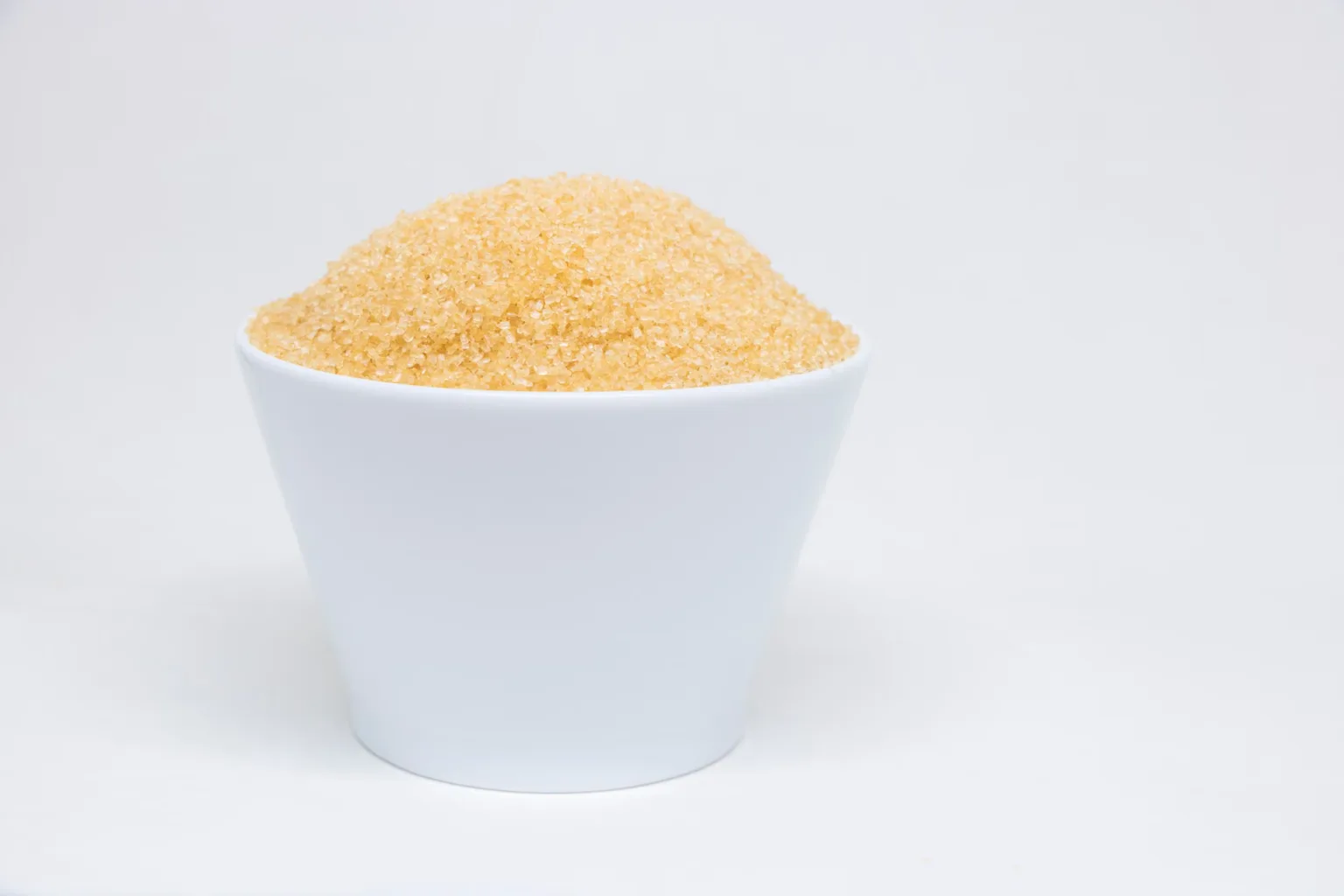
Refined table sugar is a dry sweetener with visible crystals, also called white or granulated sugar. In ordinary culinary use, table sugar is sucrose; it can be made from sugar cane or sugar beet. Crystal size may vary slightly between brands, so different products do not always incorporate in exactly the same way. It is not the same as powdered sugar, which is ground to a fine powder, or brown sugar, which has different characteristics. When a recipe simply calls for sugar without specifying a special kind, ordinary table sugar is usually the intended choice.
When to use it
Use it to sweeten coffee, tea, drinks and other preparations, or whenever a recipe calls for regular sugar without naming a specific variety. In baking, it can be creamed with butter and eggs, dissolved into liquid mixtures, or sprinkled over a preparation before baking to create a crisp surface. It can also be heated to make caramel. In some savory preparations, a little sugar is used to balance acidity; there is no need to add it if the recipe does not call for it. Choose another sugar size or type when a recipe explicitly depends on fine crystals, powdered sugar or a particular texture.
How to use it
Measure the amount specified in the recipe and add it at the stated step. For drinks and liquid mixtures, stir until the crystals dissolve; how quickly that happens depends on the preparation, so do not assume they will disappear immediately. In some doughs and batters, cream sugar with butter and eggs to incorporate air. Sprinkled over a preparation before baking, it can form a crisp crust. When heated, sugar melts and can caramelize, so watch it closely and follow the recipe directions. Do not automatically swap regular sugar for powdered sugar: their textures and, depending on the product, ingredients can differ.
Flavour and texture
It gives a clean, familiar sweetness without the molasses notes associated with some brown sugars. Ordinary granulated sugar has dry, perceptible crystals; their size can vary somewhat by brand. It dissolves in hot or cold liquids, although the speed depends on the mixture. Creamed with butter and eggs, it can contribute to aeration in a mixture; when melted and caramelized, it changes color and develops toasted flavors. Powdered sugar is much finer and behaves differently, so it should not be confused with this form.
How to choose it
For recipes calling for regular sugar, choose white table sugar with dry, free-flowing crystals. Check that the package is intact and that the sugar has no signs of moisture or unusual clumping. Brands may sell crystals that are slightly finer or coarser; that variation is normal for everyday use, but a recipe specifying superfine, powdered or pearl sugar calls for attention to the named type. Do not choose powdered sugar as though it were simply a more convenient form of table sugar: it is ground much finer, and some commercial products include anti-caking ingredients.
Storage
Keep it in the pantry in a clean, tightly closed container, protected from moisture so it stays dry and free-flowing. Table sugar generally does not require special storage conditions, but an open package can absorb moisture and clump. Use a dry spoon and keep wet utensils out of the container. If the sugar becomes lumpy, check for obvious moisture or contamination before using it; a change in texture does not mean it can be replaced indiscriminately with powdered sugar.
Substitutions
The right substitute depends on the recipe’s purpose and required texture. Superfine sugar may incorporate more readily in some mixtures, but its crystal size is not identical. Powdered sugar is a powder and may contain anti-caking ingredients, so it is not a universal replacement for table sugar. Other sugars and sweeteners can change sweetness, color, moisture or structure; switch only when the recipe allows it and consider how the result may change.
Common mistakes
Do not confuse regular refined sugar with powdered, superfine or pearl sugar: crystal size affects how it dissolves and incorporates. Do not assume every substitute will produce the same result in a batter, caramel or drink. Keep a close eye on sugar as it caramelizes. For home canning, do not change the quantities or proportions in a tested recipe unless its instructions say that the change is permitted.
Safety and allergens
Keep the product dry, the package closed, and utensils clean and dry. For home canning, follow a tested recipe and do not change its proportions on your own; ingredients and quantities are part of the stated process.
Culinary uses
- Endulzar bebidas y alimentos
- Aportar estructura, aireación y dorado a preparaciones dulces
- Equilibrar la acidez en algunos platos salados
Recommended techniques
- Disolver en líquidos
- Batir con mantequilla y huevos para cremar
- Fundir y caramelizar
- Espolvorear antes de hornear o sobre preparaciones terminadas
Pairs well with
- Café y té
- Frutas ácidas y preparaciones de fruta
- Mantequilla y huevos en masas de repostería
- Vinagre y especias en algunas salsas y encurtidos
Frequently asked questions
Is refined sugar the same as powdered sugar?
No. Regular refined sugar has crystals; powdered sugar is ground into a fine powder, and some commercial products include anti-caking ingredients.
Can I use it to sweeten drinks?
Yes. It is used to sweeten drinks and can dissolve in hot or cold liquids; the time it takes depends on the preparation.
How should I store it?
Keep it in a clean, closed container in the pantry and protect it from moisture to help the crystals stay dry and free-flowing.
Estimated nutrition
- Fat
- 0 g
- Saturates
- 0 g
- Carbohydrate
- 100 g
- Sugars
- 100 g
- Protein
- 0 g
- Salt
- 0 g
Sources and review
Automatically researched, cross-checked and validated content. Sources consulted:
- Client Challenge doi.org
- The Essential Glossary of Cooking Terms for the Culinary Arts - Escoffier escoffier.edu
- Del blanco a la panela: los 19 tipos de azúcar más comunes, en qué se diferencian y cómo usarlos en cocina directoalpaladar.com
- Azúcar - Wikipedia, la enciclopedia libre es.wikipedia.org
- El azúcar: tipos y usos. Parte I - Blog de recetas de María Lunarillos marialunarillos.com
- Agencia Española de Seguridad Alimentaria y Nutrición aesan.gob.es
- educational content to support healthful lifestyle practices sjsu.edu
- Food & Fun Afterschool hsph.harvard.edu
- Vamos a Conservar Alimentos: Ingredientes Utilizados en las Conservas Preparadas en Casa extension.psu.edu
- ¿Qué es el azúcar? Tipos, sacarosa y edulcorantes - Zschimmer & Schwarz, Inc. zschimmer-schwarz.es
- filling gender gaps: determining how traditional knowledge of experts.esf.edu
- Salsa Picante de Jícama (Spanish) - National Center for Home Food Preservation nchfp.uga.edu
- Diferencias entre el azúcar refinado y el azúcar natural – Botanical-online botanical-online.com