- Category
- Grains, flour and pasta
- State
- Dry
- Usual unit
- unit
What it is
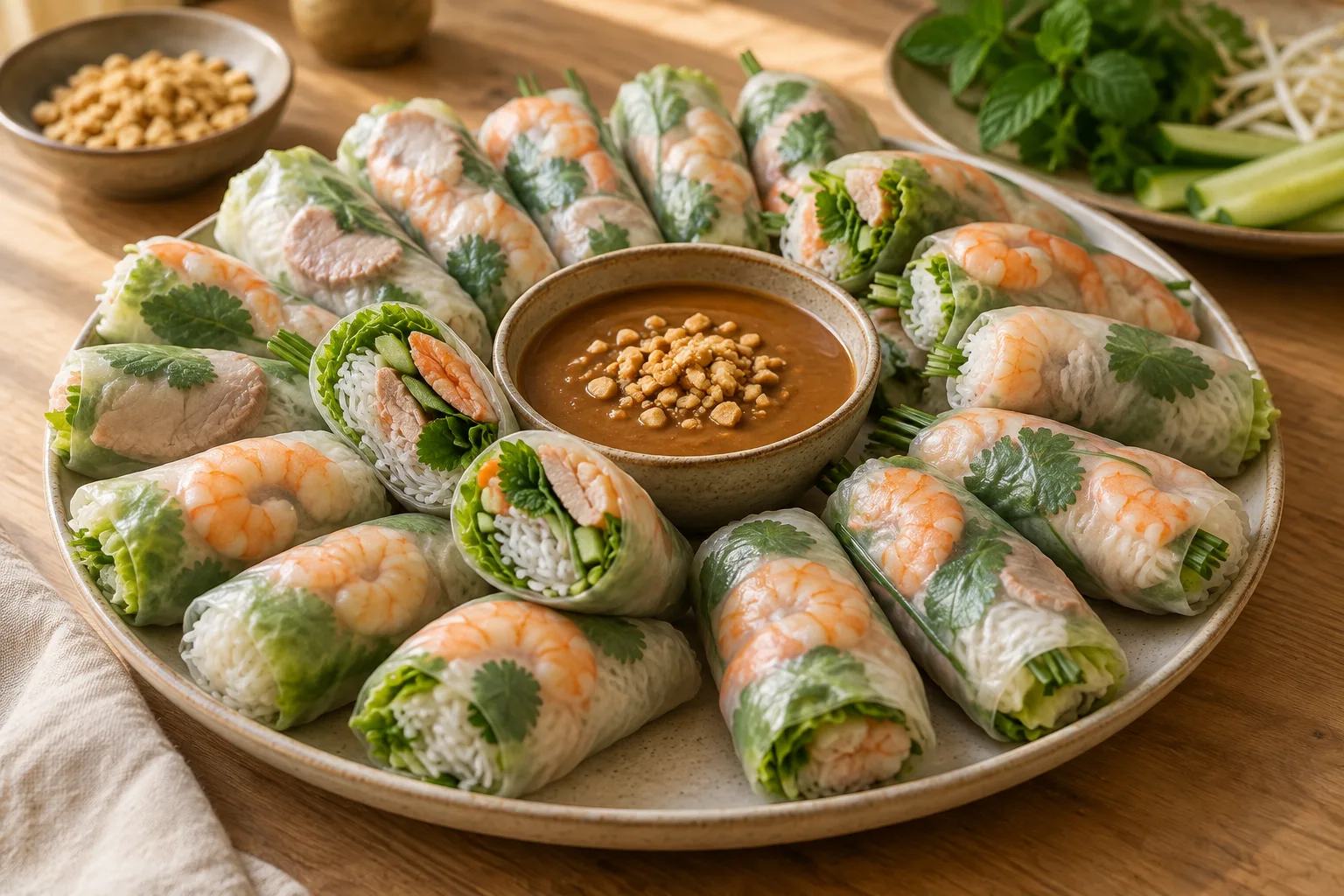
Rice paper, also called bánh tráng, is a thin, translucent wrapper commonly sold dry and brittle. Available descriptions say it is made mainly from rice or rice flour and water; some versions may include tapioca or other ingredients. When moistened, a sheet softens and becomes flexible enough to wrap fillings. It should not automatically be confused with wheat-based wrappers used for other kinds of spring rolls: these are different products. Rice-paper wrappers may be sold as rounds or squares and in different sizes. Because composition is not necessarily the same across brands, check the ingredient list on the package.
When to use it
Use rice-paper wrappers when you want a thin sheet to enclose ingredients, especially for fresh rolls served without frying or parcels that will be cooked afterward. They can also be used for fried rolls, dumplings, crisp preparations, or strips for salads and soups. Choose a shape and size suited to the recipe, and check the package directions because product dimensions and composition can vary. If the filling is moist or bulky, handle the wrapper gently and avoid overfilling so it can be folded without tearing.
How to use it
Take out one dry sheet at a time and briefly moisten it with water until it becomes flexible; sources describe either dipping it for a few seconds or wetting one side. Do not soak it longer than needed: excessive softening can make it sticky or difficult to handle. Place it on a clean surface, add a manageable amount of filling, fold in the sides, and roll. For a fresh version, serve the filled roll without frying. You can also fry rolls for a crisp finish, make parcels or dumplings, or moisten and cut sheets into strips for salads and soups. Follow the package directions if they differ from these general instructions.
Flavour and texture
A dry wrapper is thin and brittle; once moistened, it becomes flexible, soft, and somewhat sticky. Sources describe its flavor as very mild or almost neutral, so the filling tends to stand out. Frying can make it crisp. The finished texture depends on how the wrapper is moistened and on the preparation, so handle each sheet gently.
How to choose it
Look for dry, thin wrappers without obvious breaks, and check the package for softening directions. They are available as rounds or squares and in different sizes. Read the ingredient list: some versions include tapioca, and products do not necessarily share the same composition. Do not assume that all wrappers have identical ingredients or allergen statements; check the label of the specific brand you buy.
Storage
Keep dry wrappers in a cool, dry place, away from moisture, heat, and direct sunlight. One source recommends sealing an opened product in an airtight container to limit exposure to moisture. Follow the package directions, since the available sources do not establish one universal shelf life or storage condition for every brand.
Substitutions
A thin wheat-flour wrapper can be used for some rolls, but it is a different product and may behave differently. Homemade sheets made with rice flour and starches such as tapioca or corn are also described. This is an alternative preparation, not a guaranteed one-for-one match for commercial wrappers; check the recipe and adapt how you use it.
Common mistakes
Leaving a wrapper in water too long can make it overly soft, sticky, or fragile. Handling it roughly, adding too much filling, or trying to roll it while it is still brittle can also cause tears. Moisten it only until flexible and work gently, adjusting to the directions for the specific product.
Safety and allergens
The available evidence provides no specific official safety warning for this ingredient and does not confirm the allergens in every brand. Check the label and package warnings, especially if you need to avoid a particular ingredient, and handle food cleanly while following the manufacturer’s directions.
Culinary uses
- Envolver rellenos para preparar rollitos frescos o fritos
- Formar paquetitos y otras preparaciones rellenas
Recommended techniques
- Humedecer brevemente para ablandar y poder enrollar
- Freír los rollitos para obtener una textura crujiente
- Hidratar y cortar en tiras para añadir a ensaladas o sopas
Pairs well with
- Verduras y hierbas frescas, como zanahoria, menta y cilantro
- Rellenos de carne o pescado
- Salsas para acompañar, como nuoc cham o salsa de cacahuete
Frequently asked questions
Do rice-paper wrappers need to be cooked before filling?
Dry wrappers are generally moistened to soften them before rolling. Sources describe rolls served without frying as well as cooked preparations; follow the directions on the product package.
Why does rice paper stick or tear?
It may have been moistened too much, or it may still be too stiff to roll. Briefly moisten it, wait until it is flexible, and handle it gently to reduce sticking or tearing.
Are all rice-paper wrappers made only from rice and water?
That cannot be assumed. Sources describe products that may include tapioca or other ingredients, so check the ingredient list and warnings on the specific package.
Sources and review
Automatically researched, cross-checked and validated content. Sources consulted:
- ¿Por qué la muerte es origen de miedos y tabúes? doi.org
- Gastronomía de México - Wikipedia, la enciclopedia libre es.wikipedia.org
- elBulli: un nuevo lenguaje en la gastronomía repositorio.ucjc.edu
- Educación sobre la diabetes healthsystem.osumc.edu
- Mucho honra storage.lib.uchicago.edu
- Plan de Negocios. Alimentos Saludables Libres de Gluten repositorio.utdt.edu
- - YouTube youtube.com
- Papel de arroz: cómo se cocina | Gastronosfera gastronosfera.com
- Obleas de arroz para rollitos | CreatiVegan.net creativegan.net
- Papel de arroz: usos y dónde comprarlo - CocinoPedia.com cocinopedia.com
- Beneficios del papel de arroz en la cocina - La Española Aceites laespanolaaceites.com
- Cómo usar ese papel de arroz que compraste ¡lo amarás! boletincurioso.substack.com
- Papel de arroz | Gastronomía & Cía gastronomiaycia.com