- Category
- Vegetables
- State
- Preserved
- Usual unit
- g
What it is
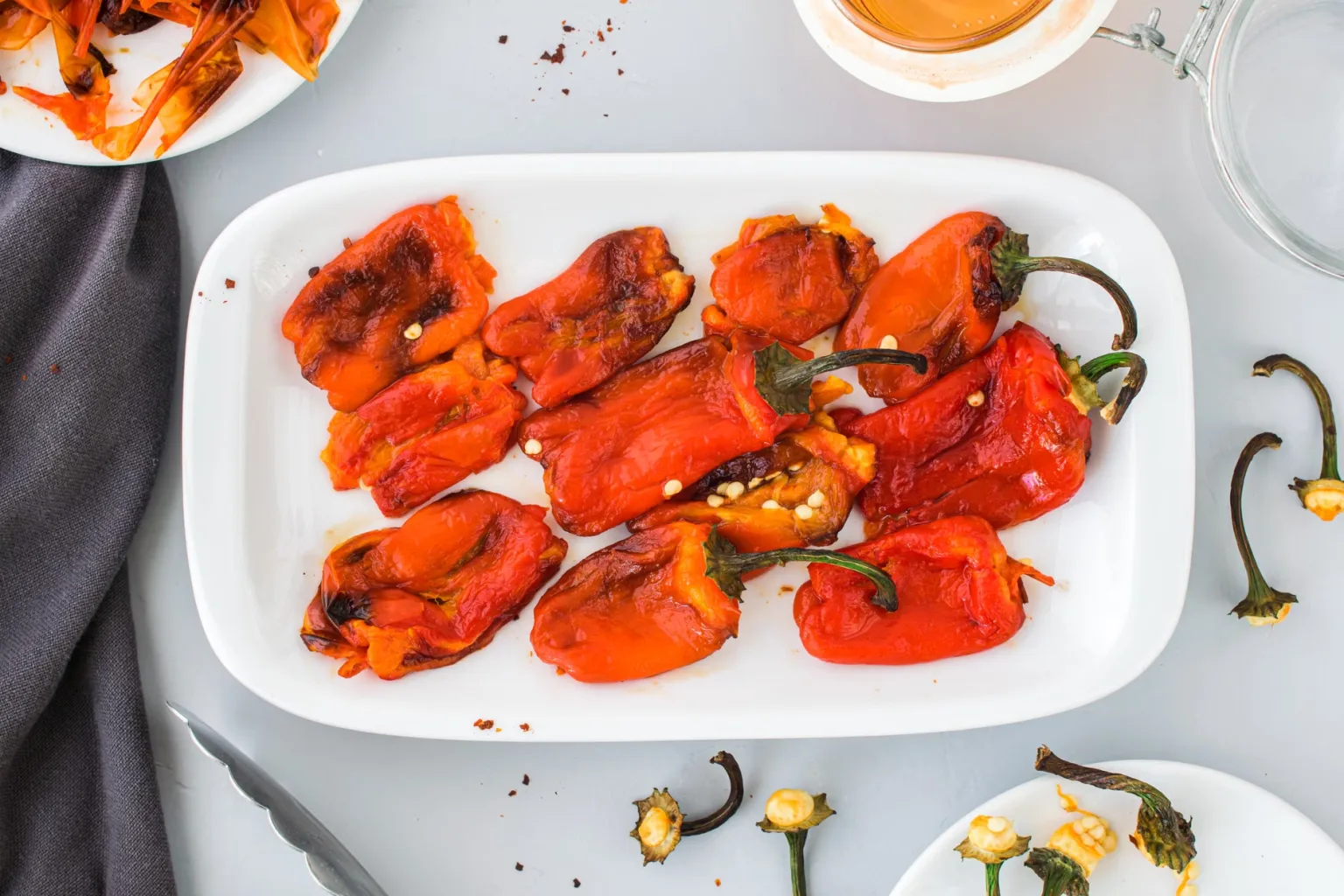
Piquillo is a variety of pepper commonly described as small, pointed or triangular, and sweet in flavor. Here, “roasted” refers to peppers that have already been cooked by roasting and are ready to use in a dish; they are often also peeled and sold preserved. Roasting is associated with a smoky note, but the exact flavor and ingredients depend on the product. Some commercial versions contain additional ingredients, so check the label rather than assuming the peppers are the only ingredient. The name piquillo alone does not establish a specific geographical origin: the available evidence distinguishes piquillo products generally from products covered by a protected designation of origin.
When to use it
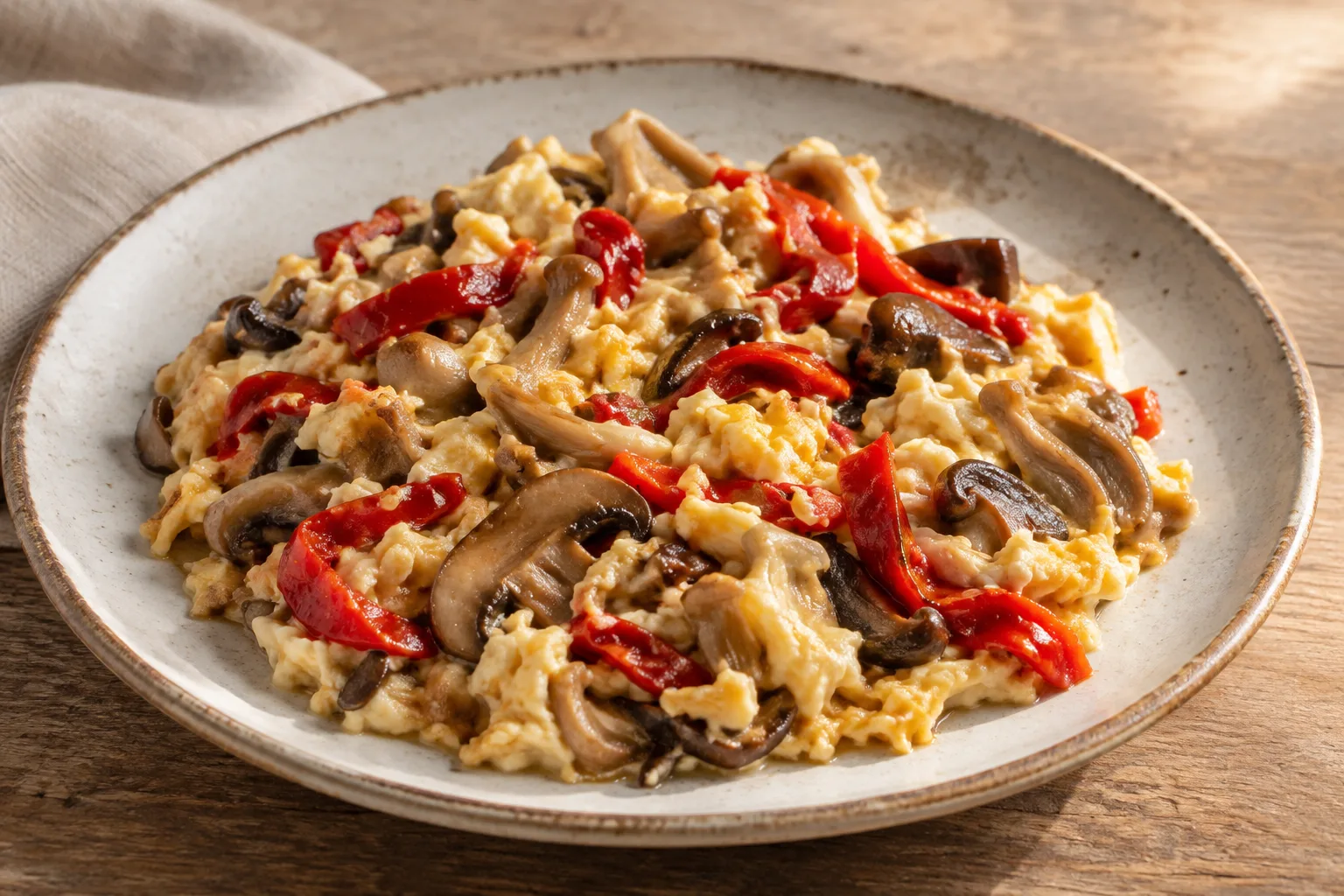
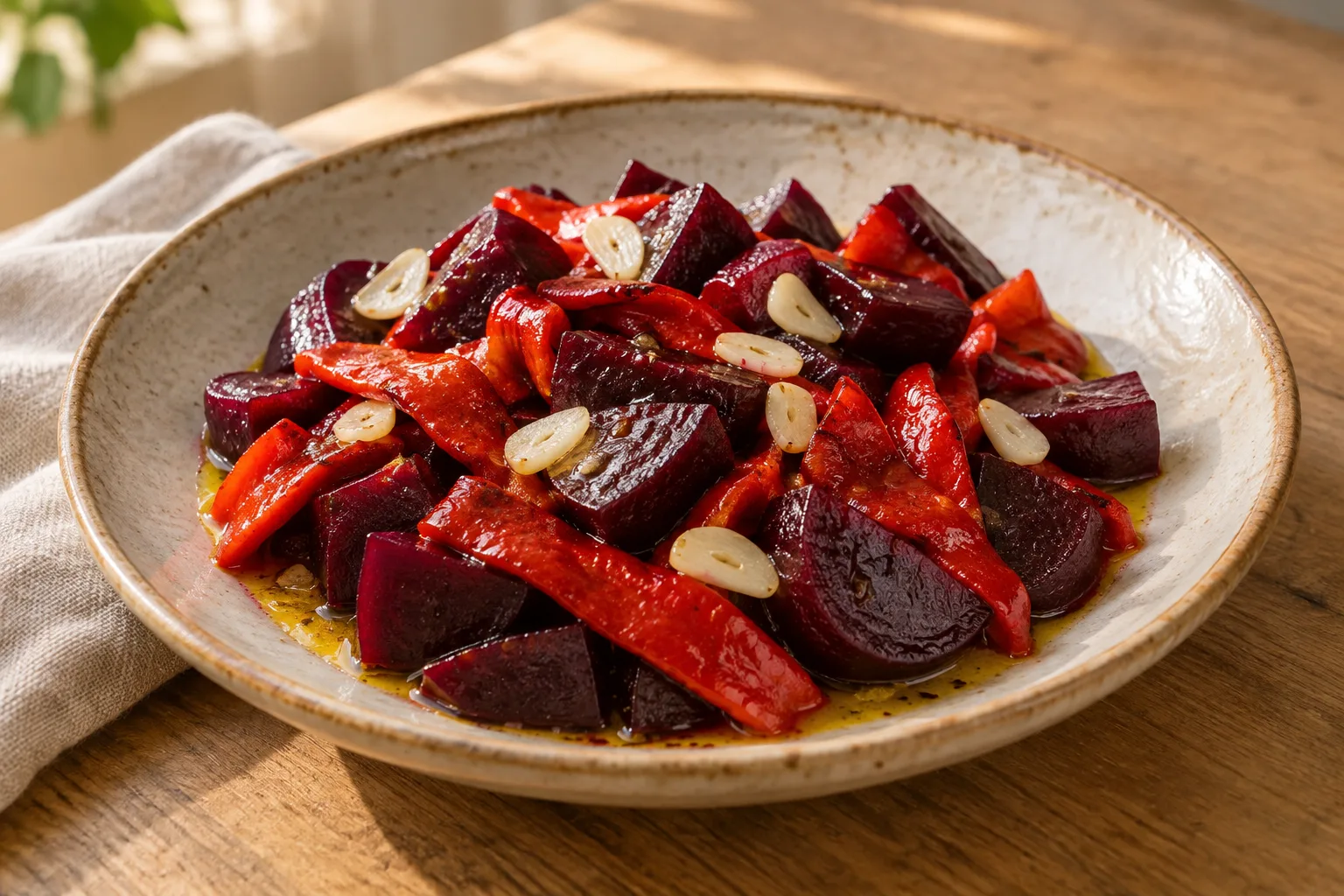
Use them when you want a ready-to-serve roasted vegetable with sweetness and a toasted note. Whole or cut into strips, they can be served as a tapa, added to a salad, or used as a side for fish or meat. Their shape also makes them suitable for stuffing with ingredients such as cod, meat, cheese or rice. Blended peppers can form the basis of a sauce. If you are using a preserved product, check whether draining it suits the recipe; the packing liquid and label ingredients can affect the result.
How to use it
Read the label and open the package according to its instructions. If your recipe needs less moisture, drain the peppers; check for any remaining seeds and remove them gently if needed. Serve them whole or slice them into strips for salads, tapas and side dishes. To stuff them, handle them gently and spoon in the filling without tearing the flesh. You can also warm them gently in a pan, plain or with oil and garlic, or blend them into a sauce or purée. Taste before adding seasoning, since some preserved products already contain salt or other ingredients.
Flavour and texture
The flesh is usually tender and soft, while still holding enough shape to serve whole or stuff carefully. Their flavor is commonly described as sweet, with a smoky note associated with roasting; some sources also describe a slight heat, so intensity can vary. Packing liquid and added ingredients may change the final impression. Draining can help when you want to avoid adding excess liquid to a salad, filling or side dish.
How to choose it
Choose an intact package and read the product name, ingredient list and storage directions. Formats vary: peppers may be whole or cut into strips, and some products include salt, sugar or acidity regulators. If a particular origin or protected designation matters to you, check that it is clearly stated on the label; the word piquillo alone does not confirm it. Choose a format that suits your planned use, such as whole peppers for stuffing or strips for salads.
Storage
Follow the package storage instructions, since advice depends on how the food is presented. Product information should state any special storage conditions where applicable. Do not assume how long an opened product will keep or store it outside the conditions specified by the producer. If you do not have the package or cannot check its instructions, avoid guessing about storage and consult reliable advice for that specific product.
Substitutions
Another variety of roasted red pepper can stand in for piquillo when a recipe calls for roasted peppers. Its flavor, size and shape may differ, so the result will not be identical. For a sauce or purée, blend another roasted red pepper; for stuffing, choose whole pieces sturdy enough to handle without tearing.
Common mistakes
Do not assume every product has the same ingredients, amount of packing liquid, or level of sweetness and smokiness. Always draining can leave a dish too dry; not draining can add liquid when a firm texture is needed. Handling the peppers roughly while stuffing them may tear them. Taste before adding salt, and follow the label for storage.
Safety and allergens
Check the ingredient list and allergen information, especially for preserved products with added ingredients. Follow the package directions for storage and safe use; they can vary by product format.
Culinary uses
- Guarnición o tapa
- Ingrediente para rellenar, ensaladas y salsas
Recommended techniques
- Servir entero o en tiras, escurrido si viene en conserva
- Calentar suavemente en sartén
- Rellenar
- Triturar para preparar una salsa
Pairs well with
- Bacalao y otros pescados
- Atún o ventresca
- Carne
- Queso
Frequently asked questions
Can roasted piquillo peppers be served without further cooking?
If the product is ready to eat, you can serve it as directed on the package. It can be served whole, in strips or as part of a tapa; check whether draining is appropriate.
What can I use to stuff them?
Culinary sources mention cod, meat, cheese, seafood and rice fillings. Handle the peppers gently to keep them whole.
How should I store them after opening?
There is no single instruction for every product. Follow the opened-package directions and do not assume a storage method or use-by period that is not stated.
Estimated nutrition
- Fat
- 0.77 g
- Saturates
- 0 g
- Carbohydrate
- 8.46 g
- Sugars
- 6.15 g
- Fibre
- 1.5 g
- Protein
- 1.54 g
- Salt
- 0.5 g
Sources and review
Automatically researched, cross-checked and validated content. Sources consulted:
- En el etiquetado alimentario hay algunas menciones que son obligatorias eletiquetadocuentamucho.aesan.gob.es
- Client Challenge doi.org
- ▷ PIMIENTOS DEL PIQUILLO, Nueve datos | Gastronomic Spain gastronomicspain.com
- ▷ Historia del pimiento del piquillo: origen y tradición - DANTZA dantza.com
- Descubre los Increíbles Usos y Beneficios para la Salud de los Pimientos del Piquillo Frescos y sin Asar - Restaurante Marcos restaurantemarcos.es
- Pimientos del Piquillo Asados 400 g – Finca La Barca anchoasdeluxe.com
- Pimientos rojos: ¿sabes cuántas variedades hay y cómo cocinarlos? hola.com
- Pimiento del piquillo - Wikipedia, la enciclopedia libre es.wikipedia.org
- Los auténticos pimientos del piquillo asados. Receta tradicional. - Tobegourmet tobegourmet.com
- 10 Recetas Fáciles Con Pimientos Del Piquillo Para Sorprender En La Mesa recetaselite.com
- Pimientos del Piquillo - The Hamoneria thehamoneria.com
- La guía definitiva para hacer pimientos asados directoalpaladar.com
- Pimientos del piquillo: recetas con sabor tradicional y creativo okdiario.com
- Recetas con pimientos del piquillo | Gastronosfera gastronosfera.com
- Maridaje perfecto: Cómo asar pimientos de piquillo para disfrutar con los mejores vinos lasvistas.es
- ¿Cómo se asan los pimientos del piquillo frescos? | Mercado Calabajío mercadocalabajio.com
- Pimientos del piquillo (enteros) • Legumbres Guillermo legumbresguillermo.es