- Category
- Herbs and spices
- State
- Dry
- Usual unit
- Variable
What it is
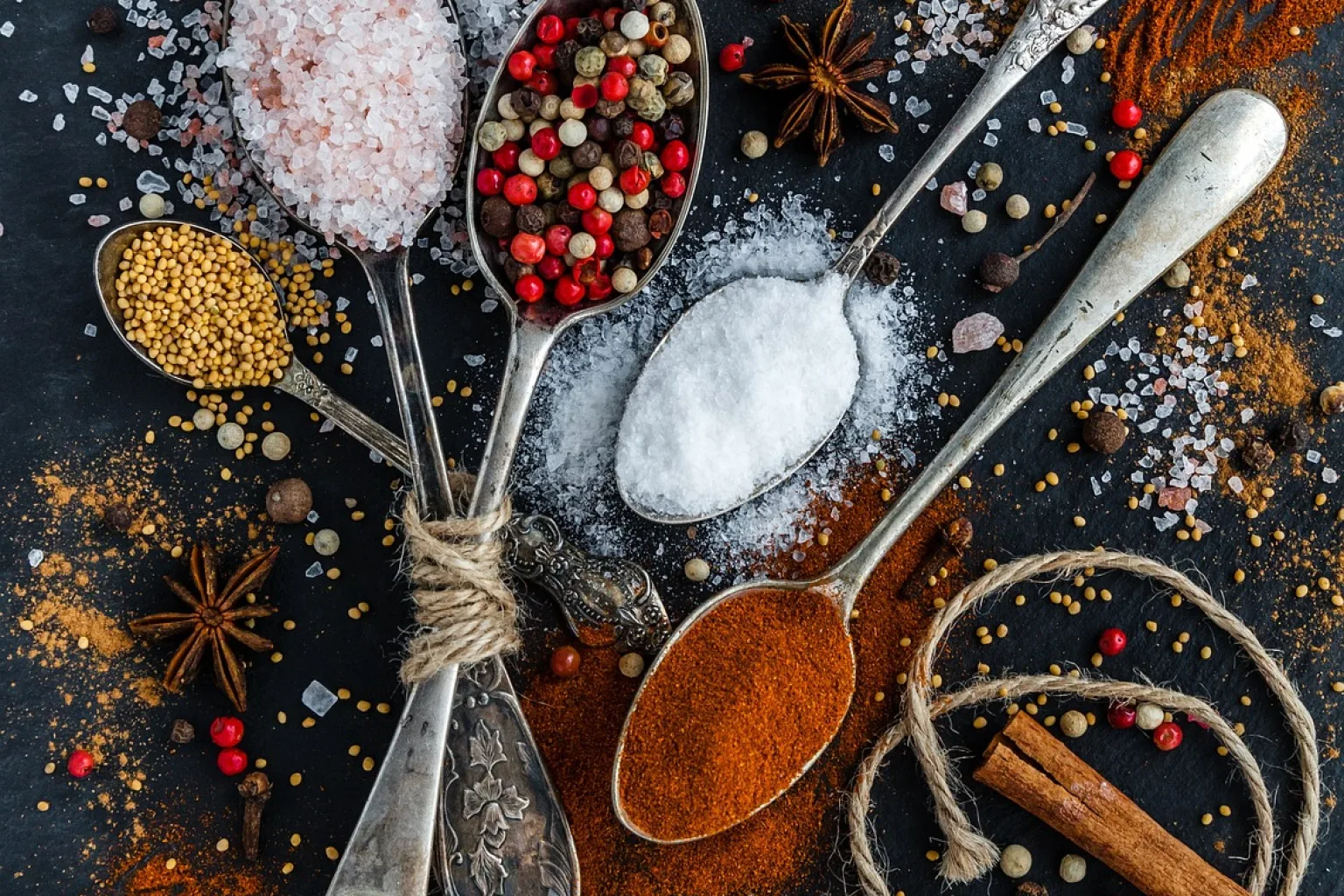
Salt and pepper is the familiar name for a pair of seasonings, not a single botanical ingredient. In everyday use, it usually means table salt and black pepper. Salt is a mineral composed mainly of sodium chloride, while black pepper comes from the berries of Piper nigrum. Although the two are often offered together at the table and used to season food, they are not interchangeable: each contributes a different character. Other pepper varieties, including white and green pepper, also exist and differ according to berry maturity and processing.
When to use it
Use them when a dish needs seasoning, but consider what each contributes rather than adding them together automatically. Salt can season vegetables, eggs, or sauces; black pepper is useful when you want its aromatic, pungent character. Both appear as possible seasonings in dishes such as scrambled eggs with vegetables and tomato salsa. Taste as you cook and adjust each seasoning according to the result.
How to use it
Add salt and pepper according to the dish and the effect you want; they do not need to be used together or in the same proportion. Add them gradually, mix to distribute them, and taste before adding more. In scrambled eggs with vegetables, for example, they are mixed with the eggs before cooking. In tomato salsa, they can be added with the other seasonings. If you want to use less salt, one culinary source suggests using herbs and spices to add flavor. Adjust pepper separately: it does not replace saltiness.
Flavour and texture
Salt mainly contributes a salty taste. Black pepper is commonly described as intense, aromatic, pungent, and somewhat bitter; white pepper has a milder aroma and can taste hotter, while green pepper may have sweeter, fruitier, and menthol-like notes. These are distinct products, and their profiles vary with variety and processing. Texture depends on how they are presented, but the available evidence does not establish one specific texture for the combined product.
How to choose it
Decide whether you want table salt with black pepper, the most familiar pairing, or whether a particular pepper variety better suits the dish. White and green pepper do not have exactly the same aroma and flavor as black pepper. Check the product name and presentation to identify the variety; do not assume that every product labeled pepper is identical.
Storage
The available evidence does not specify a storage method or shelf life for this pair of seasonings. Check the package directions and store each product according to its own label, since salt and the different peppers are separate ingredients. If you buy a prepared blend, follow the instructions for that blend rather than assuming it stores exactly like its components separately.
Substitutions
If you want to reduce salt, herbs and spices can contribute other flavors, but they do not reproduce saltiness. Salt and pepper do not replace one another either: adjust each separately or leave out the one you do not want. The best alternative depends on the dish and the flavor you are seeking.
Common mistakes
Treating salt and pepper as one ingredient can lead to adding too much of either or both. They do not taste the same or serve exactly the same purpose. Another mistake is assuming black, white, and green pepper are identical; their flavor profiles differ. Add each gradually and taste the dish before making further adjustments.
Safety and allergens
The supplied evidence contains no specific safety warning about this seasoning pair. Follow package directions and adjust salt to suit the recipe; herbs and spices can be used to contribute flavor when reducing salt.
Culinary uses
- Sazonar preparaciones durante la cocción o antes de servirlas
- Aportar salinidad y un toque picante a los platos
Recommended techniques
- Añadir a la preparación y mezclar para repartir el condimento
- Sazonar gradualmente y probar antes de añadir más
Pairs well with
- Huevos y verduras, como en preparaciones de huevos revueltos
- Tomate y cilantro, como en una salsa de tomate fresca
Frequently asked questions
Are salt and pepper the same kind of ingredient?
No. Salt is a mineral, while black pepper comes from the berries of a plant. They are often used together, but contribute different flavors.
Are white and black pepper the same?
Not exactly. The evidence describes differences in berry maturity and processing, and notes that white pepper has a milder aroma and may taste hotter than black pepper.
What can I use to reduce salt?
Herbs and spices can add other flavors. They do not provide the same saltiness, so the result will change.
Estimated nutrition
- Fat
- 0 g
- Saturates
- 0 g
- Carbohydrate
- 0 g
- Sugars
- 0 g
- Fibre
- 0 g
- Protein
- 0 g
- Salt
- 75 g
Sources and review
Automatically researched, cross-checked and validated content. Sources consulted:
- Client Challenge doi.org
- The Essential Glossary of Cooking Terms for the Culinary Arts - Escoffier escoffier.edu
- Pimienta: origen, tipos, propiedades y usos en la cocina bonviveur.com
- Washington State Food Access English-Spanish Glossary wpcdn.web.wsu.edu
- Appendix B: Recipes for Disease Prevention – Culinary Medicine opentextbooks.library.arizona.edu
- - YouTube youtube.com
- KOHLRABI - Extension St. Croix County stcroix.extension.wisc.edu
- Pantry Staples and Other Commodity Food Recipes – Page 2 – Food Smart Colorado foodsmartcolorado.colostate.edu
- Usamos la sal y la pimienta juntas por culpa de una moda francesa. En realidad son ingredientes que no tienen nada que ver entre sí directoalpaladar.com
- Sal y pimienta, historia de los básicos de la gastronomía occidental moderna sinreservas.com.ar