- Category
- Herbs and spices
- State
- Dry
- Usual unit
- g
What it is
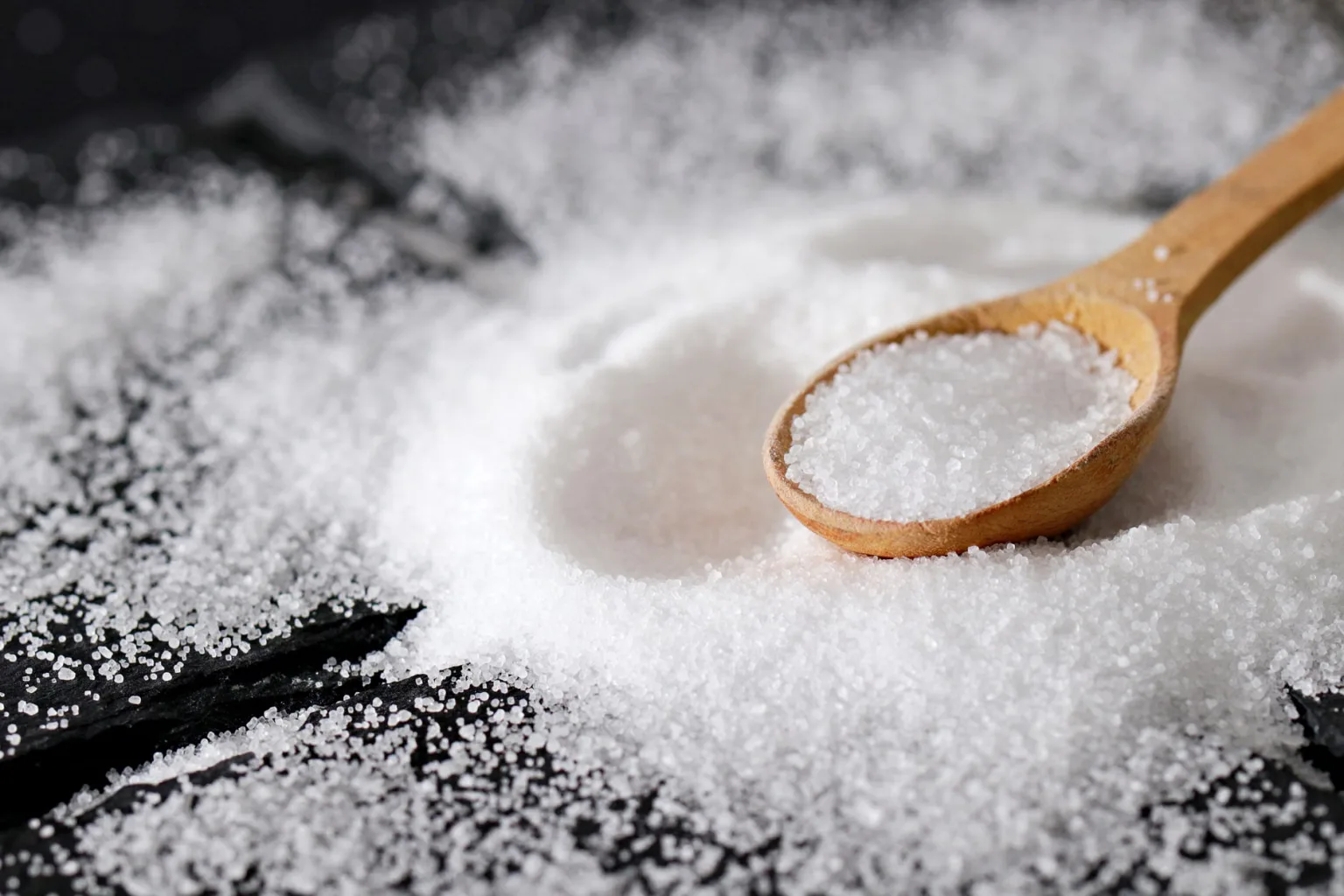
Salt is a mineral seasoning; common salt is described as sodium chloride and is sold in forms whose crystals can vary in size and shape. The sources also distinguish table salt from pure pickling salt, which is described as additive-free. However, the available evidence does not identify a culinary category called “salt for rinsing,” confirm the composition of a product with that name, or specify which food would be rinsed. This profile therefore does not treat the label as a special variety or assume that a product bearing it is edible. The guidance below is limited to salt identified as suitable for eating and to general culinary uses supported by the sources.
When to use it
Use edible salt as a seasoning in savory preparations when a recipe calls for it. In pickles, sauerkraut, and other fermentations, the amount of salt can matter to the process; follow a reliable recipe and do not reduce its specified quantity. The available sources do not establish that salt is necessary or suitable for rinsing food, or describe a method for doing so. Do not use a product labeled “for rinsing” for that purpose unless its package confirms that it is edible and gives specific instructions for the food in question.
How to use it
Use only salt identified as edible and add it according to the recipe. Bear in mind that fine and coarse crystals can differ in size, so the same volume measure does not necessarily represent the same amount of different crystal types. For preserves and fermentation, do not change the salt type or reduce the specified quantity unless the recipe permits it. Pure pickling salt is described as an additive-free option; some anti-caking agents in table salt can cloud brine or leave sediment. Do not use rock salt that is not intended for human consumption. Because the sources describe neither a food nor a rinsing procedure involving salt, do not prepare or apply such a solution based on the product name alone.
Flavour and texture
Salt provides a salty taste. Its form and crystal size can affect how it is measured and distributed during preparation: fine salt has small crystals, while some coarse forms have larger or less regular crystals. The sources describe differences among types of salt but do not establish a particular flavor, texture, or behavior for a variety called “salt for rinsing.” Check the package to determine what the specific product is.
How to choose it
Check that the package clearly identifies the product as salt suitable for eating, and read its ingredients and stated uses. For pickling and fermentation, pure pickling salt is described as free of additives. Do not infer from the words “for rinsing” that a product is edible or suitable for every food. If the label does not clarify its composition or use, ask the manufacturer before using it in cooking.
Storage
The available sources do not specify storage conditions or a storage life for a product called “salt for rinsing.” Follow the package instructions and keep the product identifiable, including whether it is suitable for eating. A shelf life or specific storage conditions cannot be provided without information from the manufacturer. If the label does not confirm that the product is edible, do not use it as an ingredient.
Substitutions
Edible table salt can replace another salt only when the recipe permits the change. For pickling and fermentation, do not change the salt type or quantity on your own. Crystal size and additives can affect the result; a volume measure of coarse salt is not necessarily equivalent to the same volume of fine salt. If the recipe gives a weight, use that as your reference and confirm that the product is suitable for eating.
Common mistakes
Do not assume that “for rinsing” identifies a recognized culinary variety, confirms that a product is edible, or provides a safe method. Do not confuse salt intended for eating with rock salt for non-food uses. Also avoid changing the type or quantity of salt in a fermentation or pickling recipe unless its instructions permit it.
Safety and allergens
Use only salt identified as suitable for eating. For preserves and fermentation, follow the recipe and its specified quantities; do not use rock salt that is not intended for human consumption. The available sources do not support specific instructions for rinsing food with salt, so do not do so without clear manufacturer directions for the particular product and food.
Culinary uses
- Condimento salado para preparaciones culinarias
- Ingrediente en encurtidos y fermentaciones cuando lo indique una receta
Recommended techniques
- Disolver en líquidos o salmueras según la receta
- Sazonar con sal comestible siguiendo las cantidades indicadas
Pairs well with
- Verduras y encurtidos
- Carnes, guisos y sopas
Frequently asked questions
Do the sources identify a culinary variety called “salt for rinsing”?
No. The sources describe culinary salt in general but do not establish the identity, composition, or use of a product with that name.
Can I use this product to rinse fruit or vegetables?
The available evidence does not confirm that salt is necessary or suitable for this use, and it provides no method. Check that the product is edible and follow package directions specific to the product and food; do not infer a procedure from the name alone.
Can I substitute table salt for pickling salt?
Only if the recipe permits the change. For pickles and fermentation, do not reduce or alter the specified quantity unless the recipe allows it; some table-salt additives can affect the appearance of brine.
Sources and review
Automatically researched, cross-checked and validated content. Sources consulted:
- Client Challenge doi.org
- Sal común - Wikipedia, la enciclopedia libre es.wikipedia.org
- 15 tipos de sal para dar variedad a nuestros platos: cómo elegirlas y usarlas en la cocina directoalpaladar.com
- Sal Marina: Qué es, cuál es su historia y cuáles son sus beneficios - Monti pmonti.com
- Dictionary of Health Related Terms: English – Spanish hia.berkeley.edu
- Comité Científico aesan.gob.es
- Vamos a Conservar Alimentos: Ingredientes Utilizados en las Conservas Preparadas en Casa extension.psu.edu
- Free Standing, Slide In, and Drop In Electric housing.illinoisstate.edu
- Los tipos de sal y sus usos en la cocina | Recetas Nestlé recetasnestle.com.mx
- Rice • The Nutrition Source nutritionsource.hsph.harvard.edu
- Alimentos para combatir los incendios forestales | Servicio de Extensión de OSU extension.oregonstate.edu
- De Compras Para la Salud: Mariscos - Ask IFAS ask.ifas.ufl.edu
- Project MUSE -- Verification required! muse.jhu.edu
- Consejos para Limpiar sus Invernaderos Vacíos | Integrated Pest Management | College of Agriculture, Health and Natural Resources | University of Connecticut ipm.cahnr.uconn.edu
- season long - weed control picol.cahnrs.wsu.edu