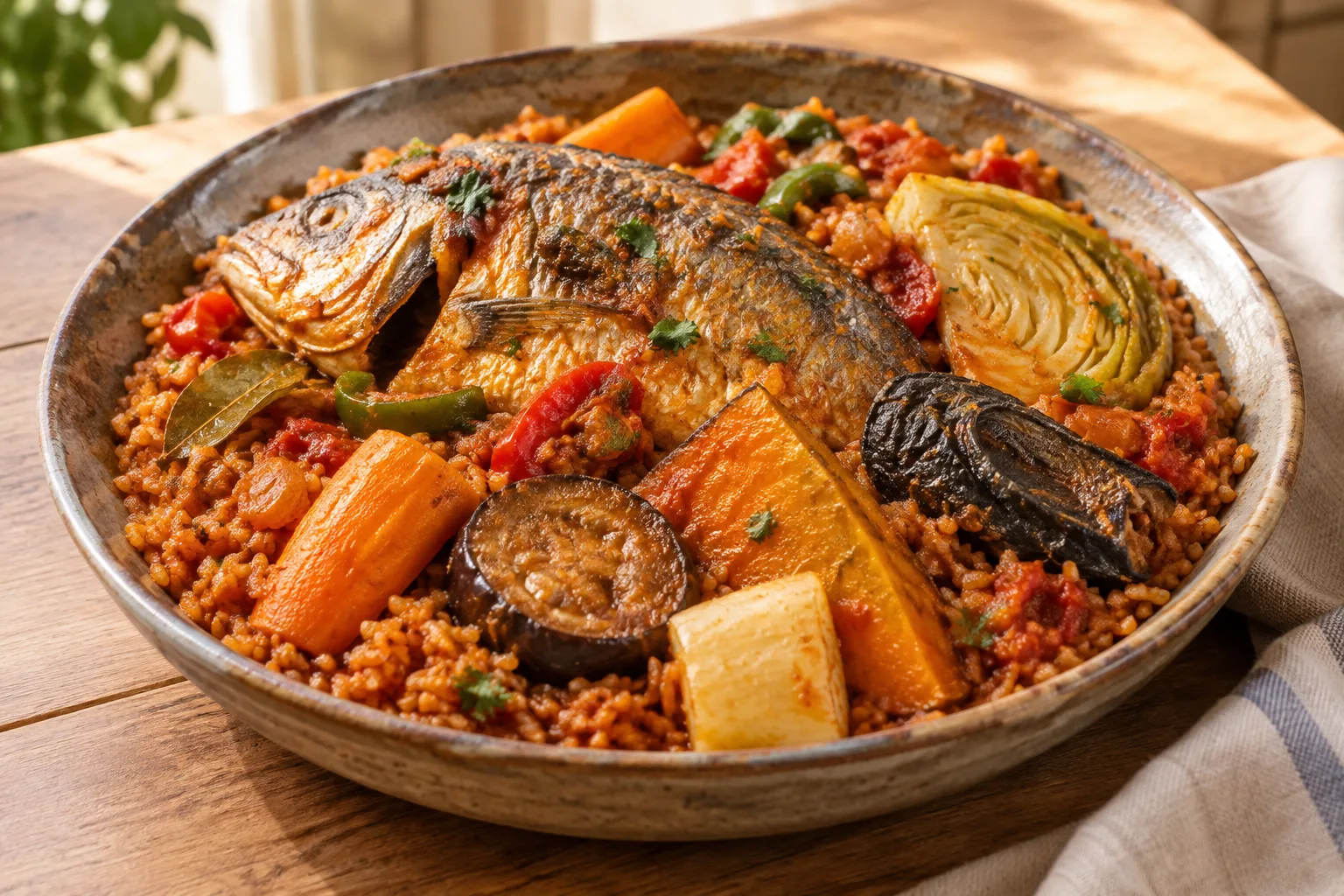
- Category
- Fish and seafood
- State
- Dry
- Usual unit
- Variable
What it is
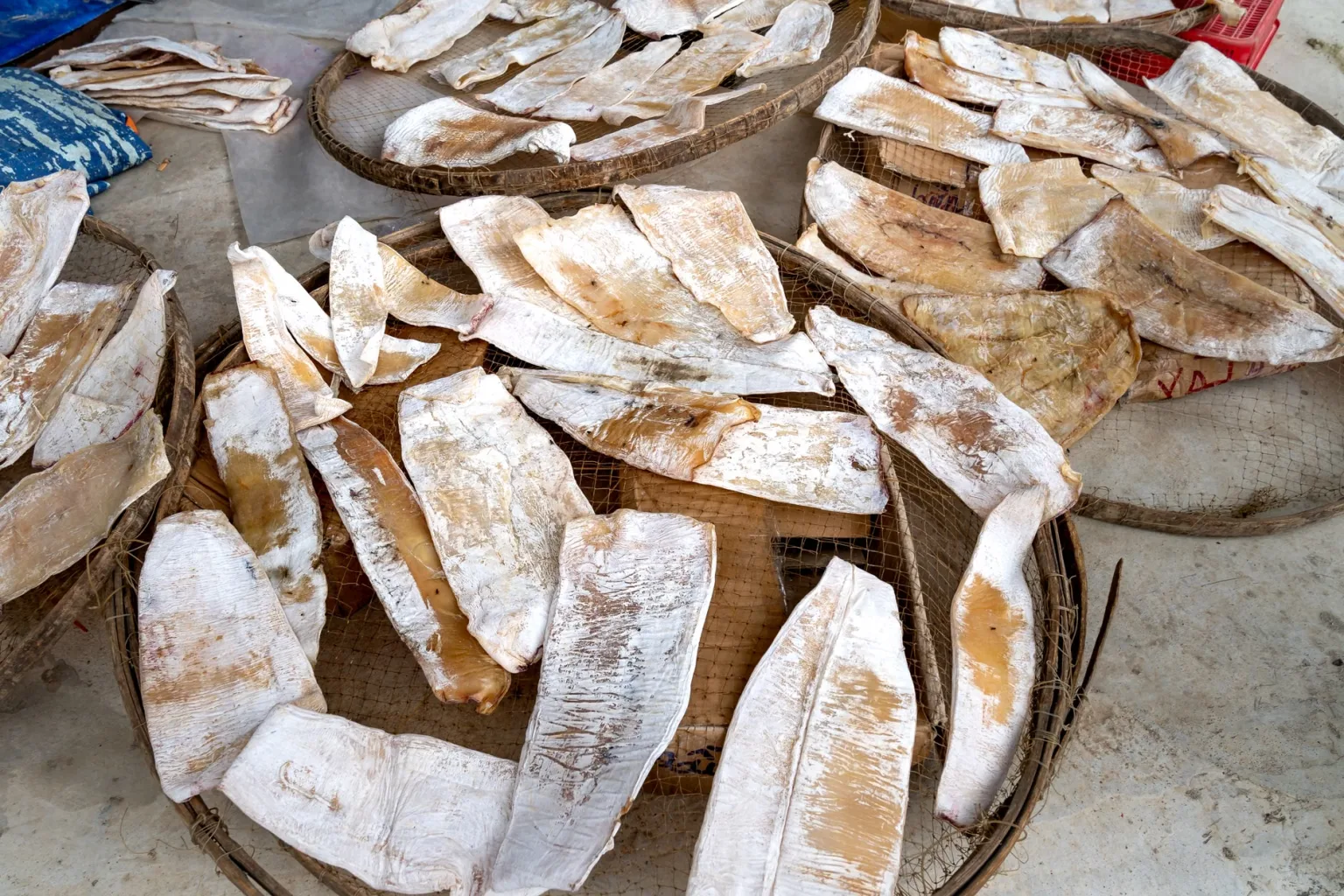
Salted dried fish is fish that has undergone salting and drying. It should not automatically be confused with unsalted dried fish: these are different products, even though regional names and preparations can sometimes cause confusion. Cod is used for some forms of dried fish, but other species are also used, so a generic product name does not establish which species is in a particular package. Processing affects texture and flavor, and the degree of saltiness can vary. Check the label to identify the product you have and follow its preparation directions.
When to use it
Use it when a recipe calls for salted fish or salted dried fish, particularly in soups and other cooked dishes where the fish contributes flavor. Some traditional preparations serve it with polenta; in other cuisines it is added to soups served with fufu or garri. If a recipe calls for soaking, allow for that step before cooking: soaking can help rehydrate the fish and remove some salt, but the required time and water changes depend on the product and its directions. Do not casually substitute unsalted dried fish, since it is not the same ingredient.
How to use it
Start by checking the label for the species, form and preparation directions. If the manufacturer or recipe recommends soaking, soak the fish in water according to those directions; there is no single duration that applies to every product. Drain it afterward and continue with the recipe, adding salt cautiously because the fish is already salted. It can be used in soups and stews, served in preparations with polenta, or included in soups accompanied by fufu or garri. Some cited recipes for dried fish use cooking or grilling, but the appropriate method depends on whether the particular product is intended for that treatment. Do not improvise a home-preservation process from an informal recipe.
Flavour and texture
Salting gives the fish a salty character, while drying leaves it less moist than fresh fish. Texture and salt intensity are not uniform; they can vary with species, form and processing. Soaking, when a recipe calls for it, rehydrates the fish and may remove some salt. Taste the dish before adding more.
How to choose it
Choose a product whose label clearly identifies it as salted dried fish and, when provided, names the species and preparation directions. The generic name does not guarantee that it is cod: other species are used too. Check that the package information is readable and that the product matches the recipe. The available evidence does not establish specific visual criteria for judging quality.
Storage
The available information cannot establish a shelf life or storage condition that applies to every salted dried fish product. Follow the manufacturer’s directions for the specific product and check the package after opening. Do not infer how long it keeps solely from its dry appearance; processing and packaging can vary.
Substitutions
Salted dried cod may work when a recipe allows that type of fish, but it is not an identical replacement if species, form or saltiness differ. Another salted dried fish may also suit the recipe. Unsalted dried fish is different; using it instead changes the salt contribution and may require recipe adjustments.
Common mistakes
Common mistakes include confusing salted dried fish with unsalted dried fish, assuming every product is cod, and applying the same soaking method to every form. Check the label and directions. Since the fish is already salted, adding salt before tasting can make a dish too salty.
Safety and allergens
The supplied evidence does not establish a product-specific official warning or a universal home-storage method. Follow the manufacturer’s directions, and do not use a dry appearance alone to decide how long the product keeps or whether it is safe.
Culinary uses
- Ingrediente principal en platos cocinados
- Aporte salado y sabroso para sopas y guisos
- Aperitivo cuando el producto y las instrucciones del fabricante permiten ese uso
Recommended techniques
- Remojar para rehidratar y reducir parte de la sal antes de cocinar, según la receta
- Cocer o asar después de preparar el pescado conforme a la receta
- Desmenuzar o cortar el pescado preparado para incorporarlo a sopas y otros platos
Pairs well with
- Sopas y guisos
- Polenta
- Fufu o garri
Frequently asked questions
Is salted dried fish the same as unsalted dried fish?
No. Salted dried fish has been salted and dried; unsalted dried fish is a different product. Check the label rather than treating them as interchangeable.
Which fish species does it contain?
It can vary. Cod is used in some varieties, but other fish are used too. Check the label for the species in your product.
Does it need to be soaked before cooking?
That depends on the product and recipe. Some preparations soak it to rehydrate it and remove some salt. Follow the manufacturer’s directions or a suitable recipe; the available evidence does not support one soaking time for every product.
Estimated nutrition
- Fat
- 2.37 g
- Saturates
- 0.46 g
- Carbohydrate
- 0 g
- Sugars
- 0 g
- Fibre
- 0 g
- Protein
- 62.8 g
- Salt
- 17.58 g
Sources and review
Automatically researched, cross-checked and validated content. Sources consulted:
- Agencia Española de Seguridad Alimentaria y Nutrición aesan.gob.es
- Dictionary of Health Related Terms: English – Spanish hia.berkeley.edu
- 4. POLÍTICA DE MERCADOS PESQUEROS mapa.gob.es
- ¿Por qué el mar es salado? doi.org
- Composition and conservation status of rays sold in Baja ... ccal.ucsc.edu
- Comparative Perspectives on the Archaeology of Coastal ... sites.pitt.edu
- Lo que Necesita Saber Sobre Derrames Cerebrales patientslearn.uams.edu
- Itinerary and diary of Francisco Atanasio Domínguez and Francisco Silvestre Vélez de Escalante | Early Americas Digital Archive (EADA) eada.lib.umd.edu
- Pescado seco - Wikipedia, la enciclopedia libre es.wikipedia.org
- Proceso de Pescado Seco-Salado en Perú - Scribd es.scribd.com
- Seco Salado | PDF | sal | Pescado como alimento - Scribd scribd.com
- ¿Qué es el pescado seco salado? todosloshechos.es
- FOODATLAS - Pescado Seco Salado sites.google.com