- Category
- Bread and dough
- State
- Fresh
- Usual unit
- slice
What it is
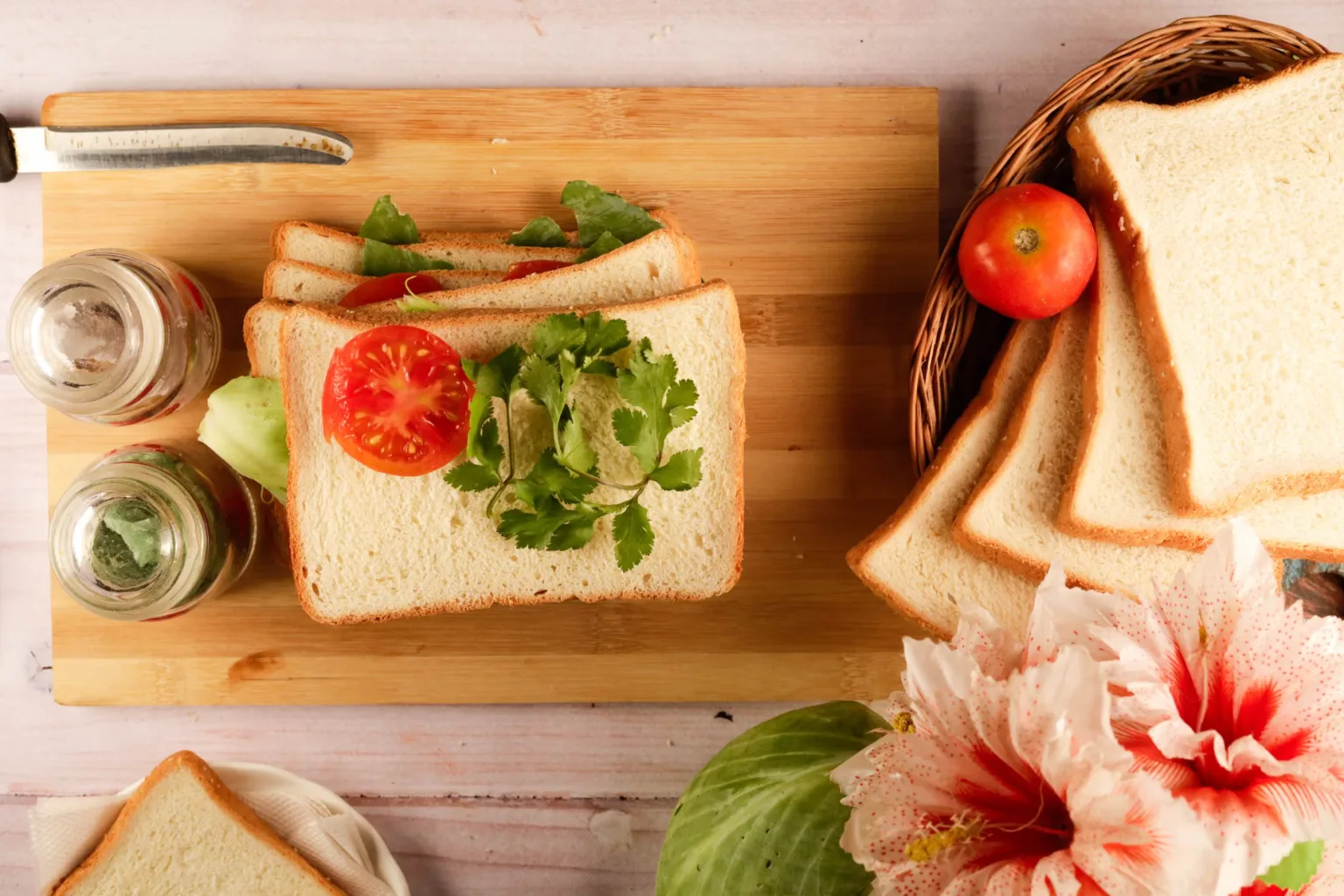
Sandwich bread is bread baked in a loaf pan and commonly sold in evenly cut slices. Its soft crumb and regular shape make it convenient as a base for sandwiches and toast. There is no single recipe: the flour used and the inclusion of ingredients such as milk, egg, sugar or fat can vary from one product to another. Whole-wheat and seeded versions are also available. The name therefore describes mainly a format and culinary use, not an identical ingredient list across all brands. Check the product label when you need to know its specific formulation.
When to use it
Use it when evenly cut, easy-to-fill slices are convenient, such as for sandwiches, filled bread and toast. It can also be used in sweet or savory preparations, including bread pudding. Firm or dry slices work well in recipes where bread is cut into cubes, soaked and baked. If the bread is very fresh for the result you want, you can toast it before adding it to a bread-pudding recipe.
How to use it
For a sandwich, put a filling between two slices and serve as is, or toast the bread if you want a crisp surface. To make toast, heat the slices to your preferred degree and add a sweet or savory accompaniment. You can also cut the bread into cubes for bread pudding: one documented recipe combines firm bread cubes with apple and spices, covers them with an egg-and-milk mixture, lets them soak and then bakes them. If you only have very fresh bread for this kind of recipe, toasting it first may help avoid an overly spongy result. Match the method to the bread’s actual texture and the recipe instructions.
Flavour and texture
It commonly has a soft, airy crumb, evenly shaped slices and a tender crust, although these features depend on the product. Whole-wheat or seeded bread can differ in flavor and texture from a white version. Toasting makes the surface crisper. Dry bread also behaves differently when soaked and may be more suitable than very fresh bread for some bread-pudding recipes.
How to choose it
Choose a product to suit its intended use: evenly cut slices work for sandwiches and toast, while whole-wheat or seeded bread offers a different composition and texture. Read the ingredient list because formulations can include different ingredients, such as wheat, milk, egg, sugars or fats. If you have an allergy or need to avoid an ingredient, do not rely on the bread’s name or appearance alone.
Storage
The available information does not establish one shelf life or storage method for every brand. Follow the package directions for the product you buy and close the package after use. Bread can change texture and become dry, so check its condition before using it and adapt the recipe to whether it is fresh or firm. Do not assume all sandwich breads have the same shelf life or need the same storage conditions.
Substitutions
Whole-wheat sandwich bread can replace a white variety when a recipe can accommodate a change in flavor and texture. For bread pudding, firm or dry bread can stand in for very fresh bread; if you only have fresh bread, one documented recipe recommends toasting it first. These alternatives change the result, so adapt the preparation to how the bread absorbs liquid.
Common mistakes
Using very fresh bread in a recipe that calls for firm, soaked cubes may make the pudding too spongy; toast the bread first if needed. Another mistake is assuming all sandwich breads have the same ingredients or texture. Check the package and choose a method suited to the particular variety.
Safety and allergens
Follow the manufacturer’s package directions and check the ingredient list if you need to avoid a particular component. Formulations vary, so do not assume a product contains only flour, water and salt.
Culinary uses
- Base para sándwiches y bocadillos
- Base para tostadas y preparaciones dulces o saladas
- Ingrediente para pudín de pan
Recommended techniques
- Tostar
- Cortar en cubos
- Remojar en una mezcla antes de hornear
Pairs well with
- Rellenos dulces o salados
- Manzana, huevo y leche en pudín de pan
Frequently asked questions
Can sandwich bread be toasted?
Yes. Toasting is a practical way to serve it and can also be useful before using very fresh bread in a bread-pudding recipe.
What kind of bread works for bread pudding?
One documented recipe uses firm or dry bread cut into cubes. If the bread is very fresh, toasting it is recommended to help avoid an overly spongy pudding.
Do all varieties have the same ingredients?
Not necessarily. Formulations may vary and include ingredients such as wheat, milk, egg, sugars or fats. Check the label of the specific product.
Estimated nutrition
- Fat
- 3.57 g
- Saturates
- 0 g
- Carbohydrate
- 44.6 g
- Sugars
- 8.93 g
- Fibre
- 5.4 g
- Protein
- 10.7 g
- Salt
- 1.07 g
Sources and review
Automatically researched, cross-checked and validated content. Sources consulted:
- ¿Por qué la muerte es origen de miedos y tabúes? doi.org
- The Essential Glossary of Cooking Terms for the Culinary Arts - Escoffier escoffier.edu
- Washington State Food Access English-Spanish Glossary wpcdn.web.wsu.edu
- Appendix B: Recipes for Disease Prevention – Culinary Medicine opentextbooks.library.arizona.edu
- M I N U T A aesan.gob.es
- Cooking 101 (Week 7) Quick and Easy Menus, Recipes and Tips for Singles and Couples: Cooking in Small Spaces Using a Microwave Oven | NDSU Agriculture ndsu.edu
- Pan De Zanahoria Y Piña - Expanded Food and Nutrition Education Program efnep.tamu.edu
- Pan de Plátano y Avena | Servicio de Extensión de OSU extension.oregonstate.edu
- Apple Pie Bread Pudding/Pudín de Pan con Manzanas (LCH) | CSU Northridge w2.csun.edu
- Tipos de pan: Pan de molde integral | Consumer consumer.es
- Descubre los secretos del pan de molde que jamás te contaron levanova.es
- - YouTube youtube.com
- Diferencias entre pan de molde y pan normal | Quiero cuidarme quierocuidarme.dkv.es
- Receta de pan de molde | elblogdeceleste elblogdeceleste.com