- Category
- Vegetables
- State
- Fresh
- Usual unit
- g
What it is
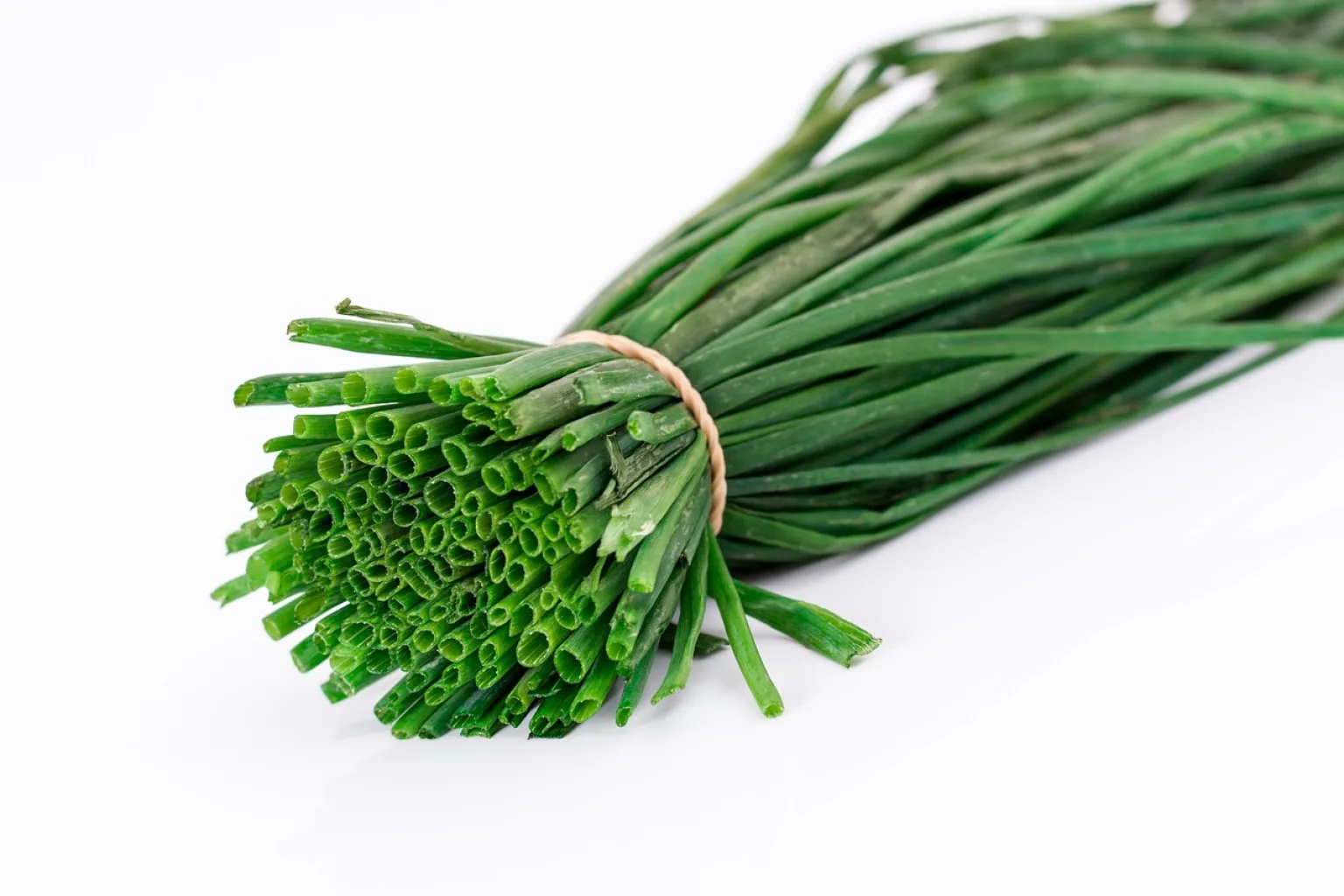
Scallions are fresh allium vegetables, commonly sold in bunches. Both the white stem and green leaves can be used, usually sliced or chopped. Common names do not always point to one botanical form: some sources identify scallions as Allium fistulosum, while others describe a young onion harvested before it fully matures. In the kitchen, think of them as tender alliums with green leaves and a milder flavor than regular onions.
When to use it
Use scallions when you want a gentler onion flavor and a fresh green finish. Raw, they work in salads, dips and dressings, or as a finishing touch for soups, eggs and rice dishes. Cooked, they can form part of a sauté, filling or sauce and pair well with potatoes, meat and pasta. Because their flavor is milder than that of regular onion, they suit dishes where a strong onion note would overwhelm other ingredients.
How to use it
Remove any visibly wilted or damaged portions, then slice or chop the amount you need. You can use both the white stem and green leaves, or separate them when you want to control the look and flavor of a dish. Add them raw to salads, dips, dressings and egg dishes, or scatter them over soup and rice as a fresh finish. For cooked dishes, add the chopped scallions to a pan as part of a sauté, filling or sauce; they can also accompany potatoes, meat and pasta. Add them near the end if you want a fresher impression.
Flavour and texture
Scallions have an onion-like flavor that is generally milder and more delicate than regular onion. The green leaves bring fresh aroma and color, while the white stem offers a more pronounced onion note. Finely sliced and served raw, they can add a light crispness; cooking softens them and blends their flavor into a dish.
How to choose it
Choose bunches that look fresh, with firm leaves and no visibly wilted or damaged sections. Check the white stems as well: they should look intact, without obvious bruising or deterioration. Bunches naturally vary in size, so choose one with the balance of white stem and green leaves that suits your recipe.
Storage
Store scallions in the refrigerator, as recommended by the available source for this vegetable. Avoid leaving them crushed under heavy foods, and separate any visibly spoiled pieces. The evidence available does not establish a precise storage period; check their condition before use and discard deteriorated parts.
Substitutions
If scallions are unavailable, use chopped regular onion but start with less: regular onion can taste stronger and may upset the balance of a delicate dish. For cooked preparations, finely chopped tender leek can provide a mild allium note. Neither option exactly reproduces scallions' green leaves and distinctive flavor.
Common mistakes
Do not assume scallions have the same intensity as regular onions: using an equal amount can overpower a mild dish. Another common mistake is chopping them long before serving when you want their fresh raw finish. Check the bunch before use and remove wilted or damaged portions.
Safety and allergens
The available evidence does not identify a specific safety warning for scallions. Handle them as fresh produce, discard deteriorated portions and follow usual food-hygiene practices.
Culinary uses
- Fresh aromatic garnish
- Mild onion flavor base for cooked dishes
- Ingredient in salads, dips, soups and egg dishes
Recommended techniques
- Finely slice or chop and use raw
- Sauté the chopped white and green parts
- Add near the end of cooking when a fresher, greener flavor is desired
Pairs well with
- Eggs and omelets
- Potatoes and creamy soups
- Salads, dips and dressings
- Meat and rice dishes
Frequently asked questions
Can scallions be eaten raw?
Yes. They are often sliced or chopped and used fresh in salads, dips, dressings and as a finish for other dishes.
Can I use the white part as well as the green leaves?
Yes. Both are usable; follow the recipe if it specifies a particular part.
How should scallions be stored?
The available recommendation is to keep them in the refrigerator. The consulted evidence does not give a precise storage duration.
Estimated nutrition
- Fat
- 28.6 g
- Saturates
- 17.9 g
- Carbohydrate
- 7.14 g
- Sugars
- 3.57 g
- Fibre
- 0 g
- Protein
- 7.14 g
- Salt
- 1.07 g
Sources and review
Automatically researched, cross-checked and validated content. Sources consulted:
- ¿Por qué la muerte es origen de miedos y tabúes? doi.org
- The Essential Glossary of Cooking Terms for the Culinary Arts - Escoffier escoffier.edu
- Conoce 15 tipos de cebolla y sus usos en la cocina - Mejor con Salud mejorconsalud.as.com
- A^ricuitu^a - Rev^sta a¢ropecuaria mapa.gob.es
- Bard College | La Voz | Archivo | Las recetas del Chef Guevara bard.edu
- Sabores de nuestras tierras/recipes - 2025 | Agricultura y Recursos Naturales ucanr.edu
- Reading List: Master of Arts in Teaching Spanish fau.edu
- Crispy Vegetable Enchilada – Community Nutrition Education web.uri.edu
- 3-Can Chili extension.arizona.edu
- Arroz frito – Food Smart Colorado foodsmartcolorado.colostate.edu
- 7 usos culinarios con la cebollita de verdeo | Recetas Nestlé recetasnestle.com.ar
- Cebolla de verdeo – paladar2016 paladar2016.wordpress.com
- Diferentes usos de la cebollita de verdeo : Prensa Gobierno de Mendoza mendoza.gov.ar
- Los diferentes tipos de cebolla y cómo usarlos en la cocina clarin.com