- Category
- Vegetables
- State
- Fresh
- Usual unit
- unit
What it is
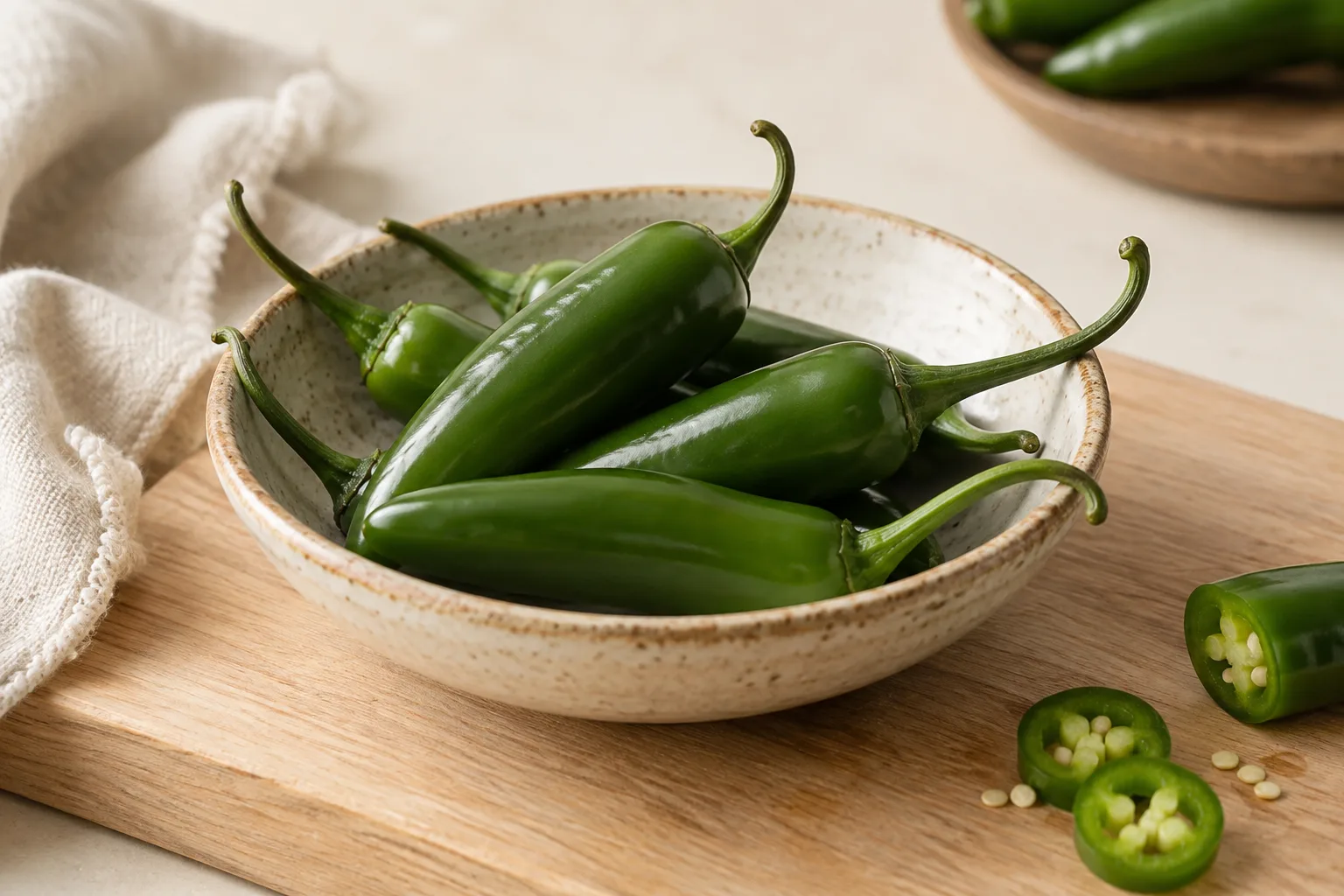
Serrano chile is a fresh pepper of the species Capsicum annuum, in the nightshade family. It is commonly used green, though it is also eaten when ripe and red. Its size and shape can vary, but it is generally small with smooth skin. In cooking, it is treated as a hot vegetable: chop it into salsas and guacamole, or roast, fry or cook it into hot dishes. Heat is not guaranteed to be identical from one pepper to another, so taste a small amount before adding more. The name serrano should not be taken as a promise of a fixed heat level.
When to use it
Use serrano when you want fresh heat in salsa, pico de gallo, guacamole or a stew. Raw, it contributes a direct, fresh presence and is easy to add finely chopped; roasted, fried or cooked, it can be folded into salsas and hot dishes. Serranos are generally hotter than jalapeños, so choose another pepper if you want less heat. To control the result, start with a small amount, taste, and add more if needed. For home-canning recipes, do not casually change the total amount of peppers or the proportions specified in a tested recipe.
How to use it
Rinse the chile under water and dry it before cutting. Remove the stem and chop it finely to add gradually to salsa, pico de gallo or guacamole; it can also be added whole or cut into a cooked dish. For a different texture and flavor, roast or blister it, fry it, or cook it with the other recipe ingredients. Taste a small portion before deciding how much to use, since heat varies. When handling hot chiles, wear gloves or use a utensil and avoid touching your eyes; wash your hands and utensils when finished. Do not reduce or change the amounts in a tested home-canning recipe: changing proportions can affect safety.
Flavour and texture
Serrano brings heat and a vegetal flavor to both raw and cooked preparations. Chopped raw, it retains a noticeable texture; roasting, frying or cooking changes its texture and lets it blend further into a dish. The heat is not uniform, so one pepper may be hotter than another. To control the result, add a small amount, taste, and adjust rather than assuming every chile has the same intensity.
How to choose it
Choose peppers that are firm, fresh, smooth and brightly colored, without soft spots, wrinkled skin, bruises, cracks or mold. Firmness and intact skin are useful signs when selecting fresh peppers. Serranos can be green or red when ripe; color alone does not guarantee a particular heat level. If buying several, check each one and avoid peppers that look damaged or wilted.
Storage
Keep fresh chiles refrigerated, preferably in a clean bag, and inspect them before use. General pepper guidance recommends refrigeration; excess moisture and freezing can damage peppers. Wait to wash the chiles until you are ready to prepare them, and discard any that develop mold or soft areas. This advice is for fresh peppers, not for home canning; use a tested preservation recipe and follow its instructions exactly if preserving chiles.
Substitutions
Jalapeño can replace serrano in an equal amount when you want less heat. The flavor and intensity will change, so taste and adjust only in dishes where adjustment is appropriate. For canning recipes, do not reduce the total amount of chile or change the proportions: use a tested recipe and follow its directions. Another fresh chile with similar heat may also work if you keep the recipe’s specified total amount.
Common mistakes
Adding several chiles without tasting can make a dish too hot. Do not assume color or size precisely predicts heat. Avoid touching your eyes after handling chiles. In a tested canning recipe, do not casually change the amount of chile or ingredient proportions; making a substitution is not the same as improvising the recipe.
Safety and allergens
Hot chiles can irritate skin and eyes. Wear gloves or use a utensil when handling them, keep your hands away from your eyes, and wash your hands and utensils thoroughly afterward. For home-canning chiles, use only a tested recipe: chiles must be processed in a pressure canner for safe canning.
Culinary uses
- Aporta picor y sabor a salsas y guisos
- Condimento o guarnición picada, cruda o cocinada
Recommended techniques
- Picar y servir crudo
- Asar o tatemar
- Freír
- Cocer
Pairs well with
- Tomate verde o jitomate
- Cebolla y cilantro
- Ajo
Frequently asked questions
Are serrano chiles used green or red?
They are often used green, but can also be eaten ripe and red. Color alone does not guarantee a particular heat level.
How can I make a recipe less spicy?
Start with a small amount and taste. Jalapeño can replace serrano in an equal amount for less heat; do not change the amount or proportions in a tested canning recipe.
Can serrano chile be eaten raw?
Yes. Chop it into salsa, pico de gallo or guacamole. Handle it carefully and avoid touching your eyes.
Sources and review
Automatically researched, cross-checked and validated content. Sources consulted:
- Client Challenge doi.org
- Selecting, Storing, and Serving Ohio Peppers | Ohioline ohioline.osu.edu
- The Ultimate Guide to Hot Peppers - Escoffier escoffier.edu
- El chile, ingrediente esencial en la cocina de México - Formacion en Gastronomia formacionengastronomia.com
- New Mexico Favorites- Chile and Pecans | New Mexico State University - BE BOLD. Shape the Future. pubs.nmsu.edu
- How to Preserve Chiles | USU extension.usu.edu
- Jeri Elizabeth Kostal Assessment of Current Guidelines for Culinary ... vtechworks.lib.vt.edu
- The Peppers Cookbook: 200 Recipes from the Pepper Lady's Kitchen - UNT Press - UNT untpress.unt.edu
- Peppers wpcdn.web.wsu.edu
- Pepper Substitutions | UC Master Food Preservers of Inyo and Mono Counties ucanr.edu
- Chile Serrano Mexicano | Comprar Fresco en España jalapenostugitana.es
- Chile serrano - Wikipedia, la enciclopedia libre es.wikipedia.org
- Chiles serranos: análisis y comparación de los mejores productos para hacer comida asiática thaibistro.es
- Chile serrano un ingrediente esencial en la gastronomía de México con muchos beneficios para la salud directoalpaladar.com.mx
- Chile serrano: picor, usos | Recetas Mexas recetasmexas.com