- Category
- Nuts and seeds
- State
- Fresh
- Usual unit
- g
What it is
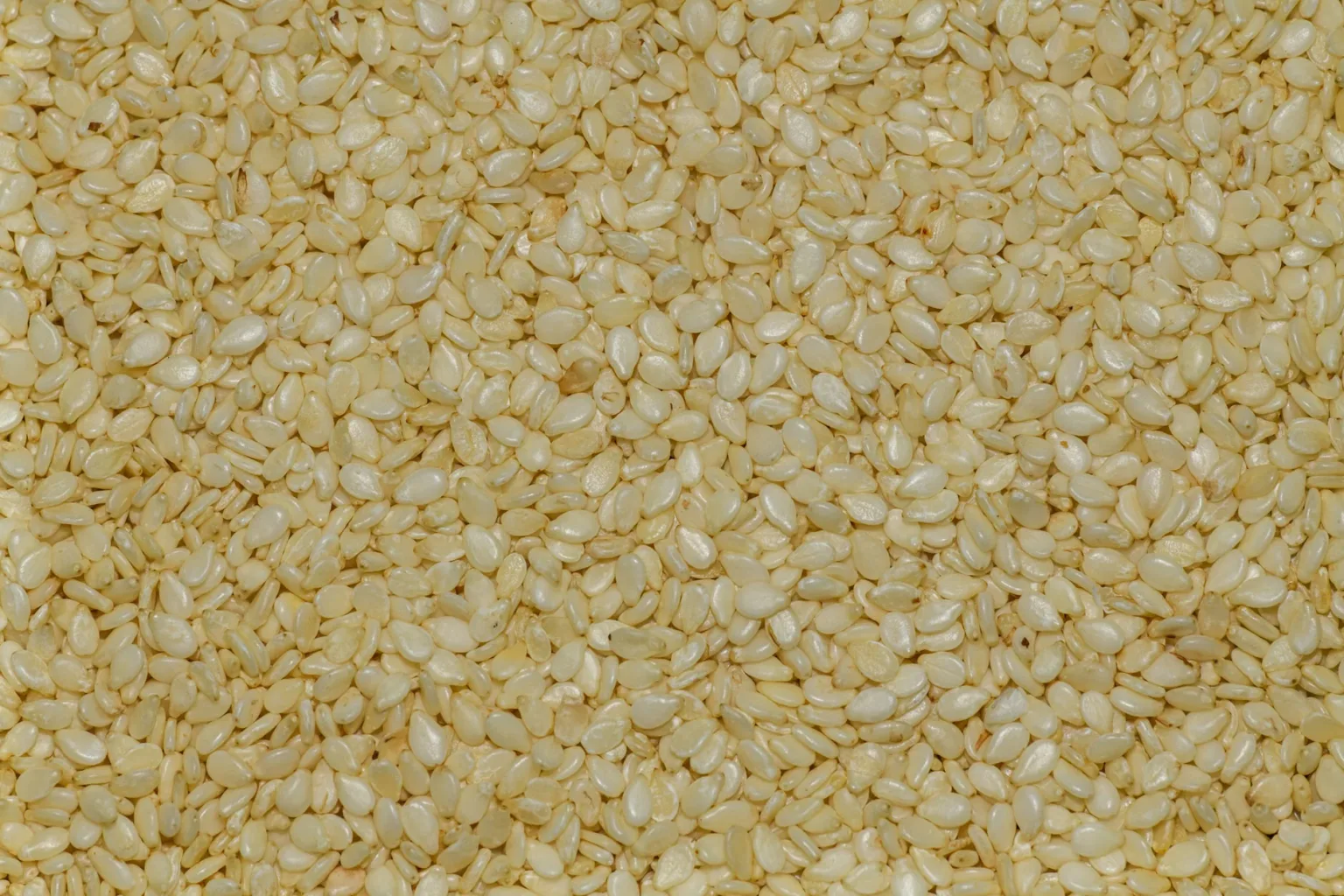
Sesame seeds, also called sesame or ajonjolí in Spanish, come from the plant Sesamum indicum. They are described in white, golden and black varieties and can be used whole, toasted or ground. In cooking they add flavor and texture in small amounts, either as part of a preparation or as a finishing topping. Culinary sources mention sesame in sauces such as mole, in breads and sweets, and in other preparations; they describe using it both within a recipe and on the finished dish. This profile focuses on those culinary uses and does not assign health benefits or provide seasonality or storage facts that the available evidence does not establish.
When to use it
Use sesame when you want to add flavor and noticeable texture to a dish. Whole seeds work as a bread topping or a finishing touch; toasted or ground seeds can be incorporated into sauces and pastes. They also appear in sweets and salads. The sources describe several colors, but do not establish that any one variety is required for a particular recipe. Keep in mind that toasted or ground seeds behave differently from whole seeds: choose the form according to whether you want a visible topping or want the ingredient blended into a mixture.
How to use it
Use the seeds whole as a topping for bread or as a finish for a dish. To bring out a stronger aroma, culinary sources recommend toasting them before adding them; watch them carefully and do not let them burn, as the available evidence gives no time or temperature. To blend sesame into a preparation, grind it and add it to a sauce or paste. You can also use it in sweets or salads. Start with a moderate amount and adjust to taste, since intensity varies with the variety and whether it has been toasted. The evidence does not establish universal proportions, so follow a specific recipe when one is available.
Flavour and texture
Sources describe sesame as delicate, with sweet and toasted, nut-like notes; toasting makes it more aromatic. Whole seeds add a visible crunch, while ground seeds can be blended into sauces and pastes. Seeds may be white, golden or black, and sources describe differences among varieties without giving one flavor description that applies to all.
How to choose it
Sources describe white, golden and black seeds; color alone does not establish quality or freshness. Choose a form that suits the recipe and check the package for its product description and directions. The available evidence does not set out specific freshness signs, quality grades or further buying criteria, so do not assume that one color or variety is superior for every use.
Storage
The available evidence does not specify a shelf life, temperature or particular storage conditions for sesame seeds. Check and follow the package directions, keep the package closed as instructed, and inspect the product before use. The sources do not support a universal storage period; toasted or ground seeds should likewise be handled according to the instructions for their particular product.
Substitutions
The available sources do not document a direct substitute that reproduces sesame’s flavor and texture. If you do not have it, you can omit it when the recipe allows, bearing in mind that the dish will lose that topping or characteristic note. Another seed might alter the appearance of a finish, but the evidence here does not support treating one as equivalent or recommending a specific replacement.
Common mistakes
Do not treat whole, toasted and ground sesame as interchangeable: each form serves a different purpose in a recipe. Avoid assuming that every variety has the same flavor profile or that color determines quality. If toasting the seeds, do not leave them unattended; sources do not provide times or temperatures, so a fixed guideline cannot be supported here.
Safety and allergens
The supplied sources do not include a specific official warning about culinary handling of sesame. Check the product label and follow its directions; if you have a dietary requirement or allergy concern, confirm suitability using reliable information before eating it.
Culinary uses
- Aporta aroma y textura a salsas y platos
- Sirve como cobertura para panes, dulces y platos terminados
Recommended techniques
- Tostar antes de incorporar para potenciar su aroma
- Moler para integrarlo en salsas o pastas
- Usar entero como cobertura o acabado
Pairs well with
- Mole y otras salsas
- Panes y productos de panadería
- Ensaladas
- Dulces
Frequently asked questions
Are sesame and ajonjolí the same ingredient?
Yes. The sources identify sesame and ajonjolí as names for the same seed, from Sesamum indicum.
Do sesame seeds need to be toasted before use?
Not always. They can be used whole as a topping, and sources also describe toasting them before adding them to a preparation to bring out their aroma.
Can sesame seeds be ground?
Yes. Culinary sources describe grinding sesame to add it to sauces or pastes.
Estimated nutrition
- Fat
- 50 g
- Saturates
- 6.25 g
- Carbohydrate
- 25 g
- Sugars
- 0 g
- Fibre
- 12.5 g
- Protein
- 12.5 g
- Salt
- 0 g
Sources and review
Automatically researched, cross-checked and validated content. Sources consulted:
- Client Challenge doi.org
- Nutrition After Your Transplant - Health Online healthonline.washington.edu
- EL AMOR A TRAVÉS DE LA COCINA: EXPLORING THE scholarsbank.uoregon.edu
- Additional file 1: The Antioxidant Food Table. vtechworks.lib.vt.edu
- Memoria II: Propuesta de indicadores mapa.gob.es
- A N D Y users.design.ucla.edu
- Ajonjolí: 11 beneficios, para qué sirve, propiedades (y cómo consumir) - Tua Saúde tuasaude.com
- Ajonjolí: qué es, a qué sabe y usos | Recetas Mexas recetasmexas.com
- El Ajonjolí gastromakers.com