- Category
- Drinks
- State
- Liquid
- Usual unit
- ml
What it is
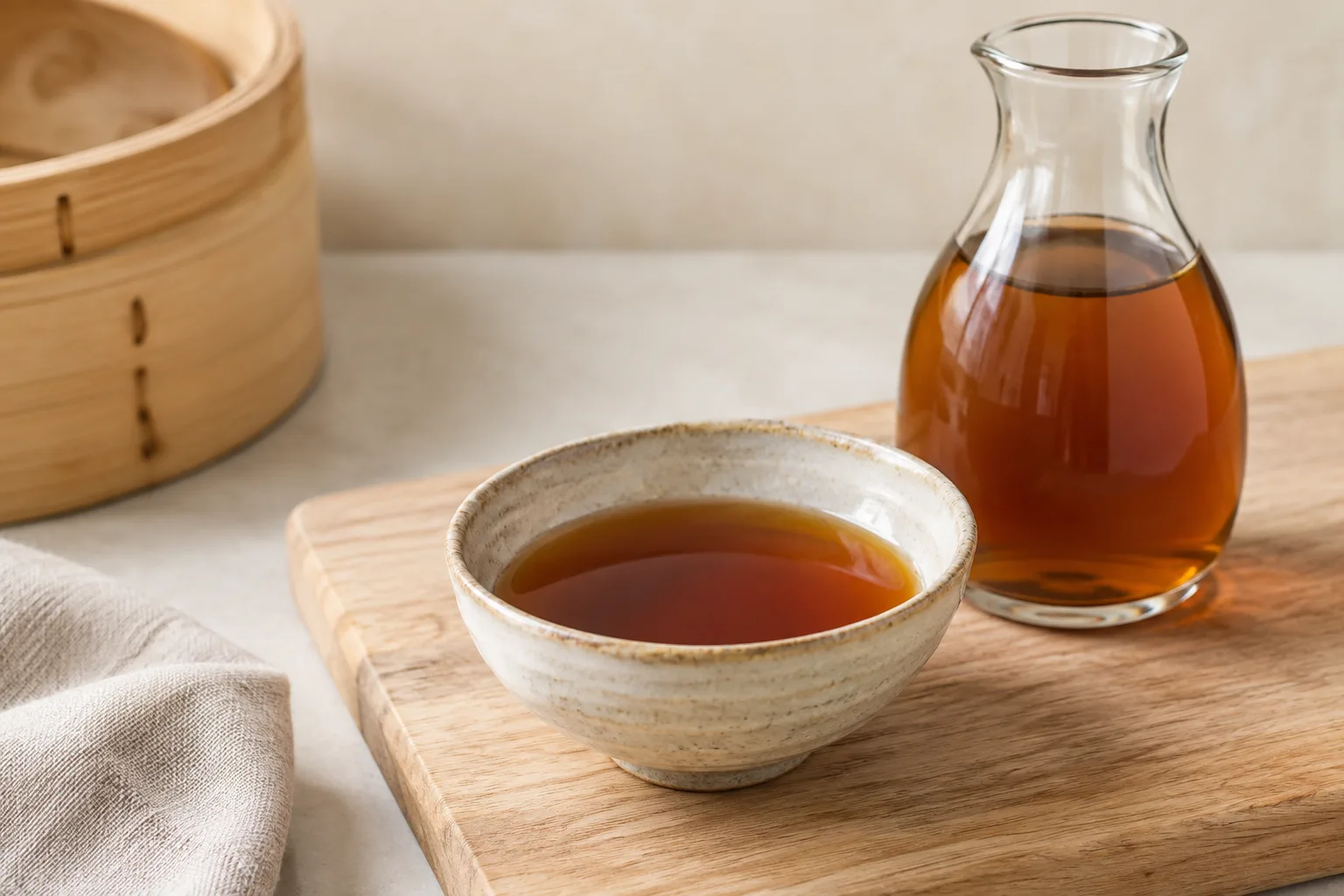
Shaoxing wine is a Chinese fermented rice wine and a type of huangjiu associated with Shaoxing in Zhejiang province. It is sold in different varieties and can be served as a beverage or used in cooking. One culinary description characterizes it as a translucent amber liquid with a complex, slightly sweet, spicy, nutty flavor; those traits can vary by product. Some descriptions of its production mention rice, water, and a small amount of wheat, so check the label if wheat must be avoided. It is not interchangeable with every clear rice wine or with every bottle labeled cooking wine.
When to use it
Use it when you want to add depth to a savory dish, such as in a meat marinade, while stir-frying chicken or beef, or in a sauce or braise. It also appears in fish and fried-rice recipes. Flavor and salt content depend on the product, so read the label, especially when the bottle is sold as cooking wine. If you intend to drink it, choose a variety marketed for that purpose and serve it according to the producer’s directions.
How to use it
Add it to a meat marinade or splash some into a pan or wok while stir-frying chicken or beef. It can also be incorporated into a sauce, filling, or braise; some recipes use it with fish. If adding it during cooking, combine it with the other ingredients and adjust the seasoning to taste, especially if the bottle contains salt. The available evidence supports these uses but does not establish one universal amount: follow your recipe and the product label. For drinking, do not assume a cooking variety is intended to be served as a beverage; check how it is marketed.
Flavour and texture
Culinary descriptions characterize Shaoxing wine as an amber liquid with a complex, slightly sweet, spicy, nutty flavor and a perfumed aroma. Intensity and nuances vary among varieties and products. A salted cooking version may add saltiness too, so do not assume all bottles taste alike or can be swapped without adjusting the dish.
How to choose it
Look for Shaoxing wine at Asian grocery stores or specialty food shops. Read the label to distinguish a variety intended for drinking from a cooking product, and check whether salt has been added. Available descriptions note that several varieties exist; their color, flavor, and composition are not necessarily identical. If you need to avoid wheat, check the ingredients or ask the producer.
Storage
Seal the bottle after use and follow the storage directions printed on its label. The available evidence does not establish a universal storage period or temperature that applies to every variety. If the producer gives product-specific directions, follow them; advice based on one bottle should not be treated as a guarantee for all products.
Substitutions
Dry sherry is described as a close substitute when Shaoxing wine is unavailable. Another Chinese rice wine may also work; sake is a possible alternative, though it changes the flavor profile. Adjust the seasoning to the recipe and check whether the chosen substitute or Shaoxing wine contains salt. Alternatives will not necessarily reproduce the original flavor.
Common mistakes
Do not assume all rice wines taste the same or that a Shaoxing cooking product is identical to a variety intended for drinking. Some cooking versions contain salt and call for seasoning adjustments. Do not substitute mirin without considering its greater sweetness; the recipe may need less sugar.
Safety and allergens
This is an alcoholic beverage; handle and consume it responsibly, and check the label for the alcohol content and ingredients of the specific product. Some descriptions indicate that certain preparations may contain wheat, so anyone who needs to avoid it should verify the label or contact the producer.
Culinary uses
- Aporta profundidad y complejidad a platos salados
- Ingrediente de marinadas y salsas
- Bebida para servir como tal, según la variedad
Recommended techniques
- Marinar
- Saltear y añadir durante la cocción
- Desglasar
- Incorporar a salsas y estofados
Pairs well with
- Pollo y otras carnes
- Pescado
- Arroz frito
- Salsas saladas y platos estofados
Frequently asked questions
What does Shaoxing wine taste like?
It is described as complex, slightly sweet, spicy, and nutty, although the profile varies by product.
Can I substitute dry sherry?
Yes. Dry sherry is cited as a close alternative, though it is not identical and may change the result.
Does Shaoxing wine contain salt?
Some cooking bottles may contain salt, and varieties can differ. Check the label before adjusting the seasoning.
Sources and review
Automatically researched, cross-checked and validated content. Sources consulted:
- The Essential Glossary of Cooking Terms for the Culinary Arts - Escoffier escoffier.edu
- ¿Quién decide qué es realmente un vino ‘natural’? doi.org
- A Dinner Fit for a Bruin | UCLA newsroom.ucla.edu
- IEW Recipes | OISS | Rice University oiss.rice.edu
- BOLETÍN DE INFORMACIÓN INTERNACIONAL ... mapa.gob.es
- Chicken and Shrimp Fried Rice – trial by fryer physics.bu.edu
- Steamed Whole Fish Recipe for Lunar New Year ice.edu
- A Q+A on Authentic Chinese Cooking with Kian Lam Kho and a "Phoenix Claws and Jade Trees" Giveaway! - Pickles and Tea apa.si.edu
- SWEET AND SALTY - USC Libraries libraries.usc.edu
- “Chinese Cuisine · A Global Expression” and Le Cordon Bleu’s 130th Anniversary Celebration cordonbleu.edu
- Vino de Shaoxing - Wikipedia, la enciclopedia libre es.wikipedia.org
- Durante años China relegó el Shaoxing a la categoría de vino para cocinar. Ahora es una bebida de restaurantes Michelin xataka.com
- El vino Shaoxing marcwiner.com
- El vino de arroz Shaoxing: la variedad ‘huadiao’ de Jiangnan - Revista Instituto Confucio - ConfucioMag confuciomag.com
- - YouTube youtube.com
- Shaoxing: El vino más tradicional de China | Delicioso | Univision univision.com